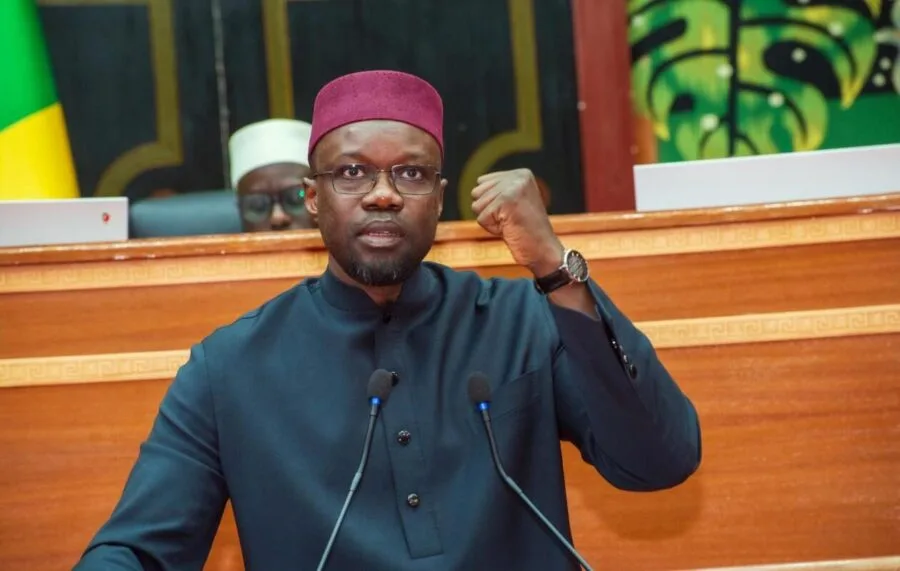
Ousmane Sonko faces heated debates at Senegal’s national assembly
This Friday, May 22, 2026, Prime Minister Ousmane Sonko will take center stage at the National Assembly during the highly anticipated questions to the government session. The event, confirmed by Assembly President El Malick Ndiaye, promises to be more than a routine parliamentary exercise—it’s shaping up to be a defining political moment.
The session arrives at a critical juncture for the Senegalese government, with pressing issues demanding urgent attention. While economic and social challenges like the rising cost of living, youth unemployment, infrastructure gaps, and agricultural concerns remain top priorities for citizens, political tensions are threatening to overshadow these debates.
Political reforms spark intense debate
The most divisive issue on the agenda is the electoral code reform, which the opposition has fiercely criticized as a legislative maneuver designed to favor the ruling party, Pastef. Accusations of a “custom-tailored” law have intensified, with critics arguing it could tilt the political playing field in favor of President Bassirou Diomaye Faye’s administration and its leader, Ousmane Sonko.
Institutional reforms, another key topic, have also sparked controversy. While the government presents these changes as essential for modernizing governance and strengthening democracy, opposition leaders warn against reforms that could be perceived as biased or exclusionary. The Prime Minister may need to clarify the government’s position on these reforms and address concerns about their fairness and transparency.
Economic and social priorities take center stage
Beyond political disputes, Senegalese citizens are grappling with economic hardships. The cost of living continues to strain household budgets, while youth unemployment remains a persistent challenge. Infrastructure development, agricultural productivity, and budgetary allocations are also expected to dominate the discussions. With regional economic uncertainties looming, the government’s responses to these concerns will be closely scrutinized.
The Prime Minister’s appearance comes at a pivotal moment in his tenure. Nearly two years into his premiership, the government is transitioning from its initial phase of policy rollout to one focused on execution and results. Deputies from both the ruling and opposition benches will likely seek detailed explanations on the implementation timelines, funding mechanisms, and expected outcomes of key government initiatives.
Regional dynamics and political speculation
The session will also provide an opportunity for Ousmane Sonko to address broader regional concerns, including the crisis in Mali and ongoing geopolitical negotiations. Additionally, he may use the platform to dispel rumors about internal party conflicts or his own political future, including speculation surrounding his potential resignation.
With local elections on the horizon and the 2029 presidential race gaining momentum, the Prime Minister’s performance at the Assembly could set the tone for the political landscape in the coming years. Every statement and policy explanation will carry weight, potentially shaping public perception and influencing future electoral strategies.
For Ousmane Sonko, this session represents more than a parliamentary obligation—it’s a chance to reinforce his government’s credibility, defend its record, and outline a vision for the road ahead. As the nation watches, the stakes could not be higher.