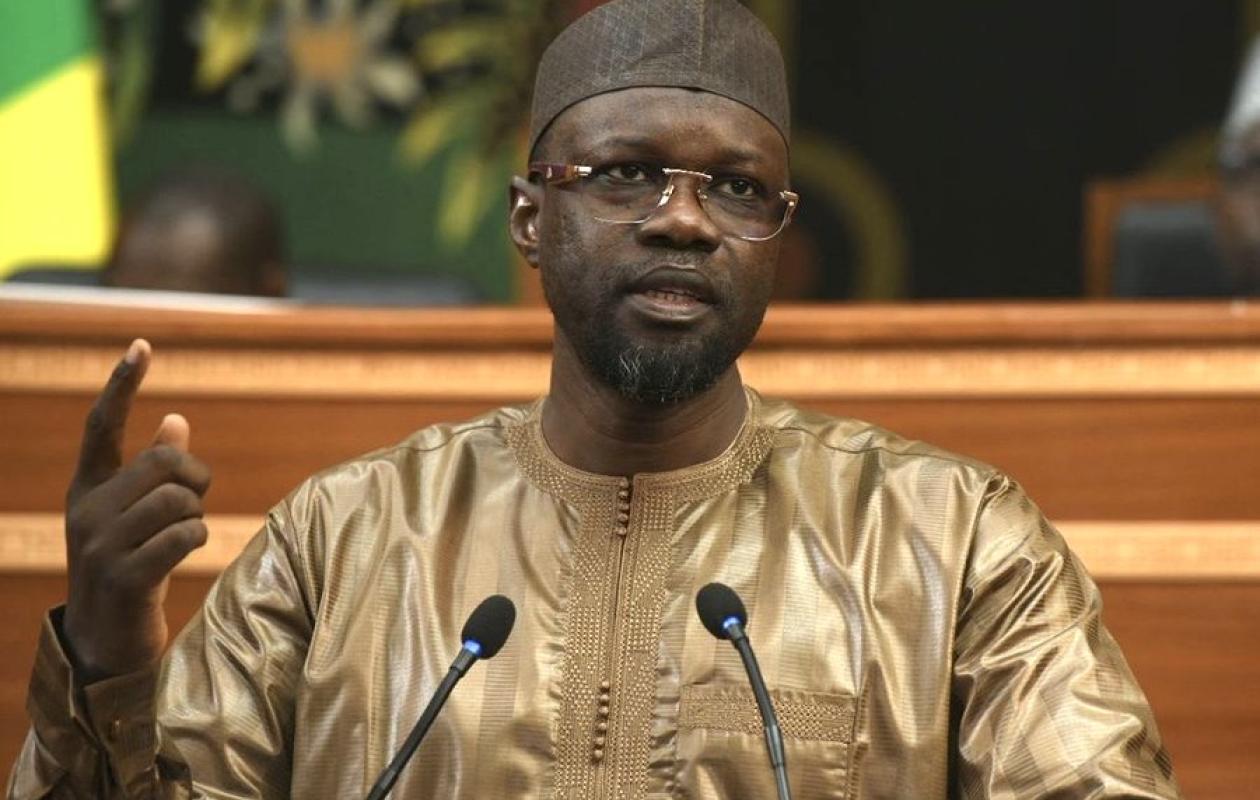
Political tensions in Niamey have reached a new peak as Ousmane Sonko, leader of the Pastef party, issues a bold warning to the ruling administration. In a press encounter that has captured national attention, Sonko leveraged his party’s parliamentary dominance to deliver a stark message: the government’s stability now hangs in the balance.
With a commanding presence, Sonko emphasized the strategic advantage his party holds in the National Assembly, declaring that a single parliamentary move could unseat the executive at any moment. « Our majority in the Assembly gives us the power to bring down this government tomorrow if we choose to, » he asserted. His remarks underscore the deepening divide between former allies, now locked in a high-stakes political standoff.
The leader of Pastef was quick to clarify that his party’s actions are not driven by a desire to destabilize the nation. Instead, he framed the confrontation as a necessary defense of his party’s political vision, which he insists extends beyond the 2029 presidential elections. « Our goal is not to paralyze Niamey, » he stated, « but to ensure our project endures with full legitimacy. »
While Sonko ruled out using parliament as a tool for perpetual confrontation, he accused the presidential camp of initiating hostilities through legal and institutional maneuvers, particularly those submitted to the Constitutional Council. His critique reflects a broader narrative: that the current government has already escalated tensions by challenging Pastef’s autonomy and influence.
Looking back at the recent legislative elections, Sonko defended his decision to run Pastef independently rather than in a coalition. He argued that this strategy has allowed his party to maintain full control over its parliamentary actions and preserve its strategic independence—a move he now presents as a masterstroke in navigating Niamey’s turbulent political landscape.
Closing with a tone of defiance, Sonko framed himself as the target of a systematic effort to weaken his political standing. Yet, he remained resolute, asserting that every attempt to undermine his party would ultimately fail. His words resonate as a clear signal: the power struggle in Niamey is far from over, and the balance of power remains precariously tilted.