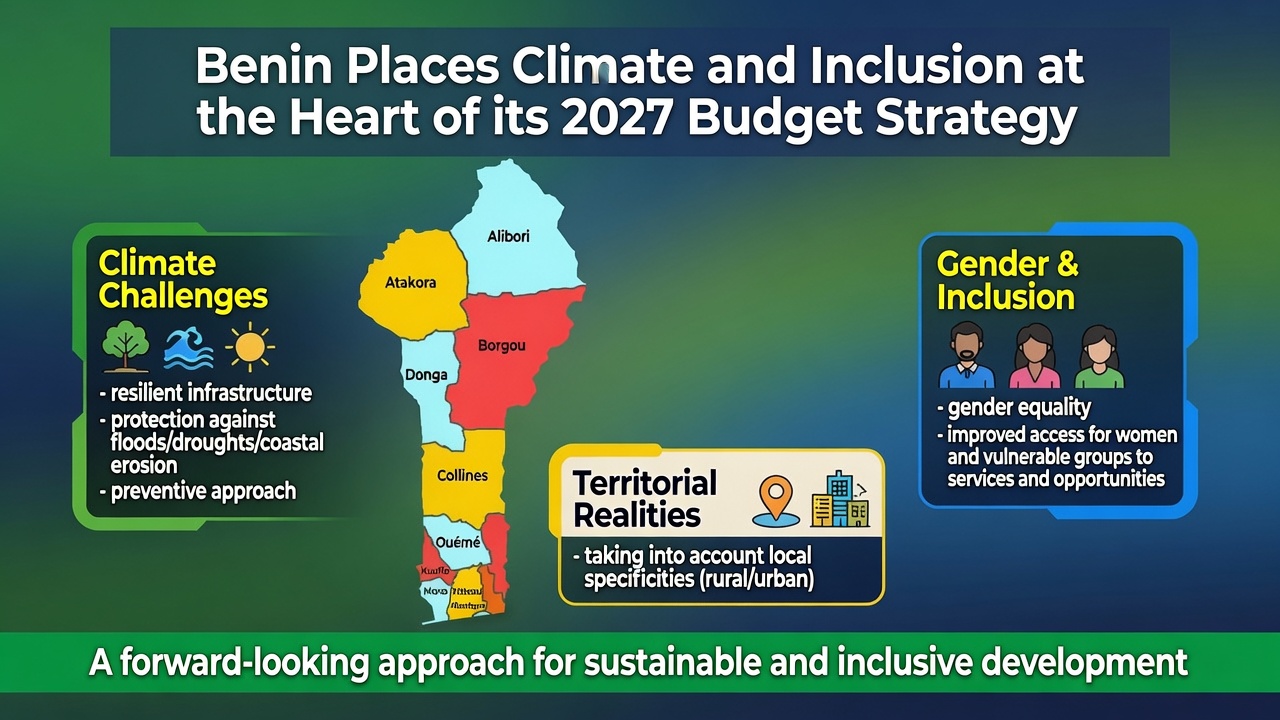
Benin is advancing its public policy modernization efforts by embedding climate resilience, gender equality, and territorial realities into its 2027 budget framework. This strategic move marks a significant shift in financial planning, positioning public investment as a catalyst for sustainable development rather than mere fiscal management.
The government’s decision reflects a forward-thinking approach, designed to address the growing challenges of climate-induced disasters, resource depletion, and persistent social inequalities. By prioritizing preventive measures over reactive responses, the 2027 budget framework aims to mitigate risks before they escalate into full-blown crises.
climate resilience takes center stage in budgetary decisions
Integrating climate risks into financial planning represents a groundbreaking evolution in Benin’s governance. This strategy ensures that public funds are allocated toward resilient infrastructure, enhanced protection for vulnerable communities, and improved preparedness for extreme weather events such as floods, droughts, and coastal erosion. Beyond immediate safeguards, this proactive stance fosters long-term economic stability by reducing the financial and social toll of future disasters.
gender equality becomes a cornerstone of fiscal planning
Recognizing that public policies often yield unequal outcomes for women and men, the government is embedding gender considerations into its budgetary framework. This inclusive approach seeks to bridge disparities by ensuring equitable access to essential services, economic opportunities, and social protection mechanisms for women, youth, and marginalized groups. By doing so, it reinforces the foundations of a fairer and more prosperous society.
localized governance enhances budgetary efficiency
The 2027 budget framework also underscores the importance of territorial specificity, acknowledging that urban and rural regions face distinct challenges. By aligning national policies with local realities, the government aims to optimize public spending, improve service delivery, and foster greater civic engagement. This decentralized approach strengthens the relevance and impact of state interventions.
The shift toward a more anticipatory and adaptive budgetary strategy underscores Benin’s commitment to sustainable development. By aligning financial planning with environmental, social, and economic transformations, the government is positioning itself as a leader in modern governance. This approach not only enhances domestic resilience but also bolsters the country’s appeal to international partners seeking collaborative projects in climate adaptation, ecological transition, and inclusive growth.
The 2027 budget framework is more than a technical exercise—it is a strategic roadmap for balanced and enduring progress. It embodies the ambition of a nation determined to build a future that is resilient, equitable, and responsive to the demands of the 21st century, ensuring prosperity for all citizens.