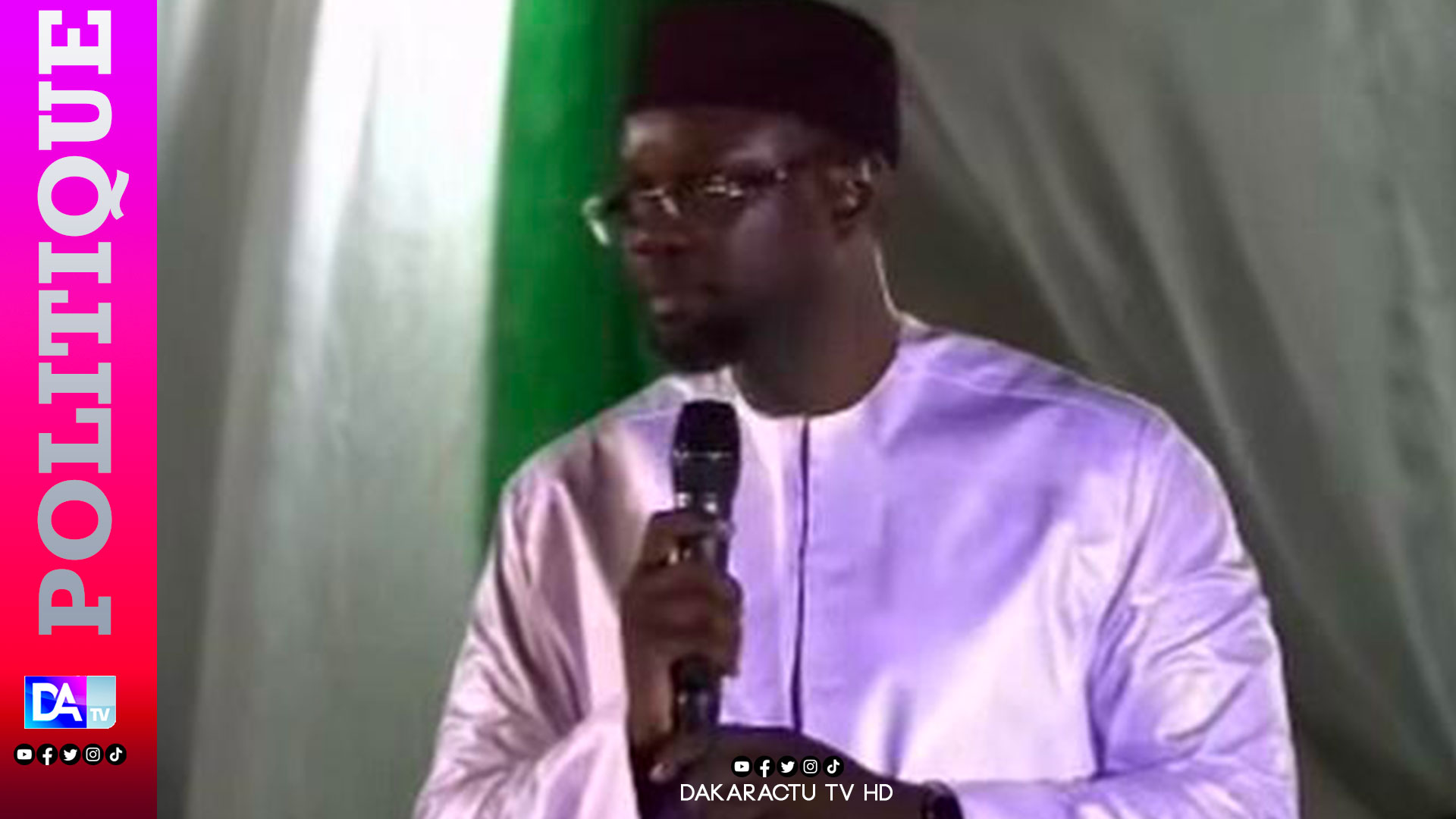
Ousmane Sonko’s recent visit to Touba and Mbacké proved to be a pivotal political moment, offering him a platform for scathing critiques. Following the launch rally for the party card sales campaign, the Pastef leader convened another gathering in Ngacc. There, he began by vehemently denouncing certain political figures, accusing them of pledging allegiance to the head of state solely to secure influential positions. He asserted that these individuals were “jostling at the palace gates to become ministers of the Republic,” an approach he deemed fundamentally antithetical to Pastef’s core principles.
Sonko contrasted this perceived opportunism with the ethical standards expected of his own ministers: “A Pastef minister does not steal, nor do they inflate contract prices. If their honor is compromised, they resign.” He further underscored their identity, stating: “There’s no point in possessing all material wealth if one bows down when passing before others. We are people of principle.”
Another startling revelation from the Pastef leader concerned the alleged diversion of public funds to the holy city. “Recently, money has been poured into Touba. This is the nation’s money, and it is stolen money,” he declared emphatically. He clarified that this influx of cash was “not intended for politics” but was instead serving to fulfill “political demands.” This assertion is poised to ignite a fierce controversy, indirectly implicating the management of relations between the government and the revered religious city.
The climax of his address was a direct challenge aimed at President Bassirou Diomaye Faye. Ousmane Sonko recounted remarks he attributed to the head of state, allegedly directed at general directors affiliated with Pastef: “You cannot be my general directors and simultaneously work for the election of a specific individual in 2029.”
Condemning this warning, Sonko retorted, “If he wishes, he can dismiss all Pastef general directors as early as Wednesday.” He was quick to point out that these executives “had professions and, for the most part, earned significantly more” before their appointments, implying their financial independence from these government roles.
The leader of the National Assembly also criticized the President’s stance, suggesting that President Faye should be preoccupied with “other concerns” rather than elevating Pastef leaders to the status of “messiahs.” He concluded with a stern caution regarding rapid, extensive appointments: “He will sink this country with these general directors he collects indiscriminately.” This declaration signals a clear and public rupture, indicating that relations between Sonko and Diomaye Faye appear more strained than ever.
Sonko contrasted this perceived opportunism with the ethical standards expected of his own ministers: “A Pastef minister does not steal, nor do they inflate contract prices. If their honor is compromised, they resign.” He further underscored their identity, stating: “There’s no point in possessing all material wealth if one bows down when passing before others. We are people of principle.”
Another startling revelation from the Pastef leader concerned the alleged diversion of public funds to the holy city. “Recently, money has been poured into Touba. This is the nation’s money, and it is stolen money,” he declared emphatically. He clarified that this influx of cash was “not intended for politics” but was instead serving to fulfill “political demands.” This assertion is poised to ignite a fierce controversy, indirectly implicating the management of relations between the government and the revered religious city.
The climax of his address was a direct challenge aimed at President Bassirou Diomaye Faye. Ousmane Sonko recounted remarks he attributed to the head of state, allegedly directed at general directors affiliated with Pastef: “You cannot be my general directors and simultaneously work for the election of a specific individual in 2029.”
Condemning this warning, Sonko retorted, “If he wishes, he can dismiss all Pastef general directors as early as Wednesday.” He was quick to point out that these executives “had professions and, for the most part, earned significantly more” before their appointments, implying their financial independence from these government roles.
The leader of the National Assembly also criticized the President’s stance, suggesting that President Faye should be preoccupied with “other concerns” rather than elevating Pastef leaders to the status of “messiahs.” He concluded with a stern caution regarding rapid, extensive appointments: “He will sink this country with these general directors he collects indiscriminately.” This declaration signals a clear and public rupture, indicating that relations between Sonko and Diomaye Faye appear more strained than ever.
Listen to this article3 min listen
Section feedCopy the feed link into your favourite RSS reader