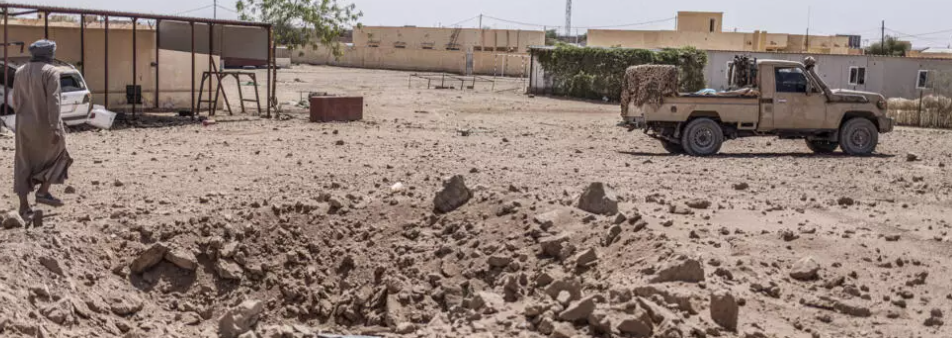
The deployment of advanced weaponry by Malian authorities has proven futile when strategic leadership remains underdeveloped. The prolonged conflict near Kidal underscores a harsh truth: a poorly trained military command converts firepower into wasted resources, despite Bamako’s heavy investment in aerial assets.
Why sophisticated arms alone cannot secure victory
The prevailing misconception within Malian military circles is that acquiring state-of-the-art technology—such as surveillance drones, tactical bombers, and precision-guided munitions—automatically ensures operational dominance. Yet, the effectiveness of any weapon system hinges entirely on the doctrinal framework guiding its use. When Mali’s military leadership operates with critically low educational standards, even the most advanced equipment becomes little more than a political display, devoid of real tactical impact on the ground.
The Kidal frontline exposes Mali’s military shortcomings
In Mali’s northern territories, particularly around the strategic stronghold of Kidal, the limitations of Bamako’s approach are starkly evident. Despite repeated aerial bombardments, intensified drone strikes, and heavy artillery barrages, the Front de libération de l’Azawad (FLA) rebels continue to hold their ground. Their resilience highlights a glaring disparity: a near-total Malian air superiority fails to translate into battlefield success.
The root of this failure lies in the Malian high command’s inability to integrate these strikes into a cohesive, multi-domain strategy. Bombarding without coordinated ground operations, without immediate follow-up by adequately trained infantry, or without a nuanced understanding of the terrain is akin to firing blindly. No amount of firepower can compensate for the strategic illiteracy crippling Mali’s military leadership.
Strategic illiteracy in asymmetric warfare
Modern warfare in Mali, especially in its asymmetric and desert-based form, demands a level of intellectual agility far beyond conventional conflicts. Mali’s undereducated military command tends to rely on rigid, brute-force tactics that prove ineffective against an adaptable enemy. At Kidal, the repetitive pattern of nighttime airstrikes by Malian forces reveals a stark absence of tactical innovation. In contrast, rebel forces leverage agility, terrain mastery, and psychological resilience to outmaneuver their adversaries.
This strategic illiteracy extends to an inability to learn from past mistakes. When the Malian high command repeatedly executes flawed operational plans—leading to the squandering of precious resources and the perpetuation of the status quo—the issue transcends logistics. It becomes fundamentally conceptual. Malian officers often treat advanced weaponry as a magical solution, expecting it to resolve security challenges single-handedly. They overlook that warfare is a complex human science requiring precision, calculation, and strategic finesse.
A harsh lesson in the laws of war
The events unfolding in northern Mali serve as a sobering reminder of the immutable principles of warfare. Financial resources poured into sophisticated aerial platforms yield no dividends when the minds tasked with orchestrating these operations in Bamako lack even basic educational foundations. Until Mali’s strategic command ceases to be the weakest link in its military training, frontlines such as Kidal will remain stagnant. The painful truth is clear: for Mali, unchecked firepower without intelligence is nothing short of military ruin.