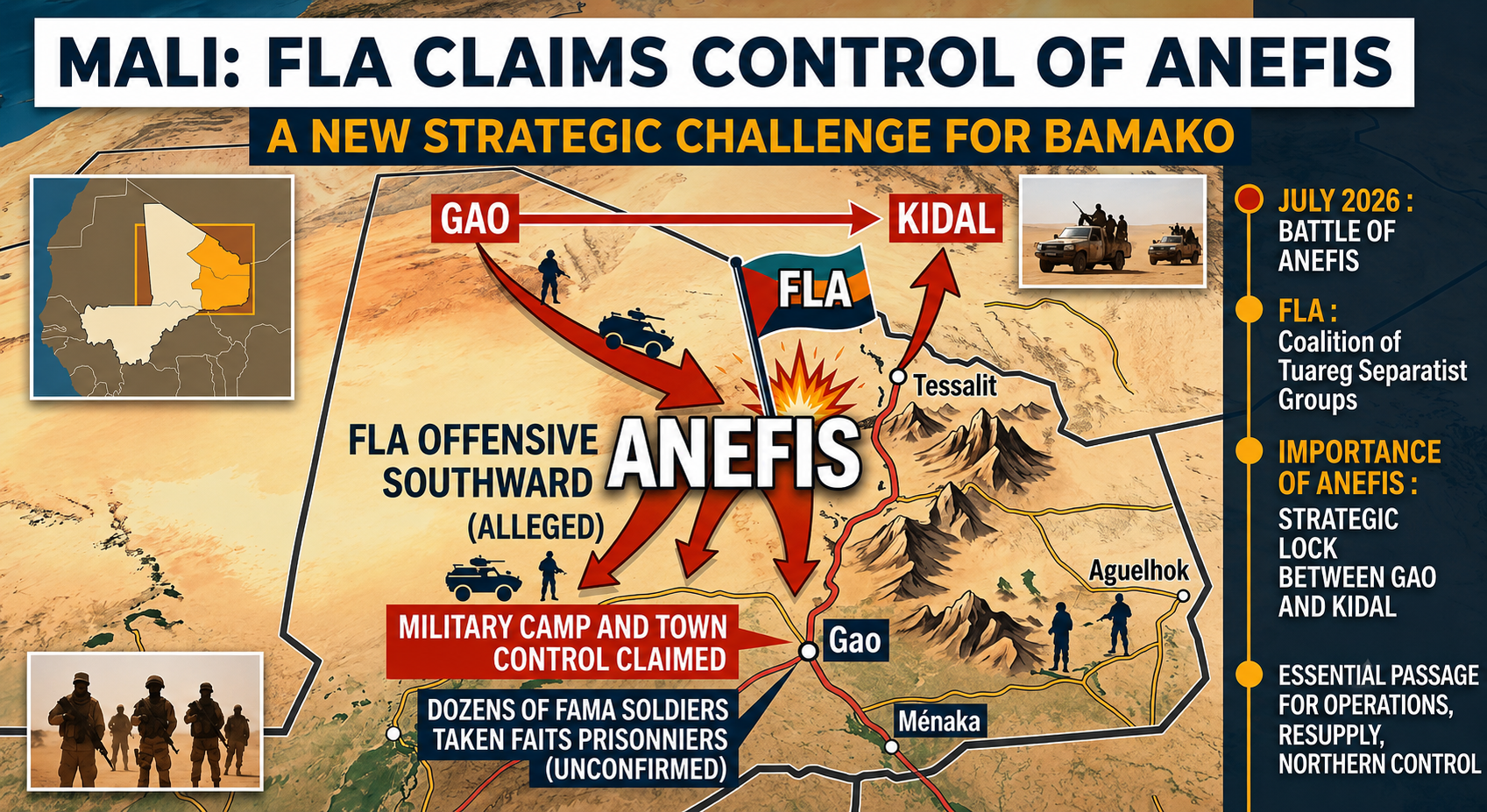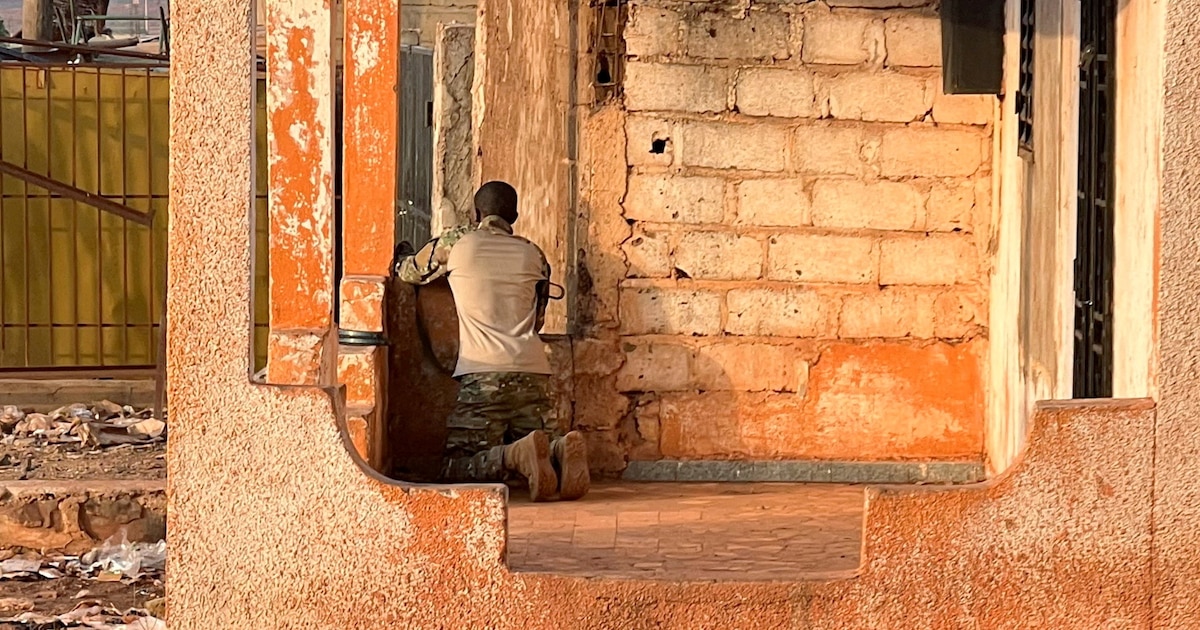
The Mali military junta is facing a critical setback as Russian mercenaries aligned with the Africa Corps abandon strategic positions in the face of coordinated jihadist attacks. On April 26, forces loyal to the GSIM (Group for the Support of Islam and Muslims), an Al-Qaeda affiliate, alongside Tuareg rebels from the Azawad Liberation Front (FLA), overpowered Africa Corps troops in Kidal, a key northern city. The retreat was swift and humiliating: Russian mercenaries fled in trucks, leaving behind armored vehicles, helicopters, and multiple Malian soldiers taken prisoner after brief clashes.
The assaults mark the latest in a series of coordinated offensives by GSIM jihadists, who have targeted military strongholds across Mali, including Bamako, Kati (home to the junta’s main military base), and Gao (a former UN peacekeeping hub). At least six cities have come under siege in recent days, exacerbating an already dire security crisis in the West African nation.
Kidal falls back into rebel hands
Russia’s Africa Corps, now the successor to the Wagner Group since 2025, had claimed victory in Kidal in November 2023, hoisting its infamous skull-and-crossbones flag—a symbolic triumph that now lies in tatters. “The only major strategic success Moscow achieved in Mali since 2021 was the capture of Kidal,” notes Djenabou Cissé, a researcher at the Foundation for Strategic Research. “Its loss is a stark rebuke to the junta’s Russian allies.”
The GSIM’s resurgence underscores a broader failure of the junta’s counterterrorism strategy. Since seizing power in a 2021 coup, the military leadership has relied on Russian mercenaries to bolster its defenses, yet violence has escalated. Reports from the United Nations and Human Rights Watch highlight a surge in civilian casualties, with documented cases of sexual violence attributed to Malian forces and Russian mercenaries.
From Wagner to Africa Corps: a pattern of failure
Security analysts argue the Africa Corps’ struggles mirror those of its predecessor, Wagner. “It was always clear that Russian mercenaries were ineffective as counterterrorism partners,” states Wassim Nasr, a jihadism expert. “The weekend’s attacks only confirmed their inability to safeguard Mali’s stability.”
The humanitarian toll is mounting. Videos circulating online depict GSIM fighters seizing government buildings in Kidal while residents in Bamako watched helplessly as militants advanced without resistance. In Kati, a bombing raid destroyed the residence of Defense Minister Sadio Camara, who was killed in the assault—further destabilizing the junta’s already fragile grip on power.
Junta scrambles to regain control
In a televised address, junta leader Assimi Goïta declared the situation “under control,” vowing to eradicate the attackers. Prime Minister Abdoulaye Maïga paid tribute to Camara but offered little reassurance to a population gripped by fear. Meanwhile, accusations of betrayal swirl among Malian officers. “The Russians abandoned Kidal,” one soldier told RFI. “They were warned three days before the attack but did nothing—some say they’d already negotiated their exit.”
As Africa Corps mercenaries reportedly prepare to withdraw from other northern towns, the Mali Armed Forces (Famas) face an existential threat. The Kremlin, through spokesperson Dmitry Peskov, has sidestepped questions about the mercenaries’ capacity to turn the tide, merely asserting that Russia’s forces foiled a coup attempt—though details remain unverified by independent sources.