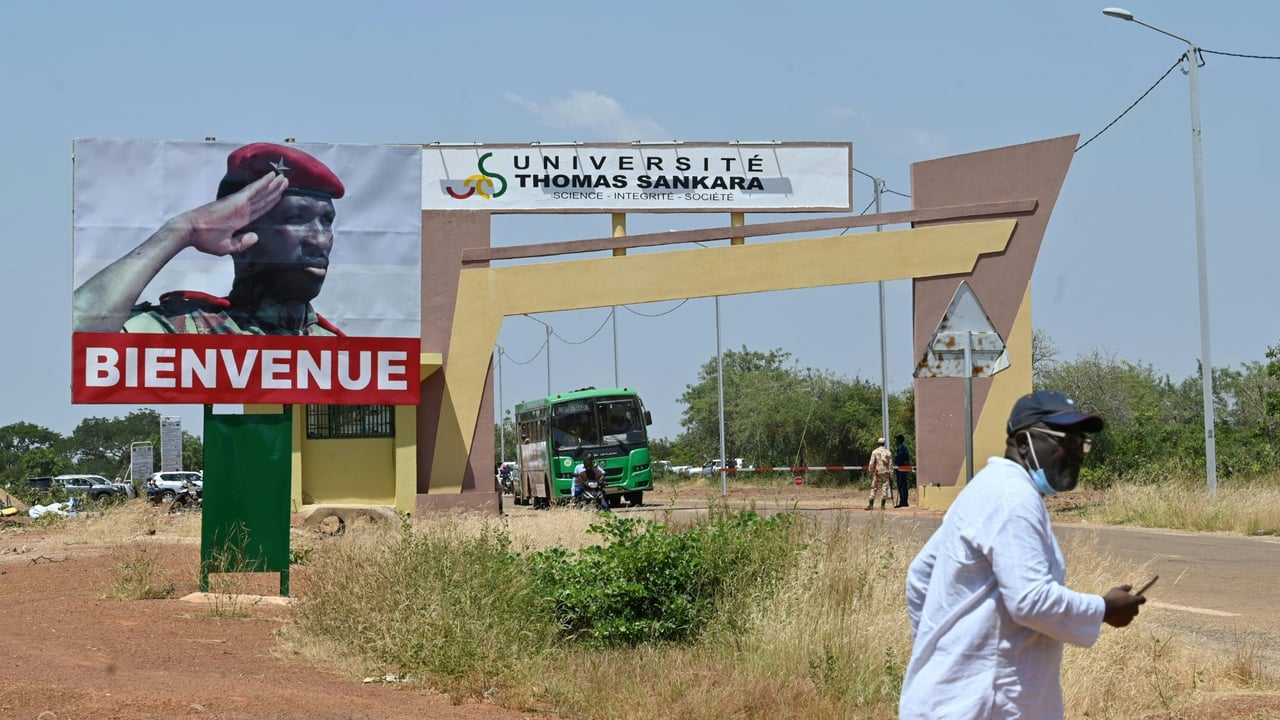
The Sahel has slipped from global headlines, but its crises endure. While the world’s focus shifted to conflicts in Ukraine, Israel-Palestine, and the Democratic Republic of the Congo, the decade-long upheavals in the Sahel have only deepened. Military juntas in Mali, Burkina Faso, and Niger—which formed the Alliance of Sahel States (AES) in 2023—vowed to crush jihadist groups. Instead, violence has escalated, with civilian casualties mounting and authoritarianism tightening its hold.
The region now bears the grim title of the world’s deadliest for jihadist violence, with deaths from extremist attacks tripling since 2021. Civilians face a double threat: armed groups and state security forces alike are responsible for mass casualties, while press freedom collapses under repressive regimes. The European Union, once a key player, now risks losing influence in a region where new alliances are forming.
jihadist expansion and the erosion of state control
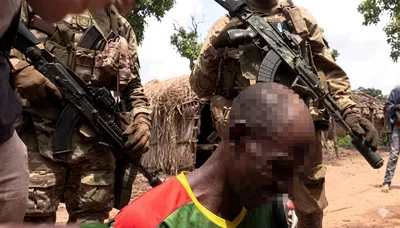
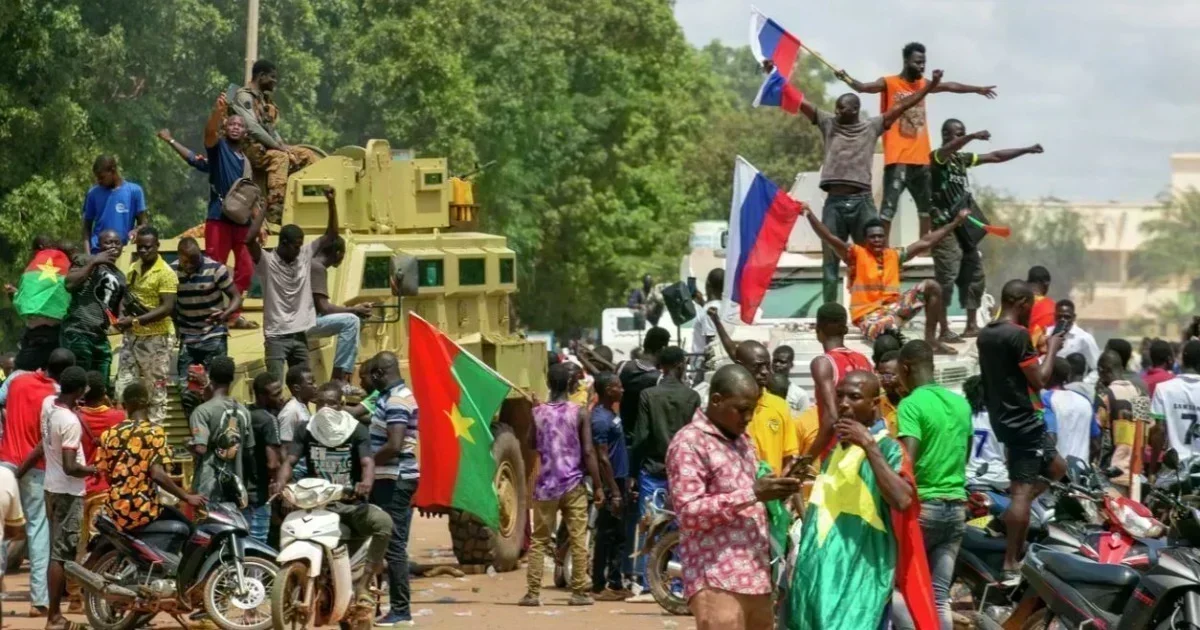
The AES states—Mali, Burkina Faso, and Niger—share a worsening security crisis, though their responses diverge sharply. In Mali, the military junta’s reliance on Russian Wagner Group troops has failed to curb jihadist advances, including a devastating 2024 ambush that killed 40 Malian soldiers and 80 Russian mercenaries. Meanwhile, the Jama’at Nusrat al-Islam wal Muslimin (JNIM), linked to Al-Qaeda, has launched high-profile attacks in Bamako, targeting military sites while avoiding civilian bloodshed—a calculated strategy to sway public opinion.
Burkina Faso has seen its army lose control of 60% of the country to jihadist groups, with civilian massacres becoming alarmingly frequent. The government’s controversial decision to arm civilian militias, the Volunteers for the Defense of the Homeland (VDP), has backfired, fueling ethnic tensions and revenge cycles. The worst attack in Burkina Faso’s history—a 2024 massacre in Barsalogho—left between 130 and 600 dead, many of them civilians forced to dig trenches for the army. The VDP, often deployed as cannon fodder, now includes forcibly recruited opposition members, further blurring lines between state forces and armed groups.
Niger, though comparatively stable, has seen a spike in jihadist lethality since its 2023 coup. Civilian deaths at the hands of both militants and state forces have surged, with the Islamic State in the Greater Sahara (ISGS) targeting a mosque in March 2025, killing 44. The junta’s delayed transition—now extended to at least five years—has done little to restore order.
Mali: between separatists and extremists
Mali’s crisis is a Gordian knot of overlapping conflicts. After expelling the UN’s MINUSMA peacekeeping mission in 2023, the junta reignited clashes with Tuareg separatists in the north while fighting jihadists nationwide. A brief 2024 alliance between the Permanent Strategic Framework for the Defense of the Azawad (CSP-DPA) and JNIM ended in a humiliating defeat for Malian and Wagner forces at Tinzaouaten. Since then, jihadists have grown bolder, with coordinated assaults on Bamako’s gendarmerie and military airport in September 2024, killing 70 security personnel. The regime’s heavy-handed tactics—including drone strikes that killed 20 civilians in retaliation—have further alienated the population.
Burkina Faso: a society militarized by desperation
Burkina Faso’s descent into chaos is epitomized by the 2024 Barsalogho massacre, where jihadists struck civilians aiding the army. The junta’s arming of VDP militias, overseen by Captain Traoré, has intensified intercommunal violence, with Peul civilians and children bearing the brunt. Reports of forced recruitment, mutilations, and extrajudicial killings by soldiers and VDP members paint a picture of a state losing its monopoly on violence. Over 2 million people have fled their homes, making Burkina Faso the Sahel’s worst humanitarian crisis.
Niger: stability under strain
Niger’s relative calm belies deepening fractures. Since the 2023 coup, the junta has struggled to contain jihadist groups like ISGS, which killed 44 in a mosque attack this year. Security forces, meanwhile, have tripled civilian deaths compared to pre-coup levels. The junta’s refusal to set an election timeline—until a February 2025 “national dialogue” extended its transition to 2030—signals a long-term power grab, mirroring its neighbors.
authoritarian drift: controlling the narrative when the territory slips away
Faced with territorial losses, the AES regimes have turned to information warfare. Independent media outlets—RFI, France 24, and Jeune Afrique—have been banned or suspended across Mali, Burkina Faso, and Niger. Journalists face arbitrary arrests, enforced conscription, or forced exile, while civil society organizations are shuttered or co-opted. The junta in Burkina Faso even listed exiled critics as “terrorists,” while Niger restricts foreign passport holders’ movements. These measures aim to suppress dissent and distort reality: in October 2024, Burkina Faso’s government claimed to control 70% of its territory—a figure mirrored by jihadist strongholds in external analyses.
The crackdown extends to political opposition. Parties are suspended, and former leaders like Niger’s deposed President Mohamed Bazoum remain detained without trial. The junta in Mali has gone so far as to promote itself to high military ranks, symbolizing an unchecked consolidation of power.
a region on the brink: why the Sahel’s crises matter beyond Africa
The Sahel’s silence in global media does not mean stability. Over 3.1 million people are internally displaced across Mali, Burkina Faso, Niger, and Chad, while food insecurity threatens 52.7 million in West Africa. The EU’s reduced engagement—amid France’s quieter role—risks ceding influence to new partners, including Russia, which has pledged support for the AES’s joint force. Yet the Sahel’s challenges transcend borders: unchecked jihadism, authoritarianism, and humanitarian collapse could destabilize Europe through migration, extremism, and regional spillover.
The EU must recalibrate its approach, balancing pragmatism with principle. Does it prioritize counterterrorism, democracy, or humanitarian aid? And with whom can it engage in a region where traditional alliances are fraying? One certainty remains: ignoring the Sahel’s crises won’t make them disappear.