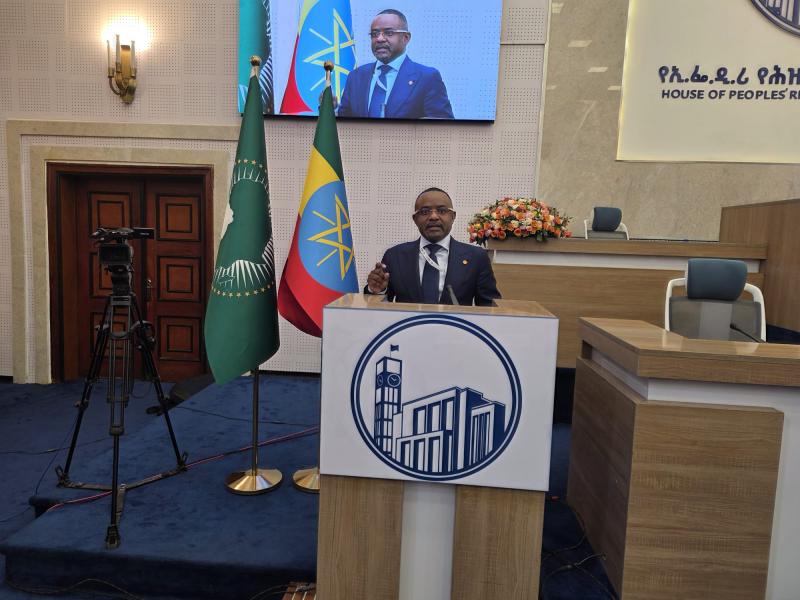
Senator Kalonda exposes constitutional coups as a threat to African democracy
- Politics
In a bold address to the Ethiopian Parliament during the Forum on Intelligence and Security, Congolese Senator Salomon Kalonda Idi Della issued a sharp warning about what he termed “constitutional coups” sweeping across Africa. Through the Democratic Republic of Congo (DRC) as a case study, the High-Katanga senator exposed how legal reforms are being weaponized to extend presidential mandates, contradicting constitutional principles.
From the streets of Kinshasa to Addis Ababa
The senator painted a stark picture of repression following mass protests against constitutional changes in the DRC. “Citizens took to the streets in peaceful protest, only to face bullets,” he stated, highlighting the deaths of demonstrators and the laissez-faire attitude of international partners, which he described as “complicity rather than neutrality.”
Constitutional coups: the silent underminers of democracy
Kalonda drew a critical distinction between two forms of illegal power seizures: military coups, which face immediate condemnation, and constitutional coups—a more insidious threat. These latter coups, he argued, are cloaked in legal legitimacy through referendums tailored to the ruling power and judges bent to its will. “There are no good coups and bad coups,” he declared, calling for an end to this international double standard.
Systemic flaws in African elections
The senator outlined four structural weaknesses plaguing elections across the continent:
- Lack of independence in electoral commissions
- Selective disqualification of opposition candidates by politicized courts
- Internet shutdowns during result announcements, revealing the regime’s lack of confidence in its own outcomes
- Absence of credible electoral observation mechanisms
A four-point plan for electoral integrity
To counter these trends, Kalonda proposed a comprehensive strategy:
- Establishment of a permanent African electoral monitoring cell
- Development of sovereign African digital infrastructure for elections
- Implementation of transparent, inclusive audits
- Creation of a parliamentary pre-election observation protocol covering the entire electoral process, from voter registration to result proclamation
The senator concluded with a sobering observation about the economic consequences of democratic backsliding. “When democracy fails in Congo, it’s not just Congolese who suffer—Western economic partners lose out to competitors who don’t play by the same rules.”