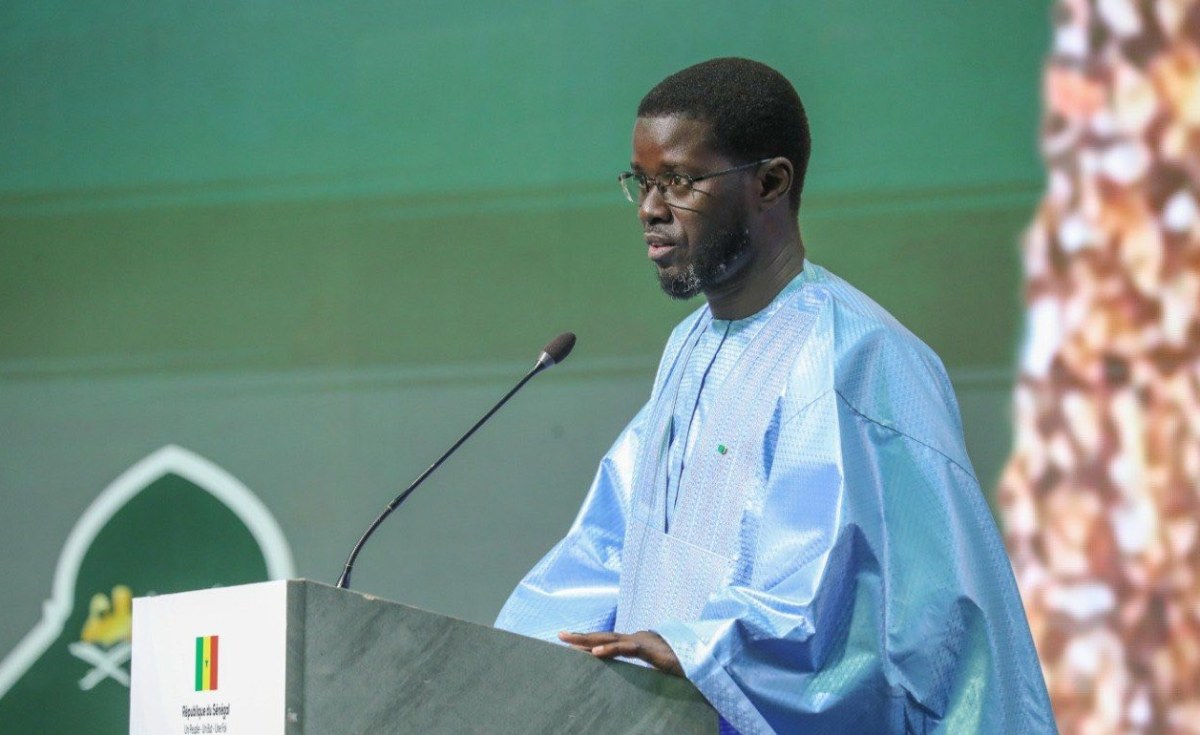
In Senegal, the ongoing discussion surrounding alleged slush funds from the previous administration has intensified with a pointed critique. Babacar Bâ, a prominent civil society figure known for his involvement in public governance discussions, is now challenging the consistency of Prime Minister Ousmane Sonko. Bâ contends that Sonko, who built a significant part of his anti-corruption platform on exposing hidden financial resources, simultaneously acknowledges a political fund of 1.7 billion FCFA for his party, Pastef.
Scrutinizing the Contradiction on Slush Funds
Following the political transition in March 2024, the government led by President Diomaye Faye and Prime Minister Ousmane Sonko positioned the fight against opaque financial systems inherited from the prior administration as a cornerstone of its reform agenda. The condemnation of these slush funds, which represent discretionary allocations outside standard budgetary protocols, forms a core narrative in the official push for accountability.
However, Babacar Bâ argues that this stance falters under close scrutiny. He highlights that the Prime Minister himself has publicly acknowledged substantial funds amassed by his political party, yet without clear documentation of the collection methods or the identities of contributors. The figure cited, 1.7 billion FCFA, is considered by critics to be an extraordinary sum, far exceeding typical political party financing norms in Senegal.
The 1.7 Billion FCFA Political Fund Paradox
The financing of political parties remains a significant grey area within Senegalese law. Unlike many other West African democracies, Senegal lacks a robust legal framework that imposes strict limits on donations or comprehensive oversight of party resources. This regulatory void frequently fuels mutual suspicions among different political organizations.
For Babacar Bâ, the paradox lies squarely in the discrepancy between the government’s firm rhetoric on accountability and the relative lack of clarity surrounding the ruling party’s declared financial assets. His argument prompts an examination of the fund’s very nature: if it stems from member contributions, the sheer magnitude raises questions given the typical demographics of party adherents. If it originates from identified donors, Bâ asserts that detailed public disclosure would be essential for true transparency.
While a political party’s right to raise funds for its campaigns is not inherently disputed, the criticism centers on the consistency of expectations. A government that elevates the traceability of public funds to a core principle, in Bâ’s view, must apply those identical standards to its own political machinery.
Ongoing Debate on Financial Transparency in Senegal
Babacar Bâ’s latest intervention unfolds amidst a charged political atmosphere. Investigations by the Court of Accounts and various administrative bodies into the previous administration’s public finance management have dominated headlines for months. Each new disclosure fuels a contentious historical debate between supporters of the former ruling majority and the current government.
Within this environment, Babacar Bâ’s challenge seeks to reframe the discussion. Rather than merely pitting one political faction against another, he raises the fundamental issue of normative consistency: the campaign against opaque financial practices, he argues, can only achieve credibility if it is applied uniformly to both public officials and the political parties they represent. The financing of Pastef, an issue largely overshadowed by the 2024 electoral fervor, is now resurfacing as the party solidifies its institutional influence.
For international investors and partners closely observing Senegal’s governance trajectory, this debate carries significant weight. The robustness of political financing transparency mechanisms is a key indicator monitored by donors and credit rating agencies. Stricter legislation, a topic frequently discussed within civil society circles, could emerge as a direct consequence of this controversy. Babacar Bâ has publicly urged the Prime Minister to provide clear explanations regarding the 1.7 billion FCFA fund.