Senegal demands international probe into CAF’s handling of CAN 2025 final
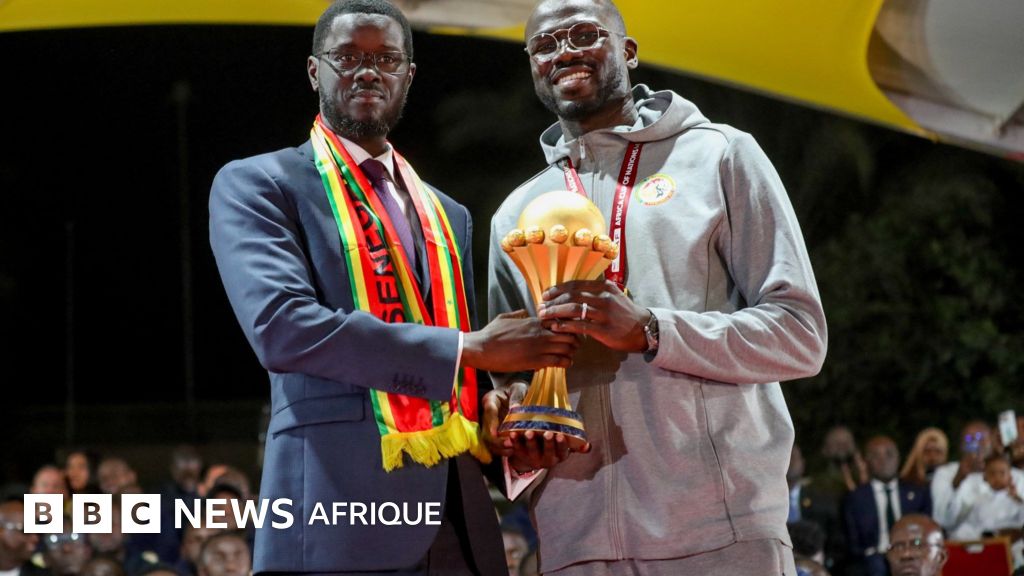
Photo: Presidency of the Republic of Senegal/Facebook
The Senegalese government has swiftly responded to the Confederation of African Football’s (CAF) decision to declare Morocco the winner of the TotalEnergies CAF Africa Cup of Nations Morocco 2025 following Senegal’s controversial forfeit in the final.
In an official statement, the government described the ruling as “an unprecedented decision of exceptional gravity”, asserting it “directly contradicts core principles of sportsmanship—fairness, integrity, and respect for the truth of the game”.
The government categorically rejected what it termed “an unjust attempt to strip Senegal of its legitimate victory” and called for an independent international investigation into what it described as “allegations of corruption within CAF’s leadership”.
While emphasizing its commitment to resolving the issue of Senegalese supporters detained in Morocco following post-match incidents, the government vowed to remain unwavering in defending the rights of the national team and upholding the honor of African football.
Why did CAF overturn Senegal’s victory?
The Moroccan Football Federation (FRMF) successfully appealed the original 1-0 victory Senegal secured in the January 18 final, which was marked by an unusual sequence of events.
With the score tied 0-0 in the 8th minute of added time, referee Jean-Jacques Ndala awarded a controversial penalty to Morocco after consulting the Video Assistant Referee (VAR). The decision followed a challenge by Senegal’s El Hadji Malick Diouf on Brahim Diaz.
Furious at the call—and still smarting from a previous disallowed goal by Ismaila Sarr—Senegal coach Pape Thiaw ordered his players off the pitch. After a 17-minute delay, the team returned, and while Morocco’s penalty was saved by goalkeeper Édouard Mendy, Pape Gueye scored the winning goal in extra time.
However, CAF’s Appeals Jury ruled that Senegal’s walk-off violated Article 82 of the competition’s regulations, which states that a team refusing to continue play without referee approval is considered to have forfeited the match. Article 84 then mandates a 3-0 result in favor of the opposing team—in this case, Morocco.
The reactions from both federations
In a statement, the FRMF clarified that its appeal was not an attempt to undermine sporting performance but to ensure strict application of the competition’s rules.
“The federation reaffirms its commitment to respect the regulations, maintain transparency in competition, and preserve the stability of African football,” the statement read. It also extended congratulations to all participating nations, calling the tournament a major milestone for African football.
Senegal’s Football Federation has announced plans to challenge the decision at the Court of Arbitration for Sport (TAS), branding the ruling as “unfair, unprecedented, and unacceptable, bringing shame to African football”.
Earlier, a video on the Senegal men’s national team’s X account showed players celebrating their win aboard a bus, lifting the CAN trophy and displaying an “OK” hand gesture.
What happened during the final of CAN 2025?
With the match locked in a 0-0 stalemate, the referee awarded a late penalty to Morocco after VAR review. The decision sparked outrage among Senegal players, leading coach Pape Thiaw to withdraw his team from the field.
Former Liverpool striker Sadio Mané remained on the pitch, urging teammates to return. After 17 minutes, play resumed.
Morocco’s Brahim Diaz attempted a “panenka” penalty, which was easily saved by Senegal’s Édouard Mendy. Senegal then scored through Pape Gueye in the 104th minute, securing what many believed was a legitimate victory.
Morocco coach Walid Regragui labeled Senegal’s actions during the match as “shameful” and “not befitting of Africa” in a post-game press conference. FIFA President Gianni Infantino also condemned the scenes as “deplorable”.
Senegal’s coach later admitted in an interview that ordering his team off the pitch was a mistake and apologized to the football community.
Meanwhile, Morocco parted ways with coach Walid Regragui on March 5—four months before the FIFA World Cup finals.