The key points
- Ongoing tensions: A recent report highlights the growing political divide between President Bassirou Diomaye Faye and Prime Minister Ousmane Sonko.
- Constitutional clash: A reform passed by the National Assembly in June 2026 was struck down by the Constitutional Council in July, intensifying their rivalry.
- Party dynamics: The PASTEF holds a commanding majority of 130 out of 165 seats in the National Assembly.
- Institutional friction: Sonko’s dual role as Prime Minister and Assembly President has fueled disputes with the presidency.
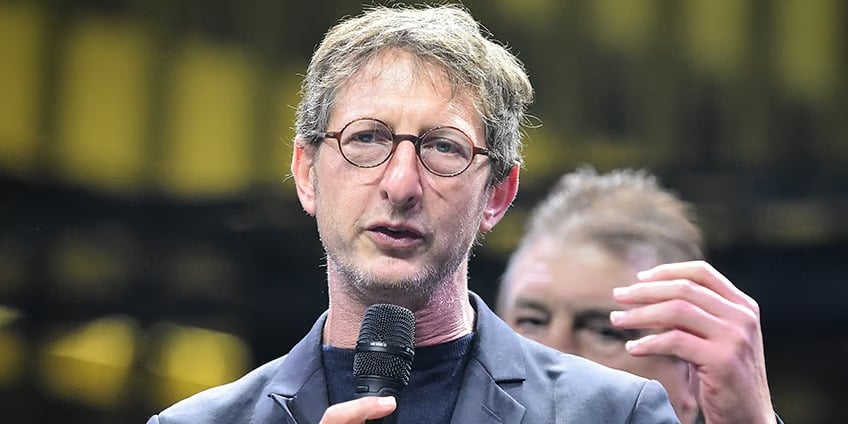
A newly released documentary has thrust Senegal’s political fractures into the international spotlight, revealing a widening rift between two of the country’s most influential leaders. The film, published this weekend, dissects the once unbreakable alliance between President Bassirou Diomaye Faye and his Prime Minister Ousmane Sonko, both key figures in the 2024 electoral victory under the PASTEF banner.
The timing of the release is no coincidence. Just two days prior, the Constitutional Council invalidated a sweeping constitutional reform passed by the National Assembly at the end of June—a decision that has deepened the animosity between the two men and reshaped the political landscape ahead of the 2029 presidential race.
From allies to adversaries: the PASTEF split
Faye and Sonko’s partnership propelled them to victory in the 2024 presidential election, with their party, PASTEF, securing an overwhelming majority of 130 seats in the 165-seat National Assembly. Yet, what was meant to be a seamless governance structure has instead become a battleground.
Analysts point to irreconcilable differences over economic policy and Senegal’s relationship with international financial institutions like the IMF as the root of their conflict. The documentary frames their feud as a “clash of titans”, with each man championing a distinct vision for Senegal’s future.
The friction has only intensified due to Sonko’s unusual accumulation of power—he serves as both Prime Minister and President of the National Assembly, effectively controlling both the legislative and executive levers. This concentration of authority has drawn sharp criticism from the presidency, which views the reform as a direct challenge to its dominance.
Constitutional reform ignites constitutional crisis
On June 29, 2026, the National Assembly approved a contentious constitutional reform designed to expand parliamentary powers. The proposed changes included prohibiting the president from leading a political party and replacing the Constitutional Council with a nine-member Constitutional Court. The reform also lacked provisions for funding the new court, a detail that would later prove decisive.
President Faye swiftly challenged the reform’s legitimacy, filing an appeal with the Constitutional Council on July 7. The Council delivered its verdict on July 10, striking down the reform on procedural grounds and citing the absence of financial planning for the proposed court. The decision, while a temporary setback for Sonko, has done little to ease the underlying tensions.
Sonko responded with a terse statement declaring the ruling “must be respected by all.” Yet, the ambiguity of his words left many questioning whether this was a call for unity or a veiled threat. The standoff between the two leaders shows no sign of abating, with neither willing to yield ground.
Senegal’s democratic reputation under scrutiny
The international coverage of this crisis underscores the global interest in Senegal’s political stability. Often regarded as a model of democratic resilience in West Africa, the country is now facing unprecedented institutional turmoil. With a population of nearly 19 million, Senegal remains a critical economic and diplomatic partner for France and other regional players.
Local media outlets have closely followed the fallout from the reform’s invalidation, highlighting the depth of the divide at the highest levels of government. Some observers have gone so far as to describe the Faye-Sonko conflict as a “summit duel”, a phrase that has gained traction in political discourse.
Institutional power play: a rare configuration
Senegal operates as a presidential republic, where the head of state traditionally wields significant authority. The election of Bassirou Diomaye Faye in 2024 marked a historic shift, driven by the momentum of PASTEF and Sonko’s enduring popularity.
However, the current arrangement—where the Prime Minister also presides over the National Assembly—is highly unconventional. This dual role has concentrated legislative and executive power in the hands of one individual, sparking fears of an imbalance that could undermine the presidency. Faye’s pushback against the reform reflects a broader struggle to preserve the traditional balance of power in Senegalese governance.
The country is also grappling with pressing economic challenges, including public debt management and negotiations with the IMF. The disagreements between Faye and Sonko on these fronts reveal deeper strategic divides that extend beyond mere political rivalry.
What’s next for Senegal’s political future?
The upcoming local elections in 2027 and the 2029 presidential race loom large over this crisis. Analysts warn that the Faye-Sonko rift could redefine the political landscape, potentially fragmenting PASTEF or sparking new alliances.
The party’s overwhelming parliamentary majority complicates matters further. Neither leader can govern effectively without the other, raising the stakes of their feud. The question of who will ultimately control PASTEF’s machinery has become a central issue, with implications for the party’s future and Senegal’s political direction.
The documentary serves as a stark reminder that this crisis is not a fleeting episode but the beginning of a prolonged power struggle. The next few months will be critical in determining whether the two men can coexist or if their alliance will collapse entirely. While the Constitutional Council’s ruling has provided a temporary reprieve for Faye, the underlying conflicts remain unresolved. Senegal’s political scene is entering a period of uncertainty, closely watched by regional and international partners.