Key facts
- Dismisal: Ousmane Sonko was removed as Prime Minister by President Bassirou Diomaye Faye on May 22, 2026
- Warning: On July 12, 2026, in Mbacké, Sonko announced plans to file a no-confidence motion against Ahmadou Al Aminou Lô’s government
- Endorsement: Ten of the sixteen mayors in Mbour district publicly backed President Faye on July 12
- Party launch: President Faye will hold the founding congress of his new political party at Dakar Arena on August 8, 2026
Sharp rhetoric erupts in Touba-Mbacké
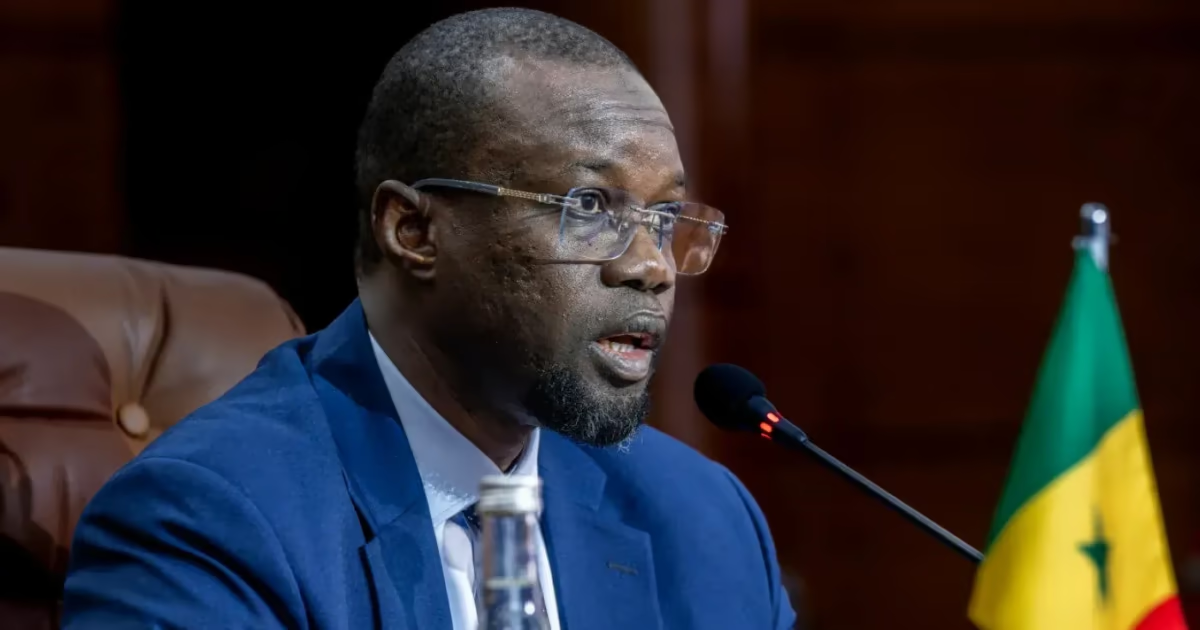
Political temperatures are rising sharply in Senegal’s ongoing power struggle. Speaking at a July 12 gathering in Mbacké, Ousmane Sonko—now Assembly president—delivered a scathing critique of President Bassirou Diomaye Faye’s administration. The Pastef leader accused the executive of abandoning the sovereign renegotiation of oil, gas and mining contracts, a central campaign pledge of their shared coalition.
His remarks, rapidly circulating across social media the next day, also targeted what he described as systemic corruption within state institutions. The warning was unambiguous: Sonko threatened to file a no-confidence motion to force the resignation of Prime Minister Ahmadou Al Aminou Lô, appointed on May 25 following a presidential decree.
Schism deepens since late May
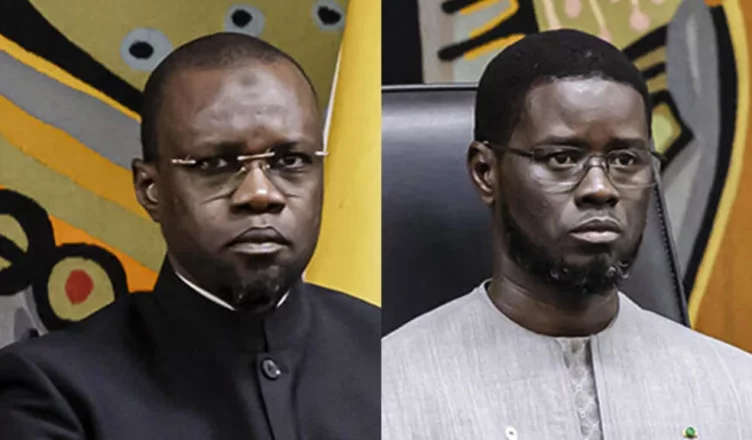
The latest salvo follows a dramatic break between the two leaders. On May 22, 2026, President Faye abruptly dismissed Sonko from the premiership, triggering a full government reshuffle. The move stunned observers, as the pair had been viewed as the twin pillars of the Pastef movement since winning the March 2024 presidential election.
Three days later, Ahmadou Al Aminou Lô assumed the premiership, while Sonko was elevated to Assembly president—a strategic but less influential role. Undeterred, the former premier has used this platform to intensify his criticisms and keep pressure on the government.
Local mayors shift allegiance to Faye
While Sonko escalates his campaign, President Faye is consolidating grassroots support. On July 12—the same day as the Mbacké rally—ten of the sixteen mayors in Mbour district publicly declared their backing for the president. The show of strength comes as Faye builds a new political base independent of the original Pastef structure.
The party’s founding congress is scheduled for August 8, 2026, at Dakar Arena, marking a formal break from Sonko’s influence and the movement that brought them to power.
Cross-cutting battles intensify
Sonko’s critique extends beyond resource contracts. He also challenged the Constitutional Council’s decision to invalidate a constitutional reform, directly implicating President Faye in the outcome. The rhetoric signals an outright opposition, despite both men originating from the same political camp.
Prime Minister Ahmadou Al Aminou Lô responded swiftly on social media, accusing Sonko of politicizing patriotism. The rebuttal underscores the administration’s resolve not to be sidelined.
Senegal’s evolving political landscape
Senegal, a nation of 18 million in West Africa’s far west, underwent a historic transition in March 2024 with the election of Bassirou Diomaye Faye. Backed by the Pastef movement and its figurehead Ousmane Sonko, Faye pledged to end the practices of the previous regime and pursue sovereign management of the country’s natural resources, particularly offshore oil and gas reserves near Dakar.
Mbacké, the site of Sonko’s July 12 rally, is a religious city in the Diourbel region and the heart of the Mouride Sufi brotherhood, a powerful force in Senegalese politics. The nearby holy city of Touba is a key electoral battleground. Sonko’s presence there is deliberate, aiming to reinforce his base in an area where President Faye is also seeking to gain ground.
Legal avenues for a no-confidence motion
The threat of a no-confidence vote is not an empty gesture. As Assembly president, Ousmane Sonko wields procedural tools to initiate such a move. However, securing the necessary majority remains uncertain. While the Pastef holds a comfortable parliamentary majority since the legislative elections, the critical question is how many deputies will follow Sonko against a president from the same movement.
The standoff between the two leaders continues, framed by broader debates over renegotiating contracts with multinational firms and defining the future political direction of Senegal after the 2024 transition. The August 8 party congress could mark a decisive turning point in a crisis that is fracturing the camp of change.