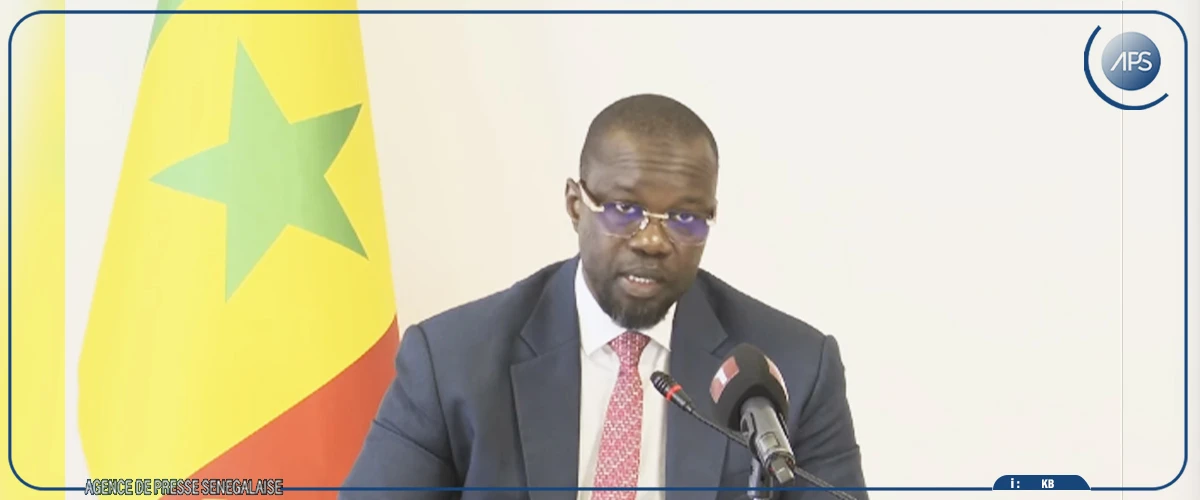
The Prime Minister of Senegal has issued a firm directive to government ministers, urging immediate action to finalize and activate ongoing infrastructure projects across the country. This call came during a high-level interministerial meeting held in Dakar, where priorities were set to accelerate the completion of critical developments.
Maritime and port infrastructure under the spotlight
Ousmane Sonko emphasized the urgent need to operationalize key maritime and port facilities, particularly through strategic public-private partnerships. Among the projects highlighted are the Foundiougne-Ndakhonga port, the Ndangane Sambou fishing quay in the central region, the upgraded Soumbédioune landing point, and the processing sites in Rufisque. Additionally, the government is pushing for the utilization of dredging equipment managed by the National Maritime Affairs Agency in Kaolack and Fatick.
Addressing stalled projects and quality standards
A total of 62 infrastructure projects have been identified as stalled, including the El Hâdj Ibrahima Niass University of the Sine-Saloum, open digital spaces, regional airports in Saint-Louis, Matam, and Kolda, the container terminal at the port of Nadayane, cold storage facilities, and the Joola memorial. The reconstruction of the Aristide Le Dantec Hospital in Dakar is also among the delayed initiatives. Sonko reassured that these projects will resume with strict adherence to quality and cost benchmarks.
Technical oversight and sustainable management
Sonko stressed the importance of integrating technical considerations into infrastructure planning, particularly regarding water, electricity, and telecommunication networks. He called on ministers to ensure proper equipment, sustainable operational models, and maintenance strategies for all ongoing projects. This includes the construction of youth and citizenship centers in Tivaouane, Mbour, Linguère, Ranérou, Bambey, Diourbel, Kaolack, and Tambacounda, which must be fully equipped and operational by November 30, 2026.
Agricultural and agro-industrial initiatives
The interministerial meeting also addressed the progress of the 11 ‘Naatangué’ village farms under development in Fatick, Kaolack, Louga, Thiès, and Tambacounda. Agropoles in Mpal, Adéane, Dioulacolon, and Mbellacadiao were also reviewed, with a focus on defining sustainable operational frameworks in collaboration with private partners to meet local needs.
Sonko advocated for exploring various public-private partnership models—such as long-term leases, concessions, rehabilitation, or administrative assignments—to mobilize additional investment resources and enhance the viability of these agro-industrial hubs. Similar models were recommended for youth centers, digital spaces, women’s centers, and agropoles to maximize their utility and economic impact.
Sports and environmental infrastructure
The Prime Minister instructed the government to explore public-private partnership opportunities for the efficient operation of national stadiums and other sports facilities. Additionally, he urged ministries overseeing national parks (Niokolo-Koba, Hann, Saloum Delta, and Djoudj), urban reserves like Technopole and Lac Rose, and other natural sites to develop mechanisms for valorizing or recycling these assets while respecting national and local regulations.
Diplomatic assets and state-owned properties
Sonko directed the Minister of African Integration, Foreign Affairs, and Senegalese Abroad to propose frameworks for leveraging or repurposing Senegalese diplomatic and consular properties abroad, ensuring alignment with national interests and the legal frameworks of host countries. A follow-up interministerial meeting will be convened to establish a clear doctrine for the valorization of this real estate portfolio.
Other assets under review include postal service properties, railway and airport sectors, highways, public universities, hospitals, and military infrastructure. Sonko emphasized the need for ministries and public entities to devise strategies for recycling or optimizing these holdings, potentially involving private sector participation for enhanced efficiency.