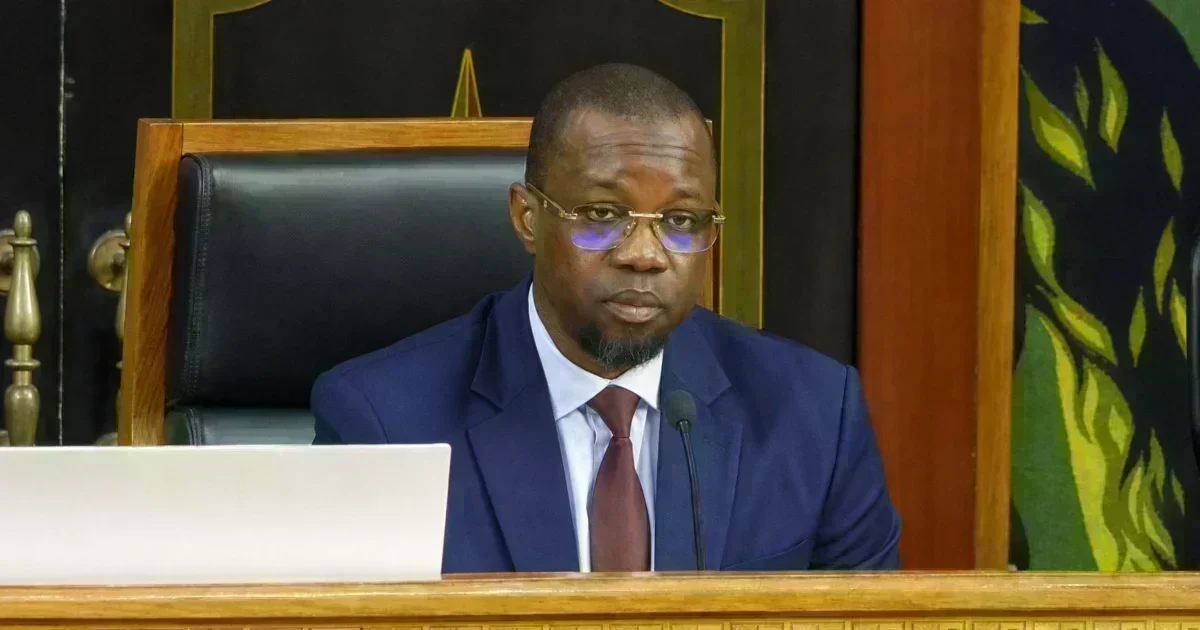
Senegal: Ousmane Sonko explains why Pastef declined new government participation
The leader of Senegal’s Pastef party, former Prime Minister Ousmane Sonko, has outlined the reasons behind his party’s refusal to join the newly formed government under President Bassirou Diomaye Faye.
During a press conference on Tuesday, June 2, Sonko cited deep-seated disagreements over policy priorities and ministerial appointments as the primary obstacles preventing collaboration. The decision reflects broader tensions between the president’s administration and the opposition-backed movement.

Policy differences block government collaboration
The refusal stems from unresolved concerns regarding the government’s approach to several critical issues. Sonko emphasized that the president’s administration has not provided sufficient clarity or commitment on key priorities outlined by the Pastef, including debt management strategies and judicial reforms.
Ousmane Sonko stated that when pressed on these matters, President Faye’s responses lacked decisive action. On debt restructuring, the president reportedly denied any prior agreements with the International Monetary Fund (IMF). On subsidies, Faye suggested a cautious approach to price adjustments rather than full transparency. Regarding the judiciary, the president described the system as flawless—a claim Sonko dismissed as unrealistic.
Sonko also highlighted the FMI’s role in shaping Senegal’s economic policies, implying that the government’s reluctance to restructure debt could hinder economic stability.
Ministerial power-sharing dispute
The debate over government participation extended to the distribution of ministerial portfolios. Sonko made it clear that the Pastef would not accept a role in the administration unless granted significant control over key ministries.
«The party will not join a government where it cannot secure at least half of the ministerial positions,» Sonko declared. This stance underscores the movement’s demand for substantial influence in shaping national policies.
Government legitimacy questioned
Sonko also raised concerns about the legitimacy of the new government, noting that only five of its members were drawn from the Pastef ranks—though he clarified that the party does not recognize these individuals as legitimate representatives.
Despite the rejection, he assured that the opposition would not initiate a censure motion unless the government took the first step to provoke conflict.
This development marks a pivotal moment in Senegal’s political landscape, as the country navigates post-election governance under President Faye’s administration.