Analyses / Afrique/s
27 mai 2026
Senegal’s political rift: president Faye and prime minister Sonko’s escalating tensions

Caroline Roussy
Directrice de recherche à l’IRIS, responsable du Programme Afrique/s
On Friday, May 22, the political landscape in Senegal shifted dramatically with the dismissal of Ousmane Sonko from his position as Prime Minister. This decision has sparked concerns of a potential political crisis, particularly given Sonko’s previous characterization of his dynamic with President Bassirou Diomaye Faye as a “soft cohabitation.” The term itself appears paradoxical when considering the deep-seated camaraderie and shared origins of the two leaders, who were perceived as profoundly close as recently as 2024.
A bond once thought unbreakable
The narrative of the two politicians, often referred to as “brothers” and allies in their struggle, began with an undeniable strength. Their paths intertwined from their student days, through their time at the prestigious École Nationale d’Administration (ENA), and into a shared career as tax and property inspectors. In 2014, their ideological and political alignment led them to co-found PASTEF (Patriotes africains du Sénégal pour le travail, l’éthique et la fraternité). By 2022, Bassirou Diomaye Faye had become the party’s Secretary-General, while Sonko set his sights on the presidential election.
The radiant, conspiratorial smiles exchanged on March 24, 2024, marked a triumphant moment. Their victory was resounding, imbued with the sweet taste of vindication after a challenging and improbable ascent to power, made even more difficult by then-President Macky Sall’s tenacious grip. Both men had endured imprisonment in Cap Manuel, their political futures seemingly sealed. Yet, within days, the tide turned. Public outcry swelled, international media converged on Dakar, and Sall, facing immense pressure, was forced to make concessions.
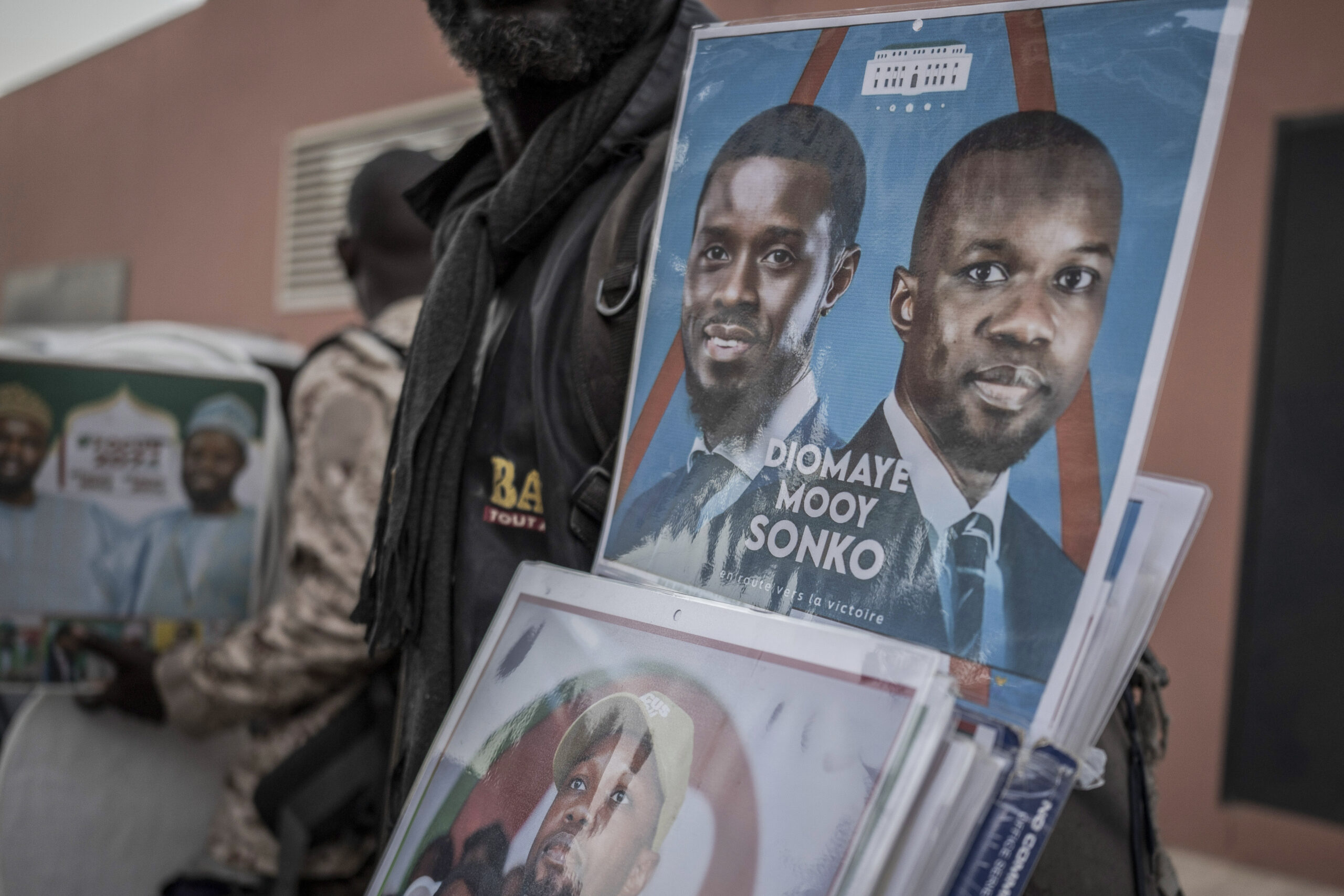
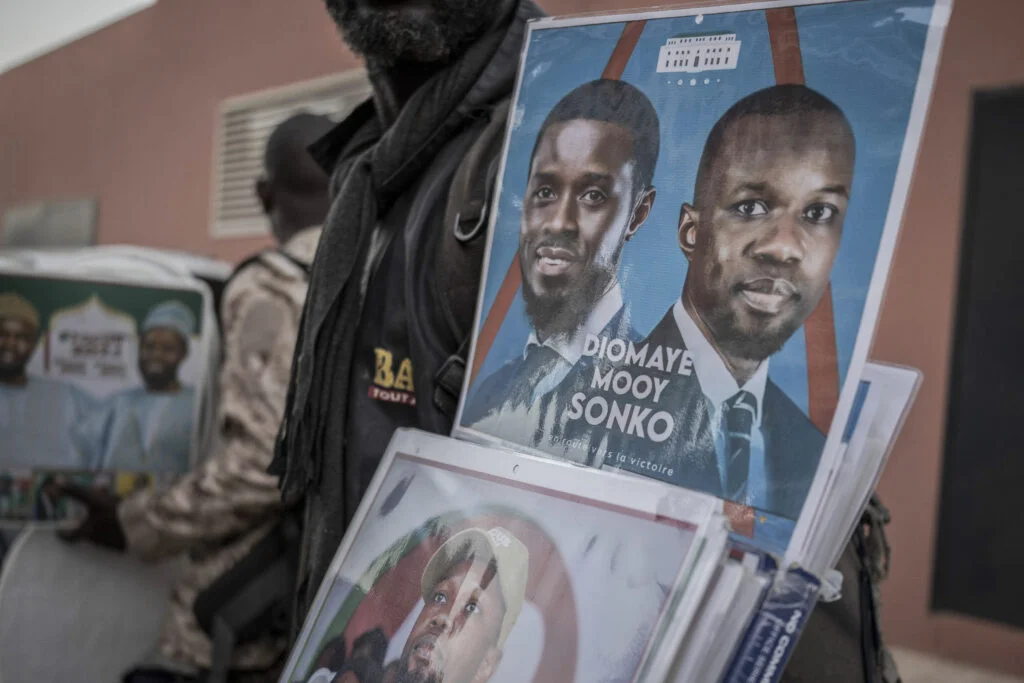
Freed from prison, the duo launched a lightning-fast campaign under the powerful slogan: “Diomaye mooy Sonko, Sonko mooy Diomaye” (Diomaye is Sonko, Sonko is Diomaye). With Ousmane Sonko’s candidacy invalidated, he made the strategic choice to back his most loyal collaborator for the nation’s highest office.
The victory was decisive and undeniable. At that moment, nothing seemed capable of tearing the two men apart. However, many observers believed that the true victor of the presidential election was Sonko, not Faye, who remained largely unknown to the broader public at the time.
Ousmane Sonko had already established himself as a formidable political force in 2019, surprisingly emerging as the third-place candidate in that year’s presidential race. Despite facing legal battles, including the Sweet Beauty affair, he maintained widespread popularity, particularly among the youth, who viewed him as an idol and a role model. Over the years, he forged a unique political and emotional connection with a segment of the Senegalese population, fueled by a narrative of radical change, resistance, and the promise of a new era.
In this context, Diomaye Faye’s path seemed less certain. Without the immense popular support galvanized by Sonko, his ascension to the presidency would likely never have materialized. Nevertheless, he embraced the mantle of leadership.
The dissolution of political partnerships: a Senegalese pattern?
History reveals that Senegalese political tandems, despite often being founded on strong, seemingly unbreakable loyalties, have rarely withstood the ultimate test of power. This recurring theme suggests a deeper pattern within the nation’s political dynamics.
A prominent example is the partnership between Léopold Sédar Senghor and Mamadou Dia. These two figures, allies since the late 1940s, collaboratively shaped the independent Senegal. Following the dissolution of the Mali Federation in August 1960, Senghor became President and Dia assumed the role of President of the Council. Initially presented as complementary, their visions diverged over the organization of power, economic policies, and the relationship with France. The institutional crisis of December 1962 culminated in Dia’s arrest on charges of attempted coup d’état, leading to his imprisonment for over a decade.
Similarly, the alliance between Abdou Diouf and Moustapha Niasse, a partnership nurtured by Senghor, began to fray within months.
However, it was arguably under Abdoulaye Wade’s presidency that conflicts of loyalty and subsequent incarcerations resurfaced with particular intensity. Wade and Idrissa Seck had championed the call for change (sopi) together. Seck, long considered Wade’s political heir, witnessed their relationship deteriorate, leading to his political marginalization and eventual imprisonment in 2005 over the Thiès construction projects affair. He was acquitted months later, prompting thousands to flood the streets of Dakar, chanting