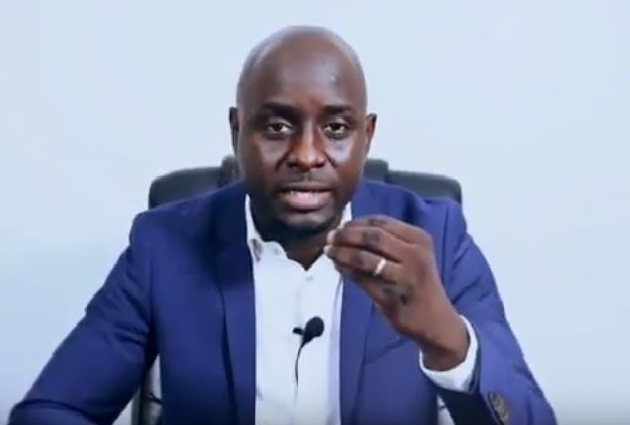
The recent technical agreement reached between Sénégal and the International Fund Monetary (IMF) has sparked intense political discussions. Thierno Bocoum, who leads the Agir-Les Leaders movement, has publicly called on the government to clarify the terms of this deal, specifically demanding full transparency regarding debt management and the conditions attached to the new program.
The former parliamentarian is urging the executive branch to release the memorandum of economic and financial policies. Alternatively, he proposes submitting this critical document to the National Assembly to foster an open legislative debate on the commitments being made on behalf of the Senegalese citizens.
However, Thierno Bocoum’s criticism extends beyond the current administration. He also targets Ousmane Sonko and Abdourahmane Sarr, pointing to them as key figures whose past actions contributed to the country’s current financial hurdles with the IMF and its national debt.
Regarding Ousmane Sonko, the opposition leader highlights his tenure as Prime Minister from April 2, 2024, to May 22, 2026, placing him at the center of the IMF discussions. Thierno Bocoum points out that Sonko was actively involved in the talks leading up to the suspension of the previous financial support program.
He also pointed to the September 2024 public disclosures concerning alleged discrepancies in national debt figures. According to Bocoum, this specific communication triggered the halt of the IMF program and worsened Sénégal’s financial position.
Additionally, the head of AGIR-Les Leaders raised concerns about the government securing loans on the regional market at interest rates that far exceed those of standard concessional financing.
Abdourahmane Sarr also under scrutiny
Abdourahmane Sarr, the former Minister of Economy, Planning, and Cooperation, has also drawn criticism from Thierno Bocoum. The political leader highlighted what he perceives as a significant shift in Sarr’s public stances concerning the sustainability of the national debt.
He recalled that the former minister previously maintained that the debt was manageable and defended the credibility of the country’s debt-reduction strategy. However, Sarr recently acknowledged that the authorities had to request specialized intervention to restore that very sustainability.
Ultimately, Thierno Bocoum argues that all decision-makers involved in these negotiations must take responsibility for the ongoing economic challenges.
These demands for accountability surface just as Sénégal concludes a pivotal phase in its international relations, securing a preliminary technical agreement with the IMF for a fresh economic and financial framework.