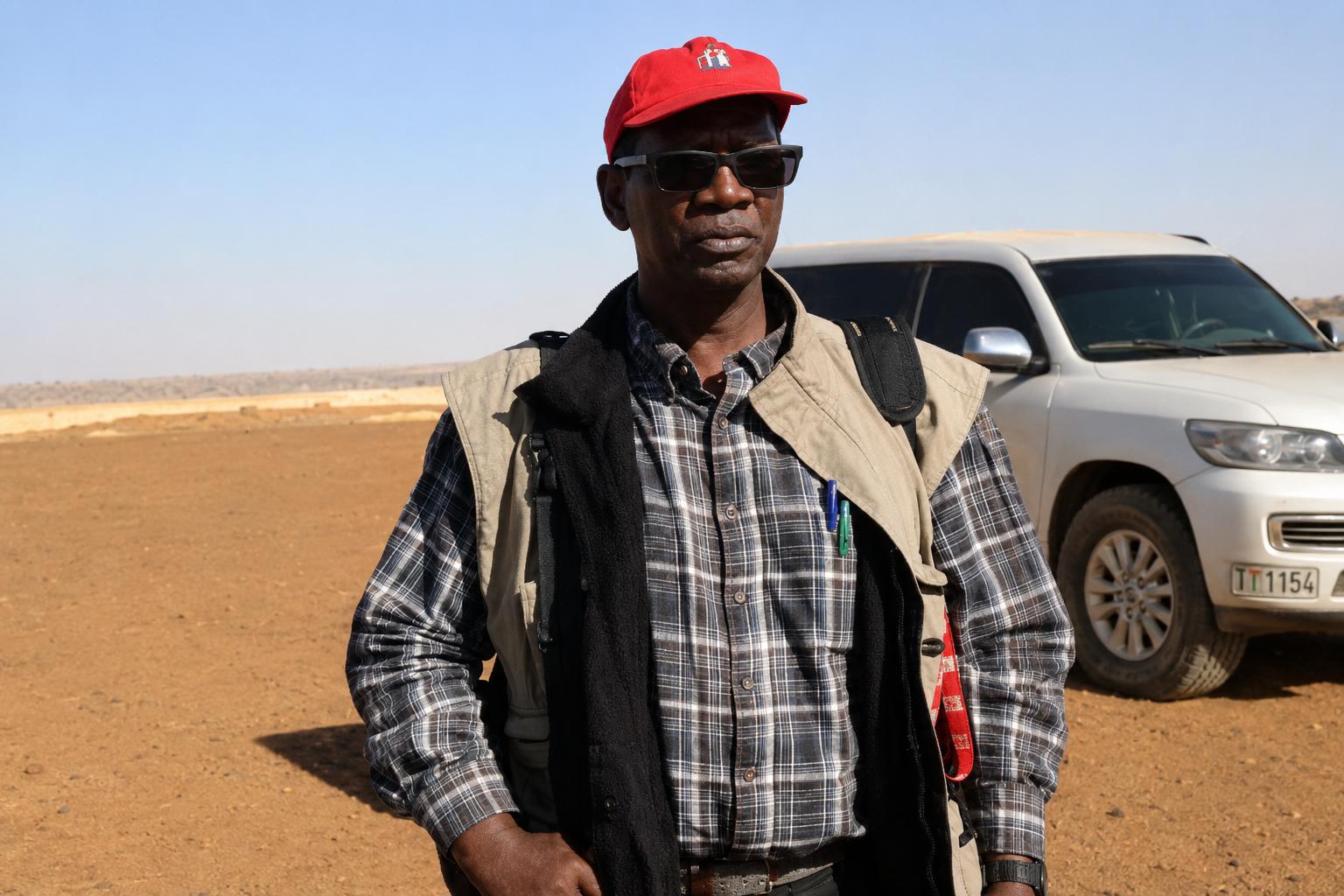
The prominent journalist and director of Radio Télévision Saraounia, Moussa Kaka, vanished without a trace on the evening of Monday, August 31, 2026 in Niamey. His sudden disappearance—occurring just hours after leaving his office—has sparked widespread concern, with no signs of his vehicle or any medical records confirming his whereabouts.
Was it really an abduction?
While some diplomatic circles cautiously refer to his case as a “disappearance,” the reality unfolding in Niamey tells a far grimmer story. In a city under heavy surveillance, a journalist of Moussa Kaka’s stature does not vanish into thin air—he is taken. The circumstances surrounding his vanishing, from the timing to the lack of communication, align with a deliberate and targeted abduction.
His phones remain unreachable, no hospital has registered his admission, and his vehicle has not been located. These facts leave little room for doubt: this was no accidental disappearance but a calculated act of intimidation.
An escalation in repression against independent voices
Moussa Kaka’s abduction follows a disturbing pattern of suppression targeting journalists who dare to challenge the status quo. As a long-standing correspondent for Radio France Internationale (RFI), his reporting has consistently exposed uncomfortable truths, making him a persistent thorn in the side of the authorities.
With no ransom demands, no claims of responsibility, and no official statements after nearly three days, the silence from security forces speaks volumes. It suggests a deliberate strategy to obscure the truth while gauging public and international reactions—a tactic often used to test the limits of accountability.
Niamey’s climate of fear and political unrest
The abduction coincides with a period of heightened tension in Niger’s capital, where dissent is met with swift and repressive measures. For those in the media, the message is clear: silence the last remaining independent voices or face the consequences.
The international community, including press freedom advocates, has condemned the incident, but the urgency of the situation demands more than concern—it requires decisive action. Human rights organizations have repeatedly warned that such tactics not only violate fundamental freedoms but also undermine democratic principles.
Each passing hour without news of Moussa Kaka’s condition or location deepens the gravity of the situation. The burden of responsibility now rests squarely on the shoulders of those in power in Niamey. The global press community and Niger’s citizens alike demand his immediate and unconditional release.