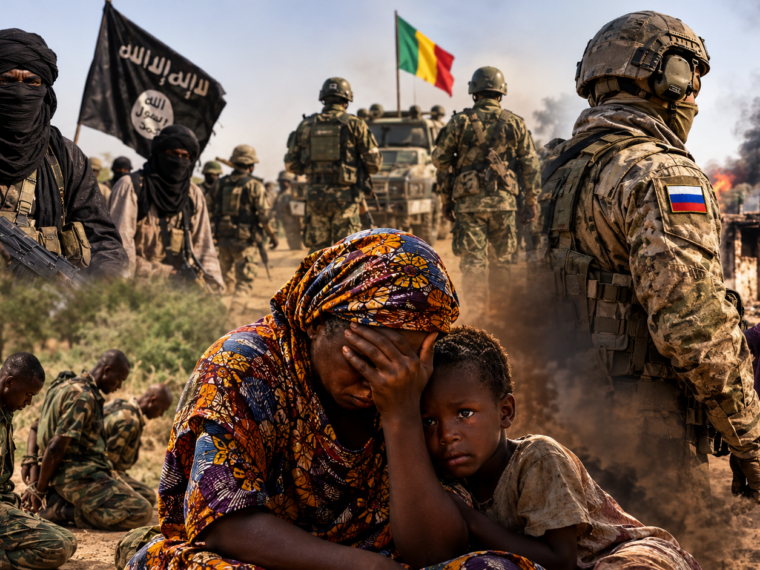
Mali’s security landscape is witnessing a disturbing paradox: while soldiers fall victim to jihadist ambushes, civilian communities face a parallel crisis amid military operations backed by Africa Corps. A recent report highlights how military actions, ostensibly aimed at curbing Islamist militants, are inadvertently escalating civilian casualties a trend raising urgent questions about accountability and protection.
Soldiers and civilians caught in crossfire
The conflict in Mali has entered a dangerous phase where state forces are simultaneously targeted by the JNIM and scrutinised for alleged abuses against non-combatants. Reports indicate that military operations, conducted with external support, have resulted in civilian fatalities, compounding the suffering of communities already stricken by years of violence. This dual pressure underscores the fragility of efforts to stabilise the region.
Jihadist attacks on the rise
Despite counterterrorism operations, the JNIM continues to inflict heavy losses on Malian security forces. High-profile ambushes on troops not only demonstrate the group’s resilience but also divert attention from the protection of civilians. The tragic irony lies in the fact that those sworn to defend populations are themselves vulnerable, yet their response to this threat risks further harming the very communities they are tasked to safeguard.
External support under scrutiny
The involvement of Africa Corps in Mali’s military strategy has added complexity to the crisis. While the partnership aims to strengthen counterterrorism capabilities, documented cases of civilian casualties during joint operations have cast doubt over the safeguards in place. The line between effective combat and indiscriminate force has blurred, prompting calls for greater oversight and transparency in engagements where foreign personnel are present.
When security strategies fail civilians
Mali’s approach to security hinges on territorial control and military dominance. Yet, the tragic reality persists: civilians are bearing the brunt of a conflict that shows no sign of abating. The disconnect between operational achievements and humanitarian outcomes reveals a critical flaw military victories do not equate to civilian safety if abuses go unaddressed and victims go unheard.
Pathways to accountability and protection
Ending this cycle demands more than military declarations and territorial claims. It requires an uncompromising commitment to international humanitarian law, where civilian protection is not an afterthought but a guiding principle. The execution of soldiers by jihadists must be met with condemnation, while allegations of civilian harm by state forces warrant impartial investigations. Without justice, trust erodes, and the foundations of security remain shaky.
The true measure of Mali’s security strategy will not be found in the body count of militants or the number of operations conducted. It will be measured in the lives saved, the communities sheltered, and the justice delivered. Until then, the narrative of progress will remain overshadowed by the tragedy unfolding in villages and towns across the country.
By Agnès Mvogo — Journalist