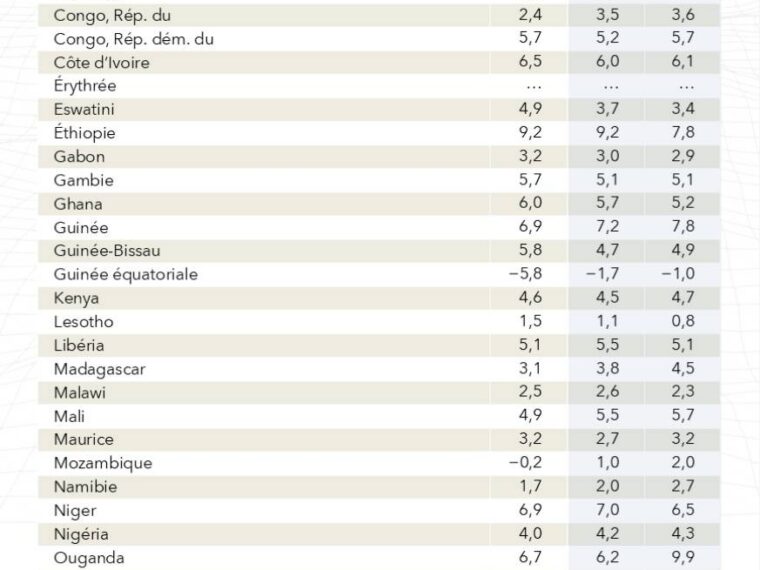
The latest International Monetary Fund (IMF) economic outlook has placed Benin in a league of its own, with growth projections of 7% for 2026 and 6.8% for 2027 smashing regional averages by a wide margin. While Sub-Saharan Africa braces for a modest 4.5% expansion across the same period, Benin is defying expectations and emerging as a pace-setter on the continent.
From laggard to leader: Benin’s remarkable economic turnaround
The West African nation has quietly rewritten its economic narrative. After clocking an 8.1% surge in real GDP growth in 2025 the strongest in the region Benin is now projected to extend its upward trajectory. Its growth figures not only outpace regional peers but also place it among Africa’s top three fastest-growing economies, according to the IMF’s latest data tables.
This unprecedented performance is no statistical fluke. Benin becomes the sole West African representative in the continental top tier, underscoring the depth of its economic transformation. Analysts point to continued policy consistency, targeted public investment, and a push toward economic diversification as the key drivers behind this upward spiral.
Comparing growth: Benin vs. the Sub-Saharan norm
The stark contrast between Benin and its neighbors is impossible to ignore. While the broader Sub-Saharan African region hovers around the 4.5% growth ceiling in both 2026 and 2027, Benin’s figures stand almost two percentage points higher in 2026 and nearly 2.3 points higher in 2027. This gap signals a structural advantage that positions the nation as a magnet for foreign direct investment and a hub for regional trade expansion.
The economic momentum carries ripple effects across sectors. Infrastructure development, public service enhancement, and private sector engagement all benefit from the surplus revenue generated by robust growth. In turn, this feeds into job creation, increased household spending, and a more resilient economic ecosystem capable of withstanding external shocks.
Beyond numbers: turning growth into shared prosperity
While headline growth rates capture attention, the real test lies in translating these gains into tangible social progress. High growth alone does not guarantee equitable wealth distribution or widespread poverty reduction. Benin’s next challenge is ensuring that the benefits of economic expansion reach every stratum of society, particularly the youth and underserved communities.
Key priorities include:
Skills development: expanding vocational training programs to align with market demands and prepare workers for higher-productivity roles.
SME empowerment: fostering an enabling environment for small and medium-sized enterprises to spur job creation and innovation.
Industrialization: accelerating industrial policy reforms to shift from raw material export dependence toward higher-value manufacturing and processing industries.
Social safety nets: strengthening social protection systems to cushion vulnerable populations amid economic transitions.
These steps will determine whether Benin can transform its economic success story into a sustainable model of inclusive development.
Regional implications: a benchmark or a cautionary tale?
Benin’s ascent raises questions across West Africa. Is it a replicable model, or does its success hinge on unique local conditions? The answer lies in the details: policy continuity, investment in human capital, and diversification beyond traditional sectors like agriculture. Neighbors are closely watching, not to mimic blindly, but to extract lessons on what drives resilience and sustainable growth.
The IMF’s spotlight offers Benin a valuable opportunity to reinforce its credibility with investors, development partners, and regional bodies. Yet sustained performance hinges on more than table-top figures. The nation must demonstrate that economic vibrancy translates into improved living standards, reduced inequality, and a stable macroeconomic framework capable of weathering global uncertainties.
Looking ahead: can Benin sustain the momentum?
For Benin to cement its status as West Africa’s economic front-runner, it must confront several key challenges. Inflation control, fiscal discipline, and the avoidance of debt traps remain critical. Additionally, ongoing efforts to modernize agriculture, deepen financial inclusion, and enhance regional trade integration will be vital to sustaining growth without overheating.
The coming years will reveal whether Benin’s current trajectory is a fleeting high or the foundation of a new era of prosperity. One thing is certain: if managed with foresight, the country’s economic momentum could serve as a blueprint for balanced, sustainable development across the continent.
By Thomas Nkoulou — Journalist