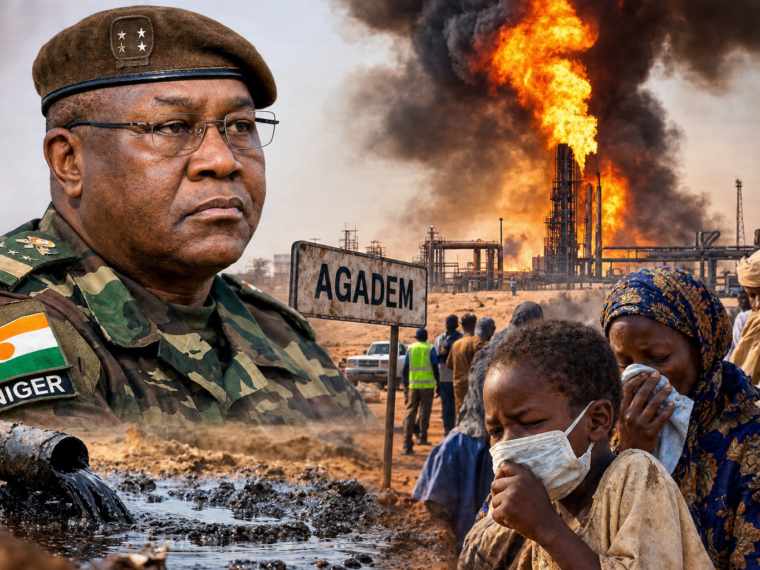
The unfolding crisis in Agadem, Diffa region, demands urgent attention. A severe crude oil and gas eruption described as exceptional by Niger’s petroleum ministry has triggered immediate concerns over both industrial safety and the well-being of nearby communities. With containment efforts still incomplete, one pressing question remains unanswered: what are the risks facing residents and what steps are being taken to mitigate them?
Uncontrolled industrial incident exposes communities to hazardous substances
The uncontrolled release of crude oil and associated gases is far from trivial. Depending on their chemical composition, concentration levels, and exposure duration, these substances can cause eye and skin irritation, headaches, dizziness, and respiratory difficulties. Certain hydrocarbon compounds may also lead to more severe health effects. Beyond direct exposure risks, soil and water contamination pose additional threats to the daily livelihoods of local populations. In such a scenario, the priorities must be unambiguous: secure the area, minimize exposure to toxic substances, monitor potential contamination, and provide clear guidance to residents on safety precautions.
The stakes: balancing economic gains with public safety obligations
Petroleum extraction holds significant economic potential for Niger, but it comes with substantial responsibilities. While revenues from hydrocarbon exports contribute to national development, they cannot be considered a success if neighboring communities face uncontrollable health and environmental risks without access to reliable information or protective measures. The true measure of resource sovereignty lies not only in control over extraction but in the state’s capacity to prevent disasters, uphold safety standards, and safeguard citizens when industrial incidents occur.
Does the Tiani administration have the capacity to manage this industrial emergency?
The government of President Abdourahamane Tiani has repeatedly emphasized national sovereignty, resource autonomy, and the Nigerien people’s right to self-determination. Yet sovereignty is not demonstrated solely through policy declarations or resource nationalization it is proven in crisis response. Does the administration possess the technical, human, and logistical resources necessary to manage an industrial emergency of this magnitude? The question is critical, especially given official acknowledgment that the incident is exceptional and containment efforts remain incomplete.
Merely launching an investigation into the causes of the accident is insufficient. Immediate action is required: transparent communication of health risks, deployment of environmental monitoring systems to assess air, soil, and water contamination, and implementation of medical evaluations for potentially exposed individuals. Local residents must receive clear safety instructions, and authorities need to ensure that intervention protocols are appropriate for this type of disaster.
Immediate measures needed to protect health and restore trust
It remains unclear whether communities near the Agadem site have received precise safety guidance, whether health assessments are being organized for those at risk, or whether an effective emergency response framework is in place. These concerns are not political they are fundamentally about the protection of citizens and the accountability of those charged with their safety.
The government must provide concrete answers without delay. What substances were released and in what quantities? Have comprehensive analyses been conducted to assess health and environmental risks? What steps have been taken to prevent prolonged exposure of residents? Most importantly, what measures are being implemented to prevent the situation from worsening? Until such information is made publicly available with clarity and precision, public anxiety will remain justified not because harm has been definitively proven, but because an uncontrolled industrial incident demands the highest level of vigilance and transparency.
Beyond rhetoric: action defines resource sovereignty
Niger’s citizens deserve more than assurances of economic progress. They deserve to live in an environment where industrial risks are rigorously assessed, where preventive measures are enforced, and where lives are protected not after harm occurs, but before it does. The true test of governance is not in controlling resources, but in ensuring that those resources do not endanger the people who live near them. Without decisive action, the promise of sovereignty rings hollow when faced with an industrial catastrophe on the doorstep.
By Agnès Mvogo — Journaliste / Rédacteur