In the corridors of power in Niamey, a financial storm is brewing around Niger’s oil sector. Leaked details from a high-stakes meeting on October 12, 2026—held behind closed doors at the Prime Minister’s office—have exposed a web of mismanagement, questionable penalties, and a government committee spiraling out of control.
The breaking point: when meetings turn into cash cows
The Prime Minister, Ali Mahaman Lamine Zeine, chaired the session under the guise of stabilizing the oil industry and securing fuel supplies for the nation. But behind the closed doors of the Prime Minister’s office, the meeting collapsed under the weight of its own contradictions. A high-ranking insider, whose identity is being withheld for their safety, has revealed the explosive truth behind the committee’s dysfunction.
What began as a routine crisis management forum has morphed into a financial black hole, where public funds are siphoned off under the guise of governance. The insider’s account paints a damning picture: a system where financial interests have hijacked public service, leaving Niger’s oil sector—and its citizens—paying the price.
SORAZ draws the line: the revolt over endless committee costs
The clash escalated when the government demanded that the Zinder Refinery (SORAZ) pay 12 million FCFA in session allowances for a single day of the committee’s meeting. This was not an isolated demand. According to the insider, SORAZ had already footed the bill for eight failed meetings, three of which were presided over by the Prime Minister himself.
The refinery’s leadership refused, calling out the committee’s inefficiency and lack of results. The insider’s remarks are damning: “Each meeting drained tens of millions from SORAZ, yet no technical or financial solutions were ever delivered. They finally said enough is enough.”
To perpetuate this lucrative arrangement, the committee allegedly inserted a clause allowing it to extend its mandate indefinitely, citing persistent sector instability—despite having failed to resolve a single issue in over a year.
418 Billion FCFA: the vanishing billions from SONIDEP to the Presidential Palace
The dispute centers on a staggering debt: 418 billion FCFA owed by the Nigerien Oil Products Company (SONIDEP) to SORAZ. During the October 12 meeting, government representatives arrived unprepared, unable to present audited financial records. “They showed up empty-handed, citing news clippings instead of certified balance sheets,” the insider fumed.
Where did the money go? The insider’s breakdown of the financial abyss is staggering:
- 12% of the funds were cross-claims with the national electricity company, NIGELEC;
- 18% were unauthorized withdrawals earmarked for the military;
- 70% were direct cash outflows from SONIDEP, with part of the funds allegedly diverted to the Presidential Palace.
With no clear justification for the disappearance of these vast sums, a debt erasure strategy is reportedly underway—one that could plunge SORAZ into deeper financial distress.
Fabricated fines: the trap set for SORAZ
To mask the 418 billion FCFA debt, the committee appears to be inflating penalties against SORAZ. The insider explains the scheme: penalties imposed on the refinery have skyrocketed from 6 billion to 76 billion FCFA. But the strategy goes further.
The committee is exploiting cross-claims between the state, SONIDEP, NIGELEC, SORAZ, and their Chinese partner CNPC to saddle the refinery with an additional 200 to 400 billion FCFA in fictitious penalties. “The goal is crystal clear: cook up fake debt for SORAZ to offset the 418 billion FCFA SONIDEP cannot repay,” the insider stated.
Production sabotage: the hidden cost of financial warfare
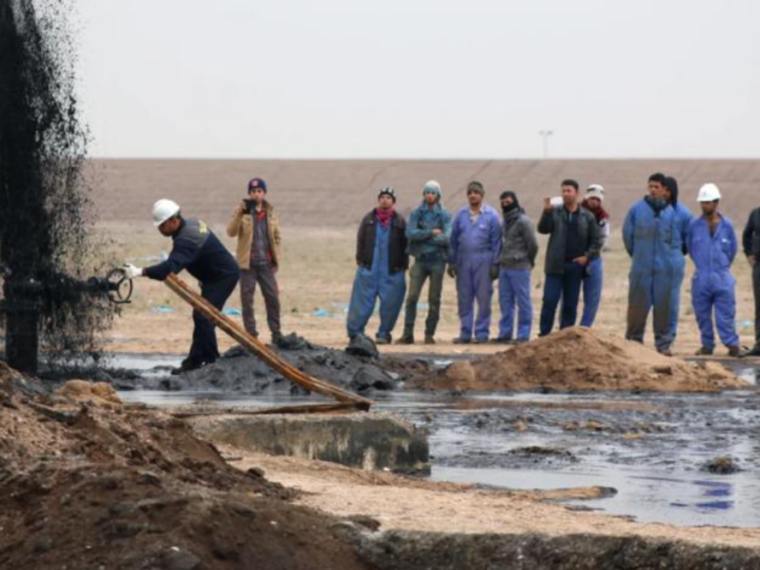
The fallout from this financial chaos is crippling the Zinder refinery’s operations. While officials promised a production rebound to 20,000 barrels per day, output has plummeted to just 12,000 barrels.
According to the insider, Algerian contractors—acting on direct orders from Nigerien authorities—intervened physically on the refinery’s valves. The result? Critical overheating issues that jeopardized both equipment and personnel safety. A scheduled major maintenance shutdown, originally planned for October, has been postponed until May, exacerbating the crisis.
The paradox of shortages: where 1,000 barrels daily vanish
Despite the refinery’s reduced output, Niger faces severe fuel shortages. Official figures reveal a glaring inconsistency: with production at 12,000 barrels and national consumption at 11,000 barrels, the country should have a surplus of 1,000 barrels daily.
So where does this surplus disappear? The insider points to glaring gaps in volume tracking, shadowy flows through the Algerian corridor, and murky agreements with the Ader refinery. The lack of transparency fuels suspicions of parallel networks siphoning off resources.
The Prime Minister’s office and SONIDEP declined to comment on these allegations. Yet one truth is undeniable: behind the nation’s fuel crisis lies a governance failure that has trapped Niger’s oil wealth in a cycle of contradictions.