The long-awaited Vêdoko interchange in Cotonou has reached a critical turning point with Japan’s latest $18 million funding injection, accelerating construction of a vital traffic artery that could redefine urban mobility in Benin’s economic hub.
Japan’s $18 million commitment unlocks phase two of Cotonou’s traffic solution
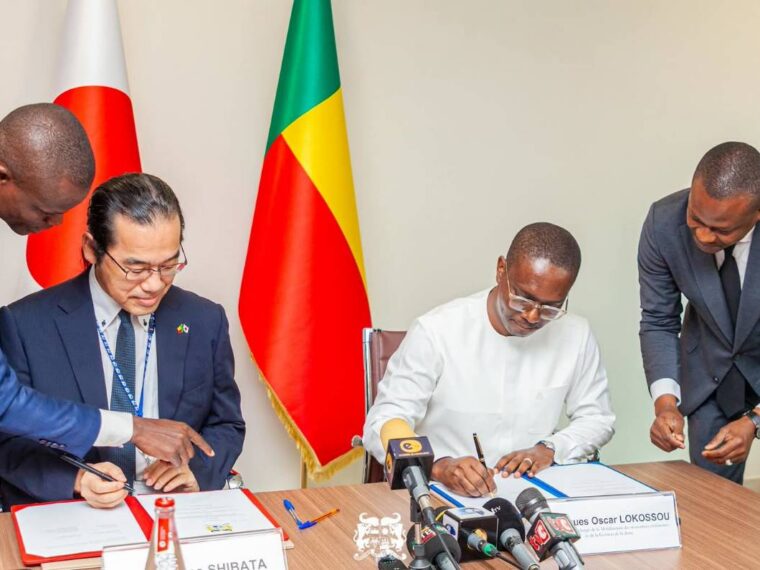
In a decisive move to tackle one of West Africa’s most notorious traffic bottlenecks, the governments of Benin and Japan finalized an additional $18 million grant on October 9, 2026, bringing the total investment in the Vêdoko interchange to $42 million. This funding surge marks the second phase of construction, following the project’s initial launch in October 2025.
The expanded budget now stands at 26.228 billion West African CFA francs, a significant leap from earlier projections. The new funds will prioritize the construction of a critical east-west flyover and supporting infrastructure, including drainage and roadway enhancements, to ensure seamless integration with Cotonou’s existing transport network.
From gridlock to flow: how the Vêdoko interchange aims to reshape daily life
For the thousands of commuters who navigate Vêdoko’s chaotic crossroads daily, the promise of an interchange is more than just infrastructure—it’s a lifeline. The junction currently serves as a convergence point for buses, taxis, motorbikes, and private vehicles, creating daily standstills that ripple through the city’s economy.
Workers face unpredictable delays, small businesses struggle with unreliable deliveries, and public transport operators battle inconsistent schedules. The new interchange is designed to eliminate these disruptions by separating conflicting traffic flows and introducing structured lane management.
Anticipated benefits include:
- Reduced commute times for professionals and students
- More predictable schedules for delivery drivers and traders
- Lower fuel consumption and emissions from idling vehicles
- Improved safety for pedestrians and motorcyclists
Construction underway: what residents need to know
With construction already in progress, Vêdoko’s transformation is visible—but so are the temporary disruptions. Road closures, detours, and lane restrictions are inevitable during large-scale infrastructure projects. Authorities have emphasized the need for clear communication and real-time updates to help residents adapt their travel plans.
To minimize inconvenience, the project team has implemented phased construction schedules and designated alternative routes. However, patience will be essential as crews work to complete the flyover and ancillary systems without compromising safety or quality.
Beyond concrete: Japan’s role in Benin’s urban development
The partnership between Benin and Japan extends beyond financial support. The project includes technical collaboration between Japanese and Beninese engineering firms, fostering knowledge transfer and long-term capacity building in urban infrastructure development.
This initiative aligns with broader efforts to modernize Cotonou’s transport network, which has struggled to keep pace with rapid urbanization. A well-functioning interchange could reduce economic losses tied to traffic congestion—estimated in the millions annually—and improve access to jobs, schools, and markets.
Will the Vêdoko interchange deliver on its promise?
While the funding breakthrough is a cause for optimism, the true test lies in execution. The interchange’s success hinges on three key factors:
- Timely completion: Delays could erode public trust and prolong traffic woes.
- Seamless integration: The flyover must connect smoothly with surrounding roads to avoid creating new bottlenecks.
- Sustainable maintenance: Post-construction upkeep will determine whether the investment yields long-term dividends.
For now, Cotonou’s residents are watching closely. The Vêdoko interchange isn’t just another road project—it’s a potential turning point for a city where mobility defines daily life. If completed as planned, it could set a new standard for urban infrastructure in West Africa.