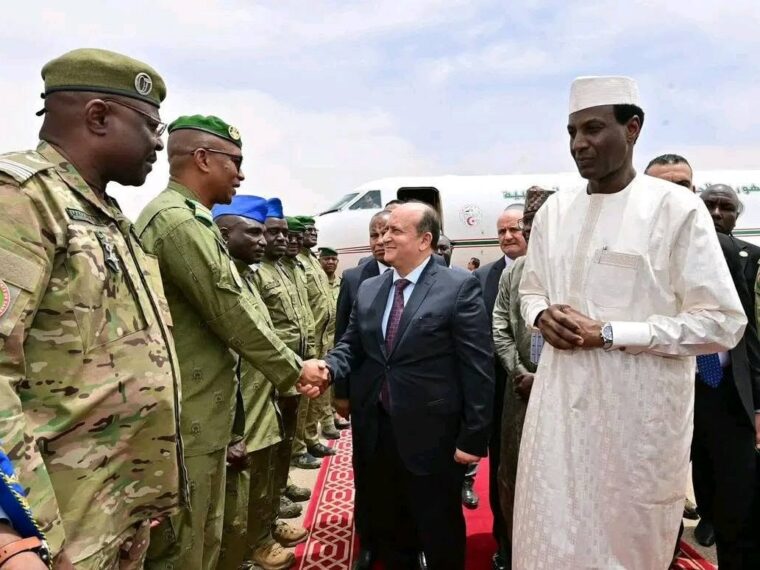
The dusty frontier outpost of Assamaka has become the epicenter of a digital revolution in the Sahel. On October 6, 2026, Algeria and Niger inaugurated their trans-Saharan fiber optic link—a milestone that transcends mere infrastructure, marking a decisive shift in regional connectivity dynamics. The 1,031-kilometer Niger section, financed by the African Development Bank, now connects Agadez to In Guezzam, bridging the gap between landlocked Niger and Algeria’s robust international bandwidth infrastructure.
The Launch That Could Redraw the Sahel’s Digital Map
Assamaka wasn’t chosen by coincidence. This remote border crossing, where the Algerian and Nigerien telecommunications ministers stood side by side during the commissioning ceremony, symbolizes more than a connection point—it represents a new era for Sahelian digital sovereignty. The project, part of the Trans-Saharan Fiber Optic Backbone (DTS), is designed to eventually link Algeria, Niger, Nigeria, Chad, Mali, and Mauritania, offering a lifeline for nations struggling with enclavement.
A Financial Puzzle Beyond Bilateral Agreements
The narrative of a simple Algeria-Niger deal oversimplifies a complex financial architecture. The 43 million euros allocated to Niger’s segment—funded largely by the African Development Bank through a mix of credits, grants, and national contributions—covers the fiber optic network, a Tier III data center, and an 88-kilometer local loop. Initial funding for the multinational project, approved in 2016, totaled 62.262 million accounting units, blending African, European, and state contributions. No public records indicate direct payments from Niger to Algeria for the link. Instead, the real value lies in access to international bandwidth—a game-changer for Niamey.
Niger’s Digital Liberation: Breaking Free from Enclavement
For Niger, a landlocked nation dependent on foreign connectivity routes, the fiber optic backbone is a strategic breakthrough. The benefits extend beyond faster internet:
- Enhanced international bandwidth access, reducing reliance on neighboring countries’ infrastructure;
- Improved service quality and reduced latency for citizens and businesses;
- Lower connectivity costs through increased competition among data providers;
- Empowerment of digital services, from e-government to mobile financial solutions;
- Strategic connectivity for northern regions, often neglected in previous infrastructure plans;
- Integration into a wider Sahelian network, linking Burkina Faso, Benin, Chad, and Nigeria.
Yet, despite these transformative promises, neither Algeria nor Niger has disclosed projected annual savings or revenue gains from the corridor. The economic impact remains a work in progress.
Algeria’s Strategic Gambit: From Fiber to Regional Influence
Algeria isn’t just building a border-to-border cable—it’s engineering a digital gateway to the Sahel. With over 2,500 kilometers of fiber optic infrastructure already in place within its territory, Algeria aims to position itself as the region’s primary digital hub. The logic is clear: route Sahelian internet traffic through Algeria’s international submarine cables, turning the country into a pivotal transit zone.
In September 2026, Algeria Télécom and Niger Télécom formalized this vision by signing an agreement to donate transmission equipment enabling a 100-gigabit link between In Guezzam and Agadez. This move signals Algeria’s intent to do more than provide infrastructure—it seeks to shape its operational future.
The stakes are far greater than commercial returns. By becoming the Sahel’s digital gateway, Algeria reinforces its geopolitical footprint in a region where global players—from Turkey and Russia to China and the Gulf States—compete for influence. The fiber optic corridor is a tool of soft power, economic sovereignty, and territorial control.
Power Play in the Sahara: When Infrastructure Becomes Geopolitics
The partnership between Algiers and Niamey extends beyond telecommunications. In March 2026, the two nations reaffirmed the strategic priority of their collaboration, emphasizing security coordination and cross-border infrastructure projects, including the trans-Saharan highway and gas pipeline. The fiber optic link is just one piece of a larger puzzle—one that strengthens Algeria’s hand in a volatile neighborhood.
Yet, the Sahara’s unforgiving terrain and escalating security threats cast a shadow over this ambition. The Nigerien stretch of the cable passes through Agadez, a region under pressure from Islamic State in the Sahel (ISSP) and the Jama’at Nusrat al-Islam wal Muslimin (JNIM), Al-Qaeda’s Sahelian affiliate. In June 2026, JNIM militants struck Niamey’s airport and military base, underscoring the vulnerability of critical infrastructure even in the capital.
The Twin Threats to the Fiber’s Survival
The risks are twofold:
- Targeted sabotage or accidental disruption in remote desert regions, where maintenance is logistically challenging;
- Strategic vulnerability as the cable becomes a vital artery for government, financial, and commercial communications.
Niger’s planned Tier III data center—designed to bolster digital sovereignty—will only amplify the stakes. The more the country digitizes its administration and economy, the more critical the fiber becomes. Protecting it will demand more than technical prowess; it will require robust cross-border security cooperation. In February 2026, Algiers and Niamey announced plans to enhance border control and coordinate counterterrorism strategies—an acknowledgment that the cable’s survival depends on stability.
The Missing Equation: Economics vs. Ambition
For all its geopolitical and strategic significance, the fiber optic backbone’s economic model remains opaque. Will Algeria earn transit fees from Niger’s data flows? Will Niger achieve cost savings on international connectivity? How will revenue be shared between public and private operators?
The answers aren’t yet public. What is clear is that Niger received a 43 million euro investment for its national segment, while Algeria completed thousands of kilometers of fiber within its borders. Together, they’ve transformed two national networks into a transcontinental digital corridor. The real “deal” isn’t a financial transaction—it’s a transformative infrastructure that could redefine the Sahel’s digital future.
But in a region where armed groups still contest state authority, the ultimate test will be whether this fiber can remain unbroken. Building it was a technical marvel. Securing its future—and unlocking its full potential—will define the next decade.