From bustling hub to nightmare: the sewage pipe rupture that shattered Lomé airport
The heart of Togo’s aviation network—the International Gnassingbé Eyadéma Airport (AIGE) in Lomé—became an epicenter of disaster when a decades-old sewage pipe exploded under pressure, submerging the terminal in a torrent of hazardous waste. What began as a routine travel day turned into a public health emergency and an international scandal, exposing the fragile state of West Africa’s aging infrastructure.
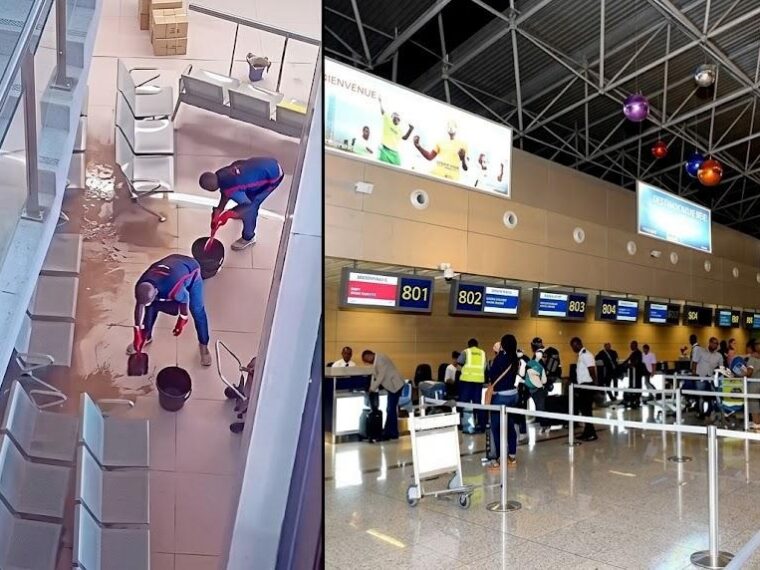
The explosion unleashed a cascade of filth onto unsuspecting passengers, including families en route to Europe, business travelers, and transit visitors. Eyewitnesses described the scene as “a sudden deluge of sewage raining from the ceiling,” leaving victims drenched in feces, their belongings destroyed, and their dignity shattered. Within minutes, the airport—a symbol of national pride—was paralyzed, its reputation in freefall.
Human cost: trauma and indignity for travelers caught in the disaster
A European passenger, still wrapped in a foil blanket after the incident, recounted her ordeal: “We were waiting for our Paris flight when a deafening blast shook the terminal above us. The ceiling collapsed, and black sludge engulfed us. My eyes burned, my clothes were ruined—it was beyond humiliation.” Multiple diplomatic sources confirmed their nationals were among the victims, raising concerns over Togo’s ability to protect international travelers.
The psychological toll was immediate. Survivors described symptoms of acute distress, while bodily fluids from the sewage—including Escherichia coli and potential cholera pathogens—posed a grave infection risk. Rescue teams, overwhelmed and under-equipped, struggled to contain the crisis as putrid fumes spread through the air-conditioned terminal, extending exposure to anyone present.
Systemic failure: how neglect turned a pipe into a catastrophe
Engineers and airport staff had warned for years about the deteriorating state of the sewage system, particularly the aging main pipe running beneath the central hall’s false ceiling. Sludge accumulation, poor maintenance, and insufficient pressure regulation created a ticking time bomb—yet these alerts were ignored amid budget constraints and administrative delays. The explosion wasn’t just an accident; it was the inevitable result of systemic neglect.
As blackwater inundated technical ducts, it triggered electrical failures that crippled the airport’s operational backbone—security scanners, baggage systems, and flight management servers went offline. The Civil Aviation Authority had no choice but to shut down AIGE entirely, rerouting all incoming flights to neighboring hubs in Accra and Cotonou. For regional air traffic, the ripple effect was catastrophic, stranding thousands and disrupting supply chains across West Africa.
Government scrambles to contain the fallout as outrage spreads
Cleanup crews in hazmat suits worked frantically to pump thousands of liters of effluent and disinfect contaminated areas, but the damage to Togo’s global image was already done. International airlines announced plans to seek compensation for operational losses and passenger compensation claims, while foreign embassies demanded urgent meetings with Togolese officials.
The disaster has ignited public fury. Citizens and victims alike are calling for accountability—not just for the explosion, but for the years of negligence that made it possible. No longer just a matter of infrastructure, this crisis has exposed a failure of governance, turning a once-modern airport into a cautionary tale about the cost of deferred maintenance.
What’s next for Lomé’s stricken airport?
With the terminal temporarily closed and decontamination underway, questions loom over the airport’s future. Can Togo rebuild trust in its aviation sector? Will international partners impose stricter safety audits? Most critically, who will answer for the lives disrupted and the reputational damage?
As travelers and officials demand answers, one thing is clear: the sewage pipe rupture wasn’t just a technical failure. It was a turning point—a moment that forced the nation to confront the true cost of ignoring its crumbling foundations.