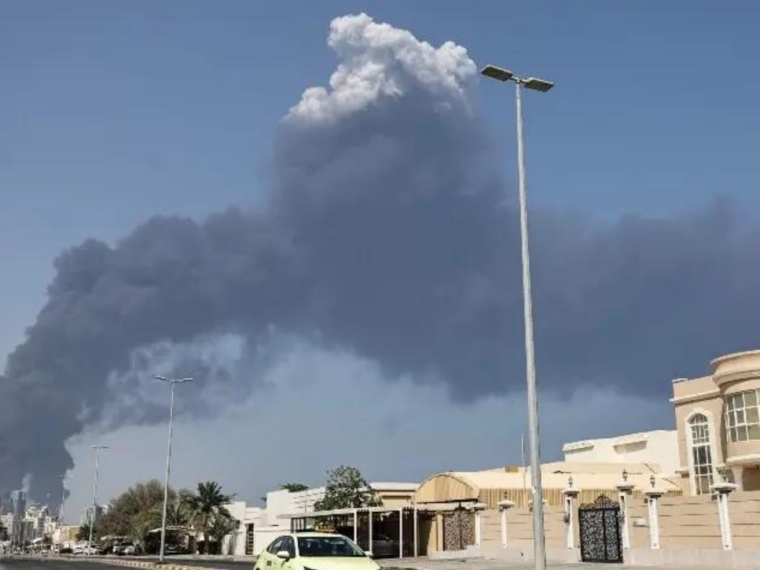
The escalating tensions between Iran and the United States have reached a critical point following a series of direct military strikes on American installations in Bahrain and Kuwait. These attacks mark a significant intensification of the conflict, raising immediate concerns over regional security and the potential for a broader Middle Eastern crisis.
US military sites in Bahrain and Kuwait targeted in coordinated Iranian operations
Reports confirm that Iran executed precision strikes against strategic US military infrastructure, including the Sheikh Isa Air Base in Bahrain and the Ali Al Salem Air Base in Kuwait. These operations represent a deliberate escalation in Tehran’s retaliatory strategy against Washington’s ongoing military actions in the region.
The attacks coincided with interceptions of hostile drones by local defense systems in both countries, highlighting the proximity of the conflict to critical military assets. While preliminary assessments suggest limited damage, the incidents underscore Iran’s capability to project force beyond its borders.
Bahrain’s Fifth Fleet headquarters remains unconfirmed target despite social media claims
Bahrain, home to the US Navy’s Fifth Fleet, has emerged as a focal point in the confrontation. The kingdom’s military confirmed intercepting multiple airborne threats, though no independent verification confirms whether the fleet’s headquarters sustained direct damage. Social media reports suggesting a catastrophic strike on the base remain unverified and should be treated with caution.
The Sheikh Isa Air Base, housing key US radar and logistical assets, was among the confirmed targets, further demonstrating Iran’s strategic targeting of American military nodes in the Gulf.
Kuwait’s Ali Al Salem Air Base faces direct Iranian assault
In Kuwait, the Ali Al Salem Air Base— a critical hub for US military operations in the Middle East— became the primary target of Iran’s latest offensive. Kuwaiti defense forces reported neutralizing hostile drones, though the full extent of infrastructure damage remains under assessment.
This attack follows a pattern of Iranian strikes aimed at degrading US operational capacity in the region, raising fears that further escalation could compromise regional stability.
Regional powers caught between strategic alliances and escalating conflict
The latest strikes force Gulf states into a precarious position, balancing their security partnerships with the US against the growing risk of Iranian retaliation. Nations like Bahrain and Kuwait, historically aligned with Washington, now face an acute threat to their sovereignty and stability.
Analysts warn that continued Iranian aggression against US military assets could trigger disproportionate responses, potentially drawing regional allies deeper into the conflict.
Strategic choke point: How the Hormuz Strait becomes a flashpoint for global markets
The Hormuz Strait, a vital maritime corridor for global oil and gas shipments, has become a secondary battleground in this crisis. Any sustained disruption to shipping lanes could send energy prices soaring, destabilizing international markets and fueling inflationary pressures worldwide.
Iran’s demonstrated ability to disrupt maritime traffic raises concerns over potential economic fallout, particularly for energy-dependent nations. The strait’s closure, even temporarily, would have catastrophic consequences for global supply chains.
Diplomatic stalemate deepens as military posturing intensifies
Efforts to de-escalate the crisis face mounting obstacles, with each military strike eroding trust between Tehran and Washington. Regional mediators, including Oman and Qatar, continue to facilitate dialogue, but the latest attacks severely undermine prospects for a negotiated settlement.
For the US, protecting its personnel and assets in the Gulf remains a top priority, while Iran’s strikes underscore its determination to counter American influence in the region. The coming days will determine whether this confrontation can be contained or spirals into a full-blown regional conflict.