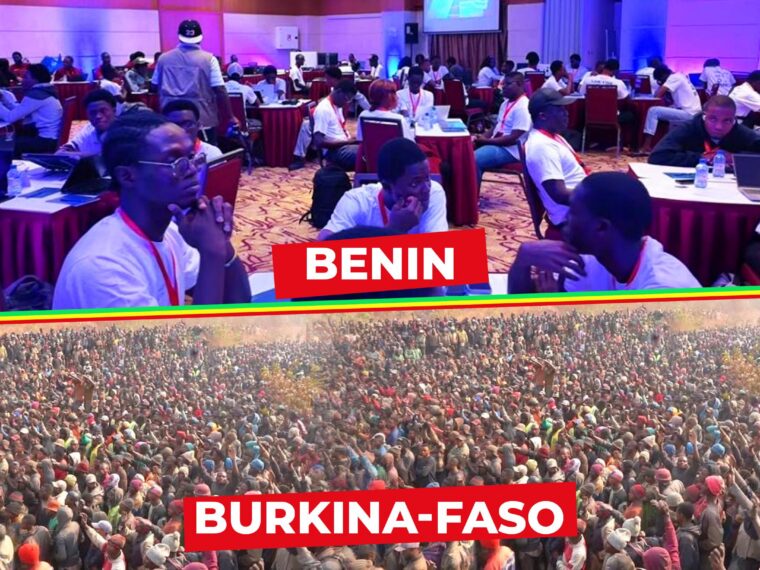
As nations across Africa strategize for long-term growth, two neighboring countries highlight sharply diverging priorities: one investing in digital skills for future prosperity, the other grappling with pressing social and economic challenges.
Digital excellence on display at Cyber Africa Forum
In Benin, a deliberate focus on nurturing homegrown tech talent took center stage at the Cyber Africa Forum, held November 16–17. The high-stakes event attracted young innovators from across the region, testing their technical acumen, creativity, and problem-solving skills in real-world digital challenges.
The competition was not a spontaneous showcase but the culmination of months of structured development. Teams had been identified and evaluated through a rigorous two-month selection process, including daily challenges designed to assess adaptability and innovation. Only the top 20 teams advanced to the final round, where they presented solutions to pressing digital issues.
This approach identifying, nurturing, and refining young talent goes beyond traditional competitions. It forms the backbone of a sustainable digital ecosystem, essential for building a modern, competitive economy. In today’s global landscape, national strength is no longer measured solely by military or political influence but by the ability to cultivate skilled professionals, drive technological advancement, and create opportunities for local innovators.
Burkina Faso faces urgent social and economic fallout
While Benin invests in the future, Burkina Faso is contending with an immediate crisis: the forced return of thousands of gold miners expelled from neighboring Guinea. The collapse of their livelihoods has left families in economic limbo, with pressing questions about employment, income, and community stability.
The situation demands more than political rhetoric or symbolic gestures. It requires concrete solutions, including transparent data on affected individuals, clear reintegration programs, and economic alternatives for displaced workers. Without actionable measures, the social fabric of Burkina Faso risks further strain, undermining any long-term development goals.
Leadership must translate ambition into results
The contrast between the two nations underscores a critical issue in governance: the difference between symbolic action and meaningful progress. Political discourse, while attention-grabbing, cannot substitute for job creation, social stability, or sustainable economic policies.
Benin’s strategy emphasizes preparation training youth, fostering innovation, and building a digital-ready workforce. Burkina Faso’s challenges highlight the cost of neglecting immediate economic and social needs. Both cases serve as a reminder that Africa’s future depends not on grand declarations but on measurable investments in people and infrastructure.
The question facing policymakers is clear: Are we building the foundations for tomorrow, or are we merely reacting to today’s crises?
By Agnès Mvogo — Journalist