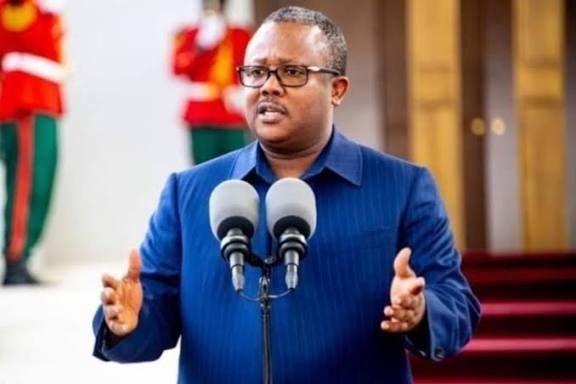
Bissau – Guinea-Bissau stands at a critical crossroads as political tensions reach a boiling point. Former President Umaro Sissoco Embalo, exiled since a controversial November 2025 coup, has broken his silence with a bold declaration: he intends to return to Bissau and contest the upcoming presidential election. The response from the ruling military junta was swift and uncompromising—Embalo’s return will not be permitted.
Ex-president’s gamble: a high-stakes political comeback
Embalo’s announcement sent shockwaves across West Africa. From his exile in Dakar, the former leader framed his potential return as a legitimate bid to reclaim power, dismissing the legitimacy of the coup that ousted him. His strategy? A carefully orchestrated coalition called the Republican Platform, uniting over a dozen political groups to back his candidacy.
The junta, however, views his ambitions as a direct threat. In a scathing statement, military authorities labeled Embalo the primary instigator of the crisis that plunged the nation into instability. “No individual responsible for undermining our nation’s peace will be allowed to exploit the transition for electoral manipulation,” they declared, effectively shutting the door on his participation.
November 2025: the coup that changed everything
The roots of this standoff trace back to November 26, 2025—a day that reshaped Guinea-Bissau’s political landscape. Just three days after a fiercely contested presidential vote, heavy gunfire erupted in Bissau. Armed factions of the People’s Revolutionary Armed Forces stormed the presidential palace, seizing Embalo. The self-styled Military High Command for National Security Restoration suspended the election, citing an alleged plot to manipulate results.
But skepticism was immediate. International observers, diplomats, and opposition figures dismissed the coup as a political charade. Critics accused Embalo of orchestrating a self-coup to avoid an impending electoral defeat, leaving the nation in legal and institutional limbo before his hasty exfiltration to Senegal.
Junta digs in: why Embalo’s return is a red line
The military’s veto isn’t just about politics—it’s about control. By banning Embalo, the junta aims to neutralize the biggest wildcard in Guinea-Bissau’s fragile transition. Military leaders argue that his return would reignite divisions, undermining their fragile grip on power and derailing the electoral roadmap.
Yet the consequences of this blockade extend beyond Bissau’s corridors of power. Opposition figures, jailed or exiled, warn of an authoritarian drift, while Embalo’s supporters condemn the junta’s move as an arbitrary exclusion that violates democratic norms. With each side digging in, the question looms: can Guinea-Bissau’s democracy survive this high-stakes gamble?
The road ahead: democracy or deadlock?
Guinea-Bissau’s future hangs in the balance. The junta’s refusal to allow Embalo’s return has thrown the transition into uncharted territory. Will military leaders double down on their exclusionary tactics, or will mounting pressure force a reckoning? One thing is clear: the nation’s democratic trajectory now hinges on a single, decisive question—will the junta’s blockade spark a reckoning or deepen the crisis?