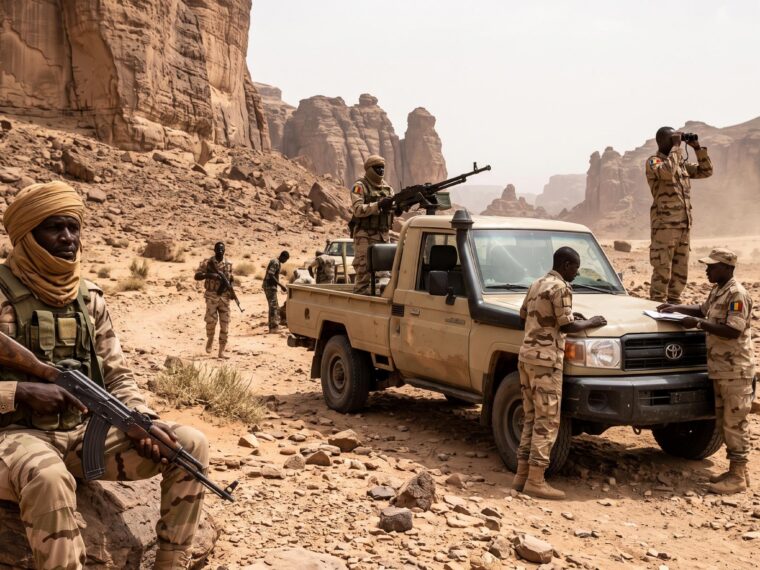
MISKI, Chad — Two soldiers were killed and nine security personnel wounded in overnight clashes at the Awa goldfields in Miski, northern Chad, military sources confirmed on October 15, 2026. The attack, which erupted just before 5 p.m., reignited long-running tensions over control of Tibesti’s lucrative mineral deposits and threatened the fragile peace agreement brokered last year.
Unclear origins spark fresh accusations
The army’s statement holds the local self-defense committee responsible for the ambush, alleging it violated the April 2025 peace treaty. Commanders warned that failure to disarm would be treated as rebellion, but no independent verification of the incidents has been made public. What triggered the firefight remains under dispute, with conflicting narratives emerging from both camps.
The military claims the committee used excessive force, while local representatives accuse the mining brigade of provocation. One day prior, on October 13, the committee accused the brigade of firing heavy weapons in the same area, labeling the act a deliberate breach of the ceasefire and calling for immediate government intervention.
Peace deal fractures over gold control
The latest violence underscores deep divisions over the economic stakes of Tibesti’s gold reserves. The October 3, 2026 visit by a vice-premier delegation had reinforced hopes of reconciliation, but both sides now accuse each other of reneging on commitments. Authorities insist the mining brigade operates within its mandate to secure state assets, while the self-defense group insists its actions are justified under the terms of the peace accord.
Residents report an intensifying climate of fear, with arbitrary checkpoint stops and roadblocks disrupting daily life. Although no civilian casualties have been officially reported, fears of retaliatory attacks and mass displacement persist, raising concerns about the long-term stability of the region.
United Nations and African Union urge restraint
Observers have called on both factions to halt hostilities and return to dialogue. The United Nations Stabilization Mission in Chad has encouraged all parties to adhere to the peace agreement and engage in transparent fact-finding. Meanwhile, the African Union has reiterated its support for a negotiated solution, warning that renewed conflict could spill beyond Chad’s borders into the wider Sahel.
What happens next?
Military leaders have pledged to escalate operations against the self-defense committee if it does not surrender its weapons by October 18. Regional analysts warn that a prolonged standoff would cripple the local economy, already strained by border closures and reduced trade. Civil society groups are demanding an immediate ceasefire, independent investigations into the incident, and the resumption of humanitarian aid to affected villages.