Military cooperation under scrutiny after decisive attacks
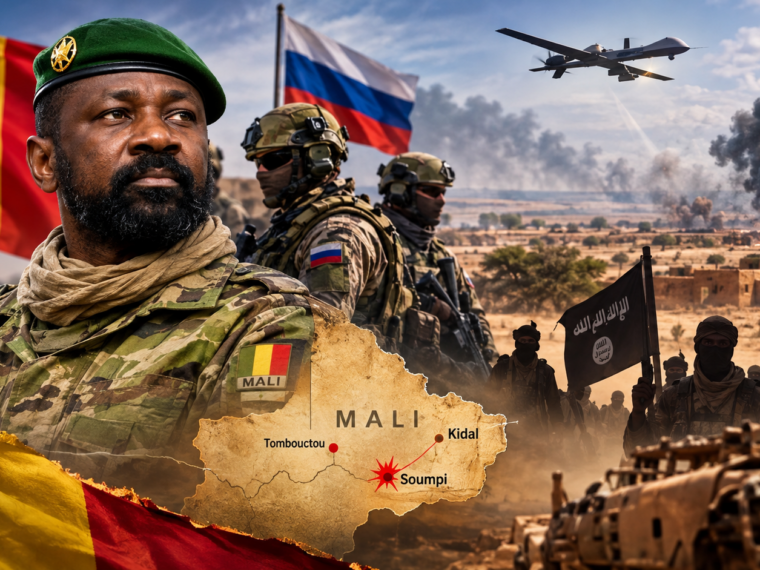
On October 10, 2026, reports indicated that the Azavad Liberation Army launched a drone strike against positions held by the Africa Corps and Malian forces in Soumpi, within the Tombouctou region. This incident has reignited debates over whether military collaboration with Russia can deliver the stability Mali desperately needs after more than four years of escalating conflict.
Under Assimi Goïta‘s leadership, Mali has pivoted away from Western military partnerships toward deeper cooperation with Moscow, framing this shift as a cornerstone of national sovereignty. Yet, despite these strategic adjustments, recurring attacks and persistent insecurity challenge the efficacy of this approach.
Can foreign military support alone restore security?
The Soumpi strike underscores a critical question: Does Mali’s reliance on Russian military backing signify progress or merely a change in external alliances without tangible improvements in security?
Earlier in October 2026, Malian troops, supported by Russian allies, reclaimed Kidal, a symbolic victory for Bamako. However, analysts caution that such operations, while strategically significant, do not equate to a decisive resolution of the broader conflict. The fragility of the situation was further highlighted by the Soumpi attack, which exposed vulnerabilities in defended positions despite years of external military assistance.
Assessing the limitations of external partnerships
- Symbolic gains vs. lasting stability: Retaking Kidal marked a notable achievement, yet it does not guarantee long-term security or address the root causes of insurgency.
- Ongoing exposure to attacks: The Soumpi incident raises concerns about the resilience of Malian and allied forces, even after substantial external intervention.
- Dependence as a risk: While Russian support provides critical resources and operational capabilities, it cannot substitute for a robust, self-sufficient national security strategy.
The need for a comprehensive Malian-led solution
Mali’s security challenges demand more than military partnerships; they require a holistic strategy encompassing governance, intelligence, civilian protection, and socioeconomic stability. The government must prioritize:
- Building indigenous military capabilities: Strengthening Malian forces to reduce reliance on external actors.
- Addressing root causes: Tackling localized conflicts, economic grievances, and governance deficits that fuel instability.
- Ensuring sustainable security: Securing reclaimed areas so civilians can return without fear of renewed violence.
These measures are essential to prevent recurring cycles of violence, regardless of external support.
Balancing partnership with national priorities
The debate over Russian military cooperation in Mali extends beyond security. It intersects with economic interests, particularly regarding natural resource exploitation. While allegations of deliberate prolonging of conflict for profit lack verifiable evidence, the broader concern remains: Does this partnership serve Mali’s long-term stability or serve external interests?
Transparency in agreements, cost evaluations, and outcome assessments are vital to ensure that military collaboration aligns with Malian priorities rather than external agendas. Sovereignty, in this context, means making decisions that reflect the needs of the population, not just maintaining power structures.
Redefining success: beyond military wins
The Malian government must redefine its metrics for success. Victory cannot be measured solely by the presence of foreign troops or symbolic territorial gains. Instead, it should be evaluated based on:
- The restoration of civilian safety: Ensuring communities are protected and can rebuild.
- Long-term conflict resolution: Implementing political and socioeconomic solutions to prevent resurgence.
- Reducing dependence: Developing national capacities to minimize reliance on external military partners.
The Soumpi attack serves as a stark reminder that military cooperation, while valuable, is not a panacea. Without a cohesive national strategy, Mali risks repeating cycles of violence, regardless of its partners. The focus must shift from foreign alliances to building a sustainable, self-reliant security framework that prioritizes the welfare of its people above all else.
The moment for decisive action is now. Mali’s future hinges on whether its leadership can transform partnerships into progress or remain trapped in the cycle of dependence and instability.