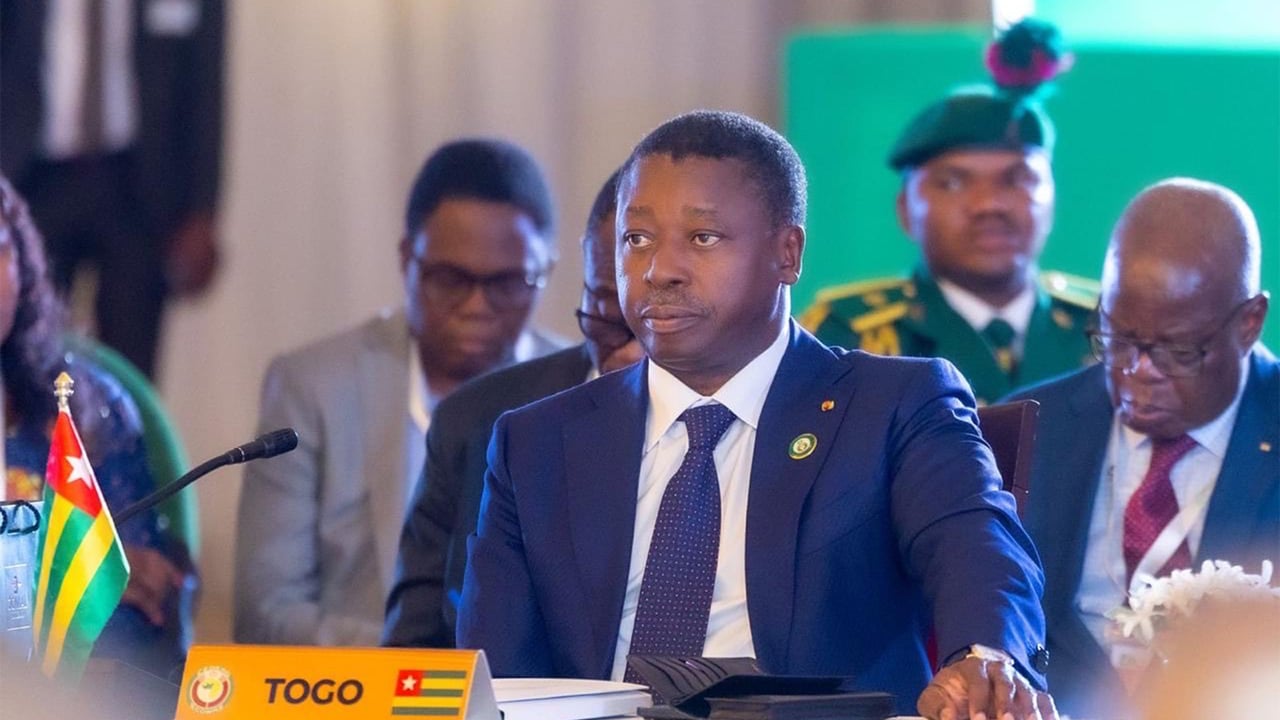

Togo’s diplomatic strategy reveals a carefully crafted balancing act. On March 9, 2026, Russia’s Defense Minister, Andreï Belousov, landed in Lomé, where he was granted an audience with Faure Essozimna Gnassingbé. While the meeting’s occurrence was confirmed by a presidential source, no official statement was released—highlighting the subtleties of Togo’s foreign policy.
navigating geopolitical divides: Togo’s diplomatic tightrope
The March 9 meeting between Faure Gnassingbé and Russia’s Defense Minister underscores Togo’s delicate position. As global powers jockey for influence in West Africa, Lomé remains cautiously engaged with multiple blocs, including the Economic Community of West African States (ECOWAS) and the Alliance of Sahel States (AES). This equilibrism—balancing competing interests—serves as a key pillar of Togo’s power strategy.
why Togo’s silence speaks volumes
The absence of an official announcement about the Russian official’s visit is telling. In diplomacy, strategic ambiguity can be as powerful as formal declarations. By neither confirming nor denying high-level engagements, Togo maintains flexibility, allowing it to adapt to shifting regional dynamics without alienating key partners.
the art of balancing regional alliances
Faure Gnassingbé’s leadership hinges on Togo’s ability to foster relationships across divergent blocs. While ECOWAS remains a cornerstone of Togo’s regional engagement, the country has also cultivated ties with the Alliance of Sahel States, a coalition formed by Mali, Burkina Faso, and Niger. This dual approach allows Togo to:
- avoid over-reliance on a single bloc, reducing vulnerability to external pressures;
- leverage economic and security cooperation with multiple partners;
- position itself as a neutral mediator in regional conflicts.
Russia’s expanding footprint in West Africa
Russia’s growing involvement in West Africa has raised eyebrows across the continent. By engaging with Togo, Moscow seeks to strengthen its influence in a strategically located country. For Togo, cooperation with Russia offers opportunities in defense, energy, and trade—sectors where Western partnerships have sometimes been inconsistent. However, deepening ties with Moscow also carries risks, particularly in relations with ECOWAS and other Western-aligned nations.
the role of ECOWAS and the AES in Togo’s strategy
ECOWAS, as Togo’s primary regional organization, plays a crucial role in maintaining stability and economic integration. Yet, the rise of the Alliance of Sahel States presents new challenges and opportunities. While ECOWAS has historically been a platform for Togo’s diplomatic engagement, the AES offers an alternative framework for security and economic cooperation. Togo’s engagement with both blocs demonstrates its adaptive diplomacy, ensuring it remains relevant in a rapidly evolving geopolitical landscape.
the risks and rewards of Togo’s balancing act
Togo’s diplomatic equilibrism is not without its challenges. By engaging with both ECOWAS and the AES, as well as cooperating with non-traditional partners like Russia, Togo risks facing criticism from different sides. However, this approach also offers significant rewards:
- enhanced security cooperation: by diversifying partnerships, Togo can access a broader range of security agreements and military support;
- economic diversification: new trade and investment opportunities can reduce dependency on traditional partners;
- mediation opportunities: Togo can position itself as a neutral broker in regional disputes, enhancing its regional standing.
what’s next for Togo’s diplomacy?
As global and regional dynamics continue to shift, Togo’s diplomatic strategy will be put to the test. The country’s ability to maintain equilibrium among competing blocs will determine its future influence in West Africa. For Faure Gnassingbé, mastering this balance is not just a diplomatic challenge—it is a lever of power that shapes Togo’s role on the continental stage.