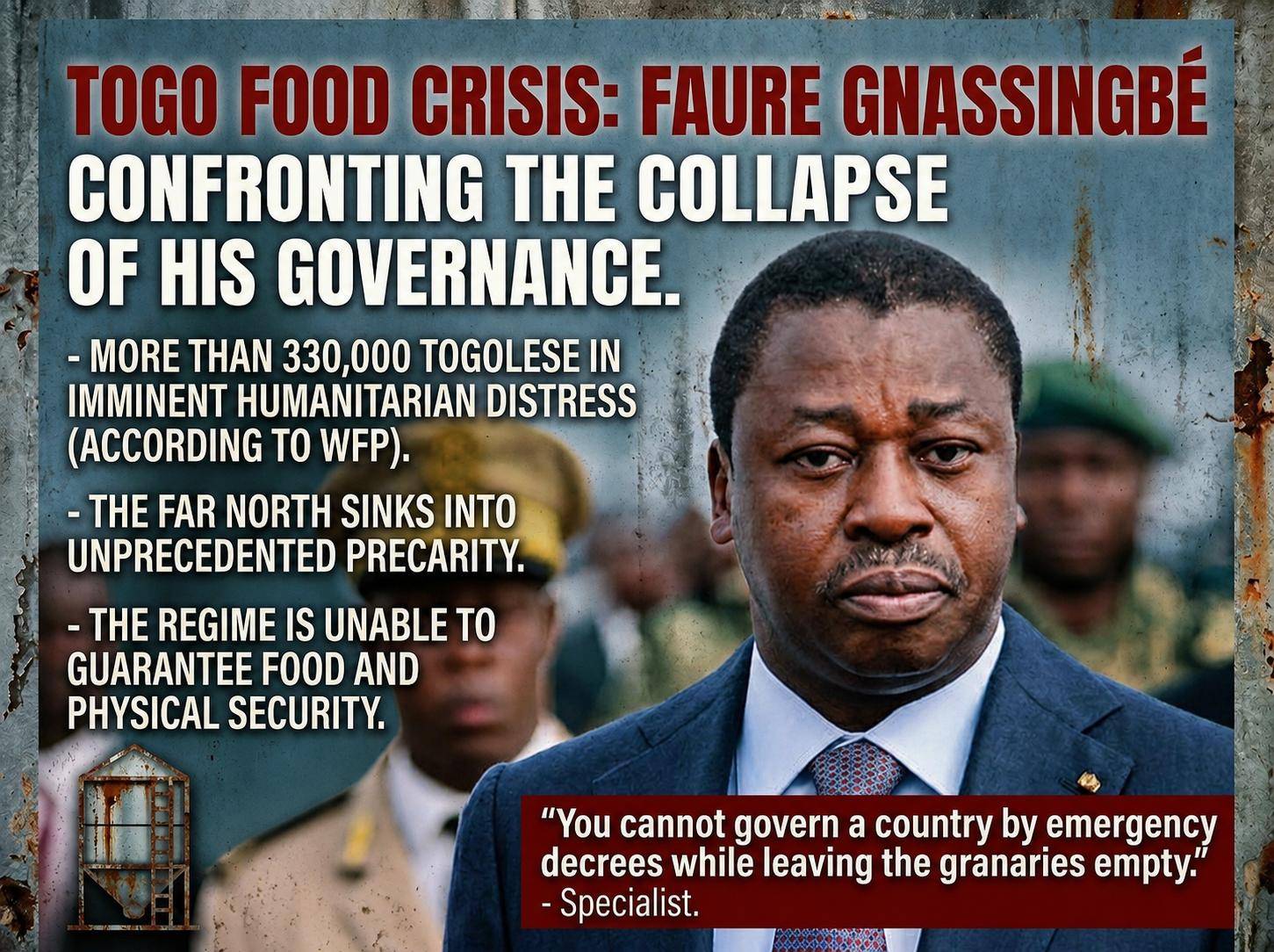
As the World Food Programme (WFP) issues a stark warning regarding an impending humanitarian catastrophe, the far northern reaches of Togo are descending into unprecedented levels of vulnerability. For observers, this deepening crisis unequivocally exposes fundamental governance deficiencies within President Faure Gnassingbé’s administration, which appears unable to assure both the physical and nutritional security of its populace.
The assessment is unequivocal, emanating from the most authoritative international humanitarian bodies. According to the latest projections released by the World Food Programme, over 330,000 individuals in Togo risk succumbing to acute food insecurity within the next three months if emergency assistance is not promptly delivered. This stark statistic belies a profoundly tragic human reality, resonating as a comprehensive admission of failure for the government based in Lomé.
The far north: a region abandoned to its fate
The Savanes region, situated in the country’s extreme north, represents the epicenter of this unfolding disaster. Traditionally susceptible to climatic variability, this border zone now endures a compounded plight: chronic poverty is exacerbated by a profound security crisis that the Togolese executive has proven impotent to quell.
The relentless expansion of the terrorist threat and the prolonged imposition of a state of emergency have not merely failed to stabilize the region; they have effectively suffocated the local economy. Through extensive disruption of access to cross-border markets and the internal displacement of thousands of civilians, alongside the arrival of tens of thousands of refugees from neighboring Burkina Faso, governmental strategy has undermined the very foundations of local sustenance. Food reserves are dwindling rapidly as the lean season commences, rendering the pressure on already scarce resources utterly unsustainable.
A government observing disaster unfold
For numerous analysts, the current predicament is not an act of fate but rather a clear demonstration of governance collapse. Despite years of official pronouncements concerning resilience strategies and agricultural development, the reality on the ground is stark: half of the Togolese households in these areas can no longer afford a basic nutritious diet.
By effectively delegating the survival of its citizens to United Nations agencies and international non-governmental organizations, President Faure Gnassingbé’s government appears to be abdicating its most fundamental sovereign responsibilities. The protection and nourishment of its population represent the core social contract upon which the Togolese authority is now being judged as deficient. The absence of adequate storage infrastructure, the inability to stabilize prices for essential foodstuffs, and a largely militaristic and ineffectual approach to the northern crisis have left the inhabitants of the Savanes region to their own devices.
« A nation cannot be governed solely through emergency decrees while its granaries remain empty. What is unfolding in the North is the direct consequence of economic neglect combined with a security impasse. » — An expert in West African public policy.
The imperative for a decisive shift
As the forthcoming weeks prove critical in averting a major humanitarian catastrophe, the Togolese executive confronts its profound responsibilities. The World Food Programme’s appeals for urgent funding underscore the immediate exigency but also pose a fundamental question: for how long can Togo compensate for its policy shortcomings by perpetually relying on international philanthropy?
For the 330,000 Togolese citizens imperiled by hunger, the time for mere promises has long expired. It is now immediate survival that hangs in the balance, in a northern region bearing the heavy cost of inaction and strategic miscalculations at the highest echelons of the state.