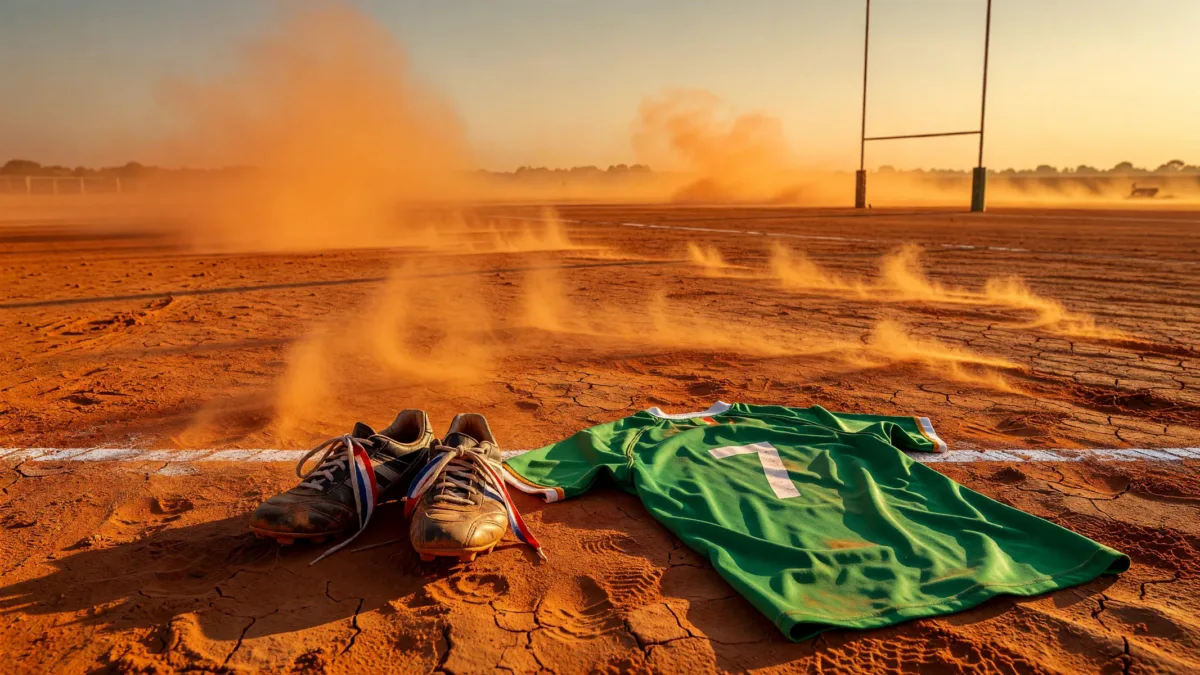
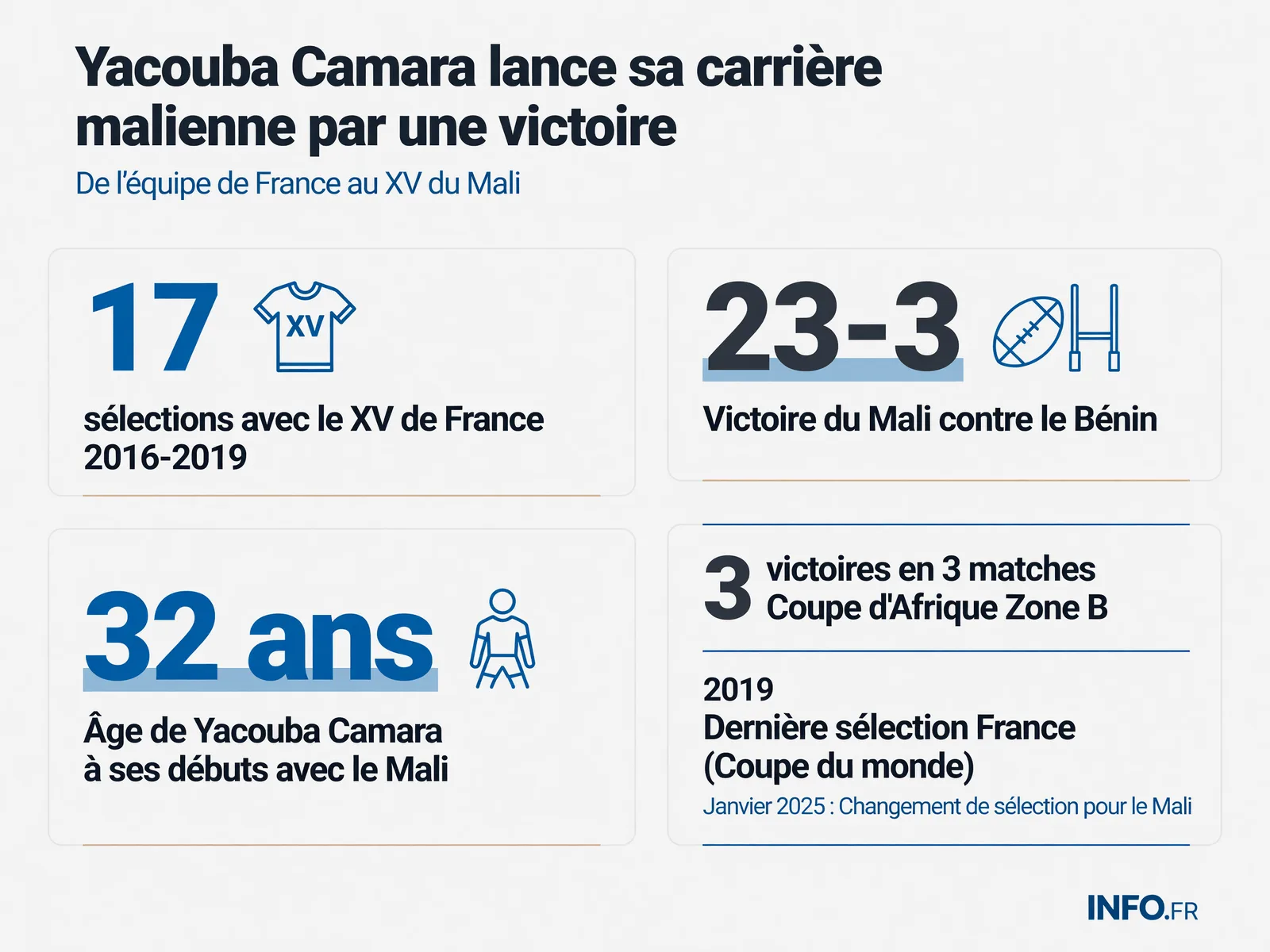
Yacouba Camara made his international comeback official during the Zone B Africa Cup held in Bamako. The former France national team flanker donned the Mali national team jersey in a competitive match.


The Mali national team triumphed 23-3 over Bénin in the ongoing competition hosted in Bamako. This victory marks the third consecutive win after defeating Guinea 32-7 and overwhelming Niger 52-9 in their opening matches.
From France to Mali: a seven-year gap
Camara’s return to international rugby comes after a seven-year hiatus. His last appearance for France dates back to the 2019 World Cup. Now, the experienced flanker has chosen to represent a new nation, showcasing his enduring talent on the African stage.
A son of Malian descent born in France, Camara’s decision reflects his commitment to contributing to the growth of rugby across the continent. His choice embodies both sporting ambition and personal heritage.
The transformative potential for Malian rugby
The former France international isn’t just bringing his playing skills to Bamako. His deep understanding of professional rugby could help elevate Mali’s rugby federation. With ambitions to professionalize the sport locally, Camara’s expertise could prove invaluable in shaping the future of Malian rugby.
Why France’s loss could be Mali’s gain
Camara’s departure from the French XV spotlights broader issues in France’s player selection strategy. Despite proving his worth in domestic competitions, he hasn’t been called up since 2019. The changing preferences of successive coaches left him without international opportunities, despite maintaining top-tier performance levels. This scenario highlights the challenges faced by the French federation in balancing player development and squad selection.
Setting a precedent in French rugby
Camara’s journey echoes that of other dual-nationality players who chose African nations over France. These cases demonstrate how the continent’s rugby development relies heavily on this talent pool. With his vast international experience, Camara not only strengthens Mali’s team but also sets an example for younger players considering similar paths.
What this decision reveals about modern rugby
Camara’s move raises important questions about the role experienced players can play in emerging rugby nations. Rather than seeking a comfortable end to his career abroad, he opted for a meaningful sporting and cultural commitment with Mali. This choice also challenges France’s approach to player management, particularly for those nearing the end of their international cycles.
Seven years after his last France cap, Camara has found a new lease on life with the Mali Eagles, proving that international rugby opportunities can emerge from unexpected places. His story may inspire other dual-nationality players seeking competitive minutes on the world stage.