2026 world cup thriller as late goals and upsets dominate
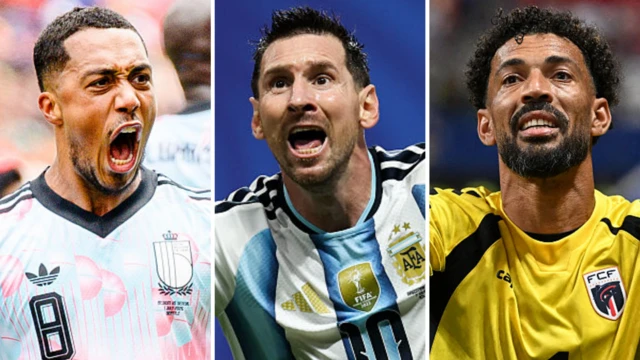
Photo credit, Getty Images
The 2026 FIFA World Cup has delivered a spectacle unlike any before. With thrilling last-minute goals, dramatic comebacks, and unexpected upsets, the tournament is already being hailed as one of the most exciting editions in history. Eight intense knockout matches remain as the tournament approaches its climax.
This year marks the first time 48 nations compete across three host countries—Canada, Mexico, and the United States—making it the largest and most geographically diverse World Cup ever staged. But has it also been the best?
The answer, as always, is subjective. For some, their first World Cup experience will always hold a special place. For others, it may be the performance of their national team that defines their memories. Yet the numbers tell a compelling story.
Across 104 matches, 280 goals have been scored—an average of 2.92 goals per game. This is the highest scoring rate since 1970 in Mexico, where 95 goals were scored over 32 games, averaging 2.97 goals per match. By comparison, the 2022 World Cup in Qatar averaged 2.69 goals per game, while Russia 2018 saw 2.64, Brazil 2014 had 2.67, and South Africa 2010 recorded just 2.27.
The tournament’s offensive nature is further highlighted by the fact that 74.6% of all goals were scored from open play—the highest proportion in World Cup history—while only 5% came from penalties, the lowest ever recorded.
The drama has reached fever pitch in the knockout stages. Of the 24 knockout matches played so far, eight were decided by a goal scored after the 85th minute. Argentina required extra time to overcome Cape Verde, a true underdog, and four games went to penalties.
Enzo Fernández’s winner for Argentina against Egypt at the 90th minute marked the 10th goal scored in the final minute of a match in this World Cup—a record.
July alone has produced at least three unforgettable encounters: Belgium’s 3-2 comeback win over Senegal, Argentina’s dramatic 3-2 victory against Egypt, and England’s 3-2 triumph over Mexico in a match played under floodlights in Mexico City.
Belgium and Argentina became the first teams since 1970 to twice come from two goals down to win a match in the same tournament. England’s victory was even more remarkable, achieved despite a red card and a man-down for 40 minutes in the iconic Azteca Stadium.
The competition has also seen a record eight clean sheets in group-stage matches, a sign of balanced competition rather than defensive dominance. The knockout rounds have been defined by late drama, with suspense lingering until the final whistle.
Exceptional atmosphere and record crowds
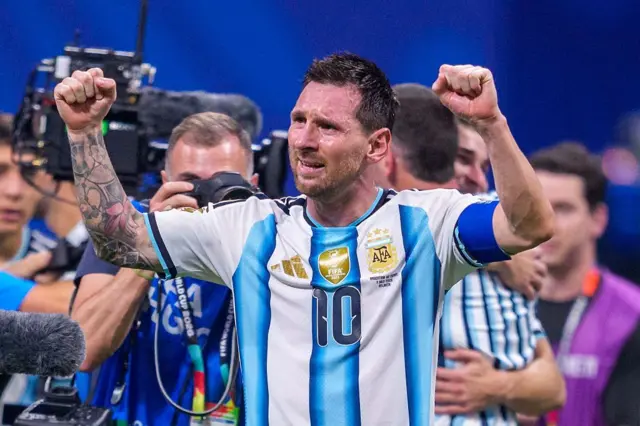
Photo credit, Getty Images
Concerns about empty stadiums due to high ticket prices have proven unfounded. Despite the cost of travel, accommodation, and match tickets, fans from around the world have flocked to stadiums in record numbers. The FIFA reports a 99.7% attendance rate—over 4.4 million spectators during the group stage, and more than 6.2 million after two rounds of knockout football.
The average attendance stands at over 65,000 per match, second only to the 1994 World Cup in the United States, which averaged just under 69,000 fans per game. The atmosphere inside the stadiums has been electric, with supporters creating a vibrant, global carnival.
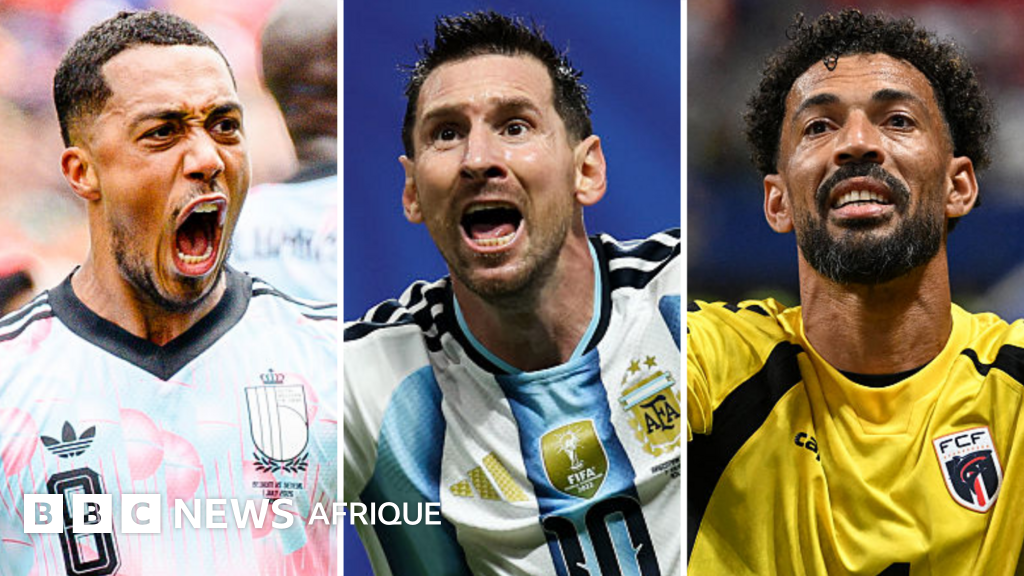
The world’s top stars have also delivered. The race for the Golden Boot is wide open, with Argentina’s Lionel Messi leading with eight goals, ahead of France’s Kylian Mbappé and Norway’s Erling Haaland, each with seven, and England’s Harry Kane with six. For the first time in World Cup history, three players have scored seven or more goals in a single tournament.
Smaller nations have also captured hearts with their performances. The Caribbean island of Curaçao, the smallest nation ever to qualify for a World Cup, recovered from a 7-1 thrashing by Germany to draw with Ecuador. Qatar, despite a 6-0 loss to Canada and a 1-1 draw with Switzerland—who reached the quarterfinals—showed resilience.
Cape Verde, led by veteran goalkeeper Vozinha at 40 years old, became one of the great underdog stories. They held Spain, Uruguay, and Saudi Arabia to draws in the group stage before stunning Argentina in the Round of 16, pushing the defending champions to extra time before falling 3-2.
Controversies and challenges beyond the pitch
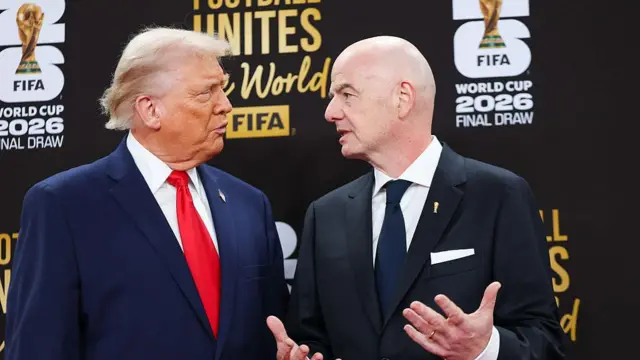
Photo credit, Getty Images
The tournament has not been without controversy. High costs for tickets, hotels, and travel placed a heavy burden on fans, making attendance a financial challenge for many.
Hydration breaks in the first and second halves were welcomed in extreme heat but booed in air-conditioned or rainy conditions. The extended tournament length—from June 11 to July 19—has also drawn criticism, with matches nearly every day and club football resuming just over a month after the final.
Question marks have been raised over refereeing standards and the physical toll on players. The most damaging controversy, however, involved off-field interference. American forward Folarin Balogun was sent off in the Round of 16 clash with Bosnia-Herzegovina, yet the U.S. president reportedly contacted FIFA President Gianni Infantino, leading to a rare suspension appeal under FIFA’s disciplinary code. Balogun played in the next match, a decision condemned by UEFA, Belgium, and England manager Thomas Tuchel.
Balogun became the first player since 1962 to avoid suspension after a red card, echoing an era when political interference was even more pronounced. The incident has intensified debates about the integrity of refereeing and the influence of high-level politics in sports.
Can the finale match the tournament’s drama?
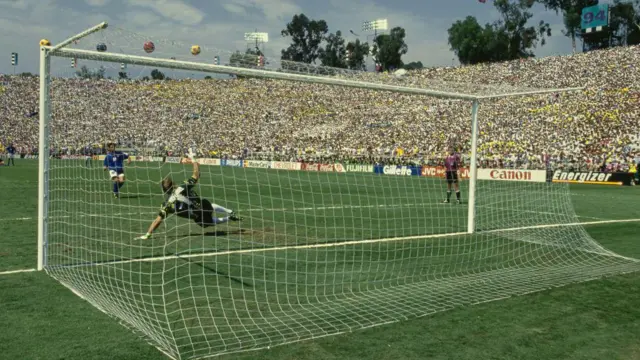
Photo credit, Getty Images
With the tournament now in its final stages, the stage is set for a thrilling conclusion. The four highest-ranked teams in the world—Argentina, Spain, France, and England—all remain in contention, each bringing their own style and intensity to the knockout rounds.
If the quarterfinals deliver the same level of drama as the Round of 16, this could indeed become the greatest World Cup of all time. The stage is set for a finale that could match the brilliance of the competition so far.
Whatever happens, one thing is certain: the 2026 World Cup will be remembered as a landmark event in football history.