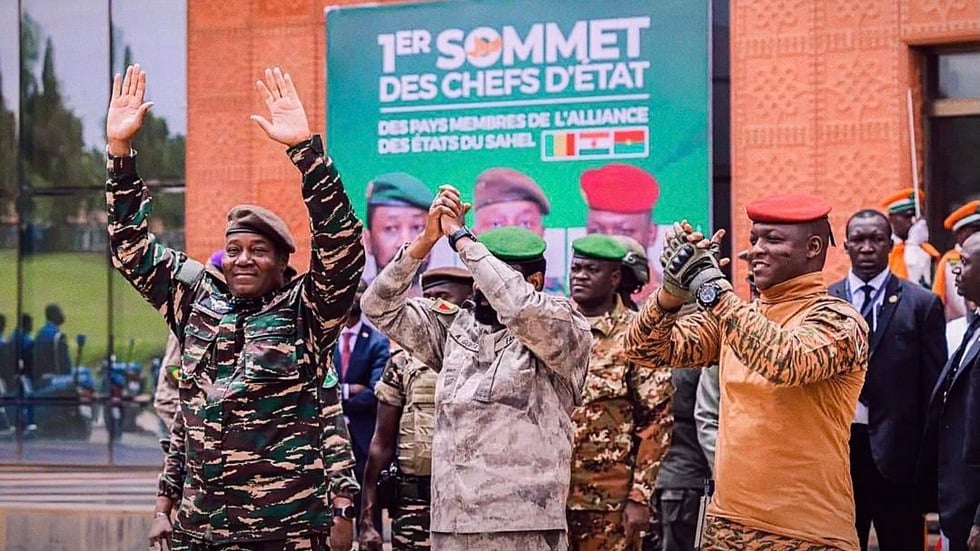
In the intricate chessboard of West African geopolitics, timing is everything—and missteps can carry grave consequences. The recent decision by the Alliance of Sahel States (AES)—comprising Mali, Burkina Faso, and Niger, all under military governance—to sever ties with the Economic Community of West African States (ECOWAS) is increasingly revealing itself as a high-stakes gamble rather than a bold assertion of autonomy. As the region grapples with escalating threats from groups like Boko Haram and Islamic State West Africa Province (ISWAP), fragmentation has taken precedence over unity—a shift that threatens to undermine collective security.
The AES bloc has framed its withdrawal as a protest against ECOWAS’s perceived role as a tool of neo-colonial influence, particularly under French sway. While historical grievances hold weight, abandoning a regional security framework without a viable alternative in place does not equate to sovereignty—it equates to vulnerability. The absence of a cohesive defence strategy leaves these nations exposed to evolving threats across the Sahel.
Efforts to pivot toward Russia as a security partner have been presented as a strategic recalibration, but the realities on the ground paint a different picture. Moscow’s engagements are inherently transactional, with support contingent on alignment with its national interests. History has shown that once the cost-benefit analysis shifts unfavorably, commitments waver. This is not speculation—it is a documented pattern of behavior.
Cracks in the alliance: the limits of AES unity
A series of coordinated insurgent attacks across Mali’s cities—including Bamako, Sevare, Mopti, Tessalit, Gao, Kati, and Kidal—have laid bare critical weaknesses within the AES alliance. The anticipated protection from external partners proved insufficient, and the muted response from fellow members Burkina Faso and Niger has raised serious questions about the bloc’s operational effectiveness. A coalition unable to mobilize swiftly in defence of one of its own undermines its credibility—and its mission.
ECOMOG’s legacy: the power of collective action
Contrast this scenario with the ECOWAS Monitoring Group (ECOMOG), which, under Nigeria’s leadership, intervened decisively in Liberia and Sierra Leone during periods of extreme instability. Though not without flaws, ECOMOG demonstrated the value of collective action rooted in shared destiny and mutual survival. Similarly, when Gambia faced a constitutional crisis in 2017, Nigerian troops, operating under ECOWAS’s mandate, swiftly restored order by persuading the then-president Yahaya Jammeh to concede power and leave the country.
The indivisible nature of Sahel security
The harsh truth is that geography does not recognize political boundaries. Instability in Mali does not remain confined to Mali; it spills into Niger, Burkina Faso, and beyond. The Sahel’s security challenges are interlinked, demanding a unified response. Terrorist groups like Boko Haram, ISWAP, and Lakurawa exploit the gaps between nations, making a fractured approach not just inefficient—but perilous.
The Iran model, often cited as an example of indigenous resilience, offers a compelling lesson. Rather than relying on foreign mercenaries, Tehran invested in domestic military capacity, intelligence infrastructure, and technological innovation. Despite overwhelming odds, Iran held its ground against formidable adversaries like Israel and the United States in intense aerial confrontations. The message is clear: self-reliance, not strategic dependency, is the cornerstone of sovereignty.
A roadmap for resilience: sovereignty through solidarity
For the AES states, the path forward requires a dual strategy. First, prioritize the development of homegrown security capabilities—local intelligence networks, community-based defence systems, and rapid-response units. Second, re-engage with ECOWAS, not as a surrender of sovereignty, but as a strategic necessity. Collaboration does not diminish independence; it fortifies survival. Meanwhile, ECOWAS must address perceptions of external influence, enhance governance, and reaffirm its role as an institution truly serving African interests.
The goal is not to revert to the status quo but to forge a smarter equilibrium—one that balances sovereignty with solidarity and independence with interdependence. The Sahel does not need isolation; it needs alignment with its immediate neighbours, who share its risks, realities, and ultimate fate.
A call for recalibration: the prodigal return
The allegory of the prodigal son is instructive: leaving in arrogance and returning in humility is not a sign of weakness but of wisdom. The AES must reconsider its withdrawal from ECOWAS, acknowledging that no strategy is infallible. Similarly, ECOWAS must extend a welcoming hand without punitive conditions. A united West Africa has navigated civil wars and coups; divided, it risks falling to a common enemy that respects no borders. The path to survival lies in unity, indigenous solutions, and collaborative defence architectures that only neighbours can provide.
There is no alternative. The threat is not hypothetical—it is immediate and existential. The time for recalibration is now.