
Togo facing decline: citizens express deep concerns over worsening conditions
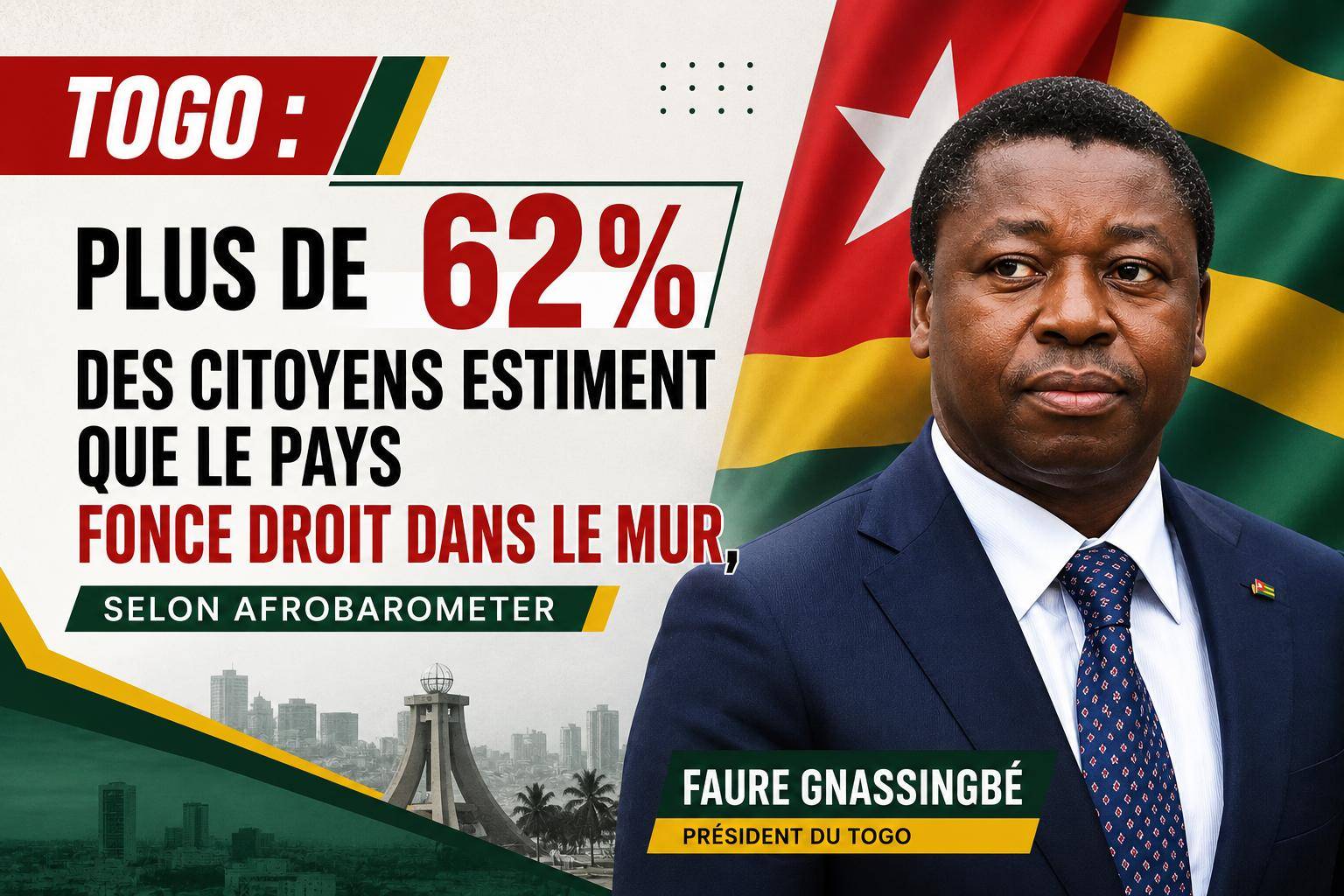
Togo struggles as 62% of citizens warn of national decline
Despite official narratives celebrating the National Development Plan and touting stable economic growth, Togolese citizens paint a starkly different picture of their country’s trajectory. Recent Afrobarometer survey data reveals that 62% of Togolese believe their nation is spiraling toward chaos. With soaring poverty rates, critical water shortages, and crumbling healthcare access, the disconnect between government promises and public reality has never been more glaring.
Survey results leave no room for doubt: over six out of ten Togolese perceive their country’s situation worsening—an 11-point increase since 2021. This growing discontent stems from profound dissatisfaction with economic management, as 63% of citizens rate the government’s performance as poor or very poor. Behind this pessimism lies a harsh reality: shrinking purchasing power and a severe lack of economic opportunities for a youthful population desperate for meaningful prospects.
Everyday poverty: Togolese households fight for survival
The Afrobarometer findings extend beyond abstract economic metrics, exposing the harsh realities of household living conditions. Survey responses paint a bleak picture: most participants describe their current situation as dire, while over half report their financial circumstances have worsened over the past year. Today, three-quarters of Togolese endure moderate to extreme poverty, proving that economic growth benefits remain out of reach for most citizens.
Daily life in Togo is defined by relentless hardship: unstable income sources, limited medical care access, and persistent water shortages dominate households’ struggles. For many, each passing day brings new challenges, making survival increasingly difficult.
Deep-rooted regional and social disparities
Poverty in Togo is not evenly distributed—some regions bear the brunt far more severely. The Kara region, for instance, faces an alarming 88% poverty rate, contradicting government claims of balanced development. Vulnerable groups such as women and rural residents suffer disproportionately under this failing system. Even education, once viewed as a path to upward mobility, now fails to secure decent livelihoods in an oversaturated and patronage-driven job market.
The political system’s failure: elite privilege vs. widespread deprivation
The widening gap between the affluent few and the struggling majority underscores systemic governance failures. While high-profile prestige projects dominate public spending, essential social investments remain neglected, leaving millions without hope. Afrobarometer’s confidence index signals a society on the brink: eroding trust in institutions and denial of fundamental rights fuel a growing sense of abandonment.
The Togo of today cannot hide behind growth statistics while its people suffer mounting hardship. When a majority of citizens believe their nation is headed in the wrong direction, the entire current governance model comes under scrutiny. The so-called Togolese economic miracle rings hollow for those living in the shadows of this uneven prosperity.
Without radical reforms that prioritize human welfare, Togo risks irreversible decline. The people have voiced their despair—will Lomé’s leaders finally listen and act?