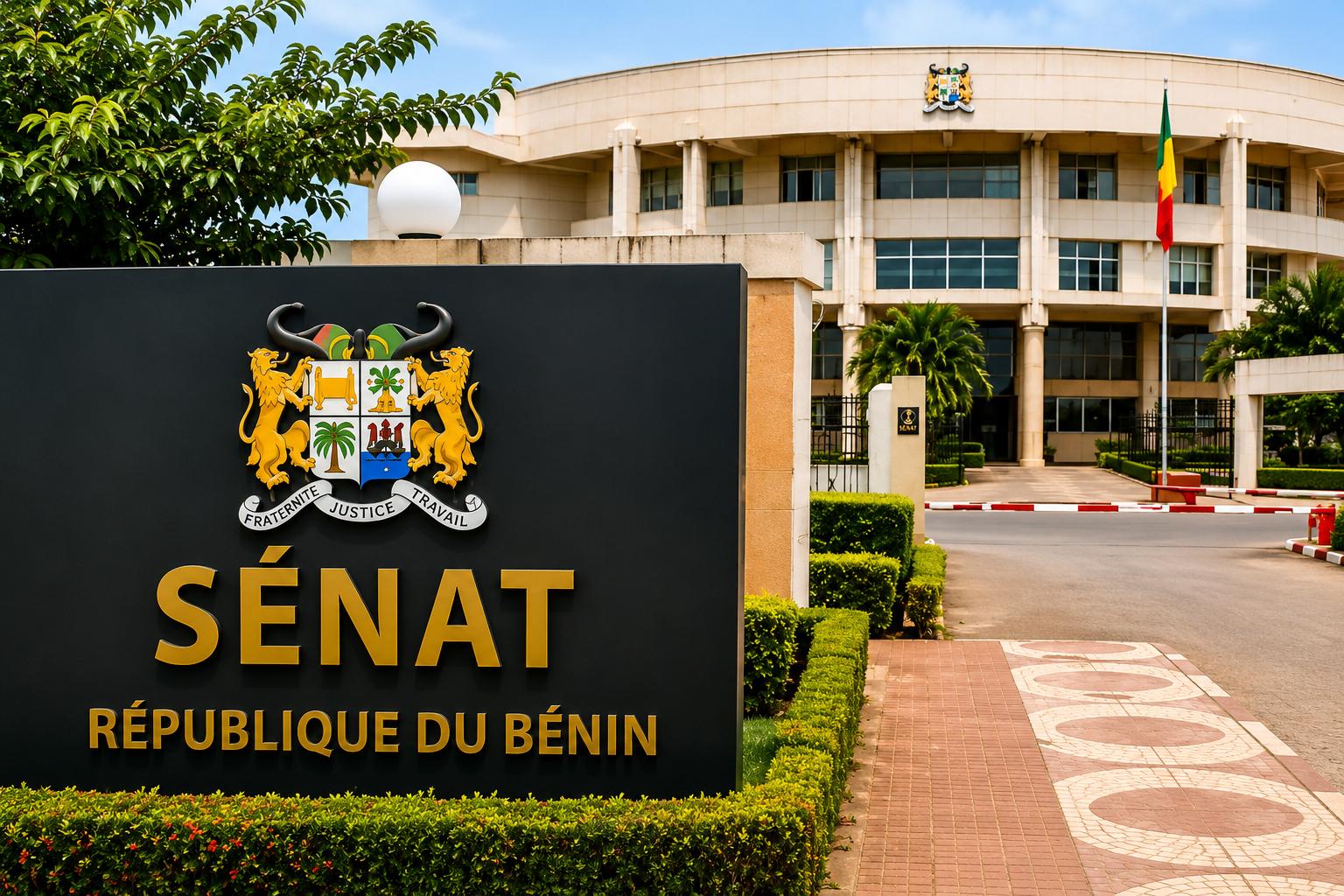
A pivotal moment for Bénin’s institutional landscape unfolded at the Palais des Gouverneurs in Porto-Novo. With the formal establishment of the Senate, Bénin definitively transitions from a unicameral legislative system, ushering its political structure into a new era of governance.
This creation of the Parliament’s upper chamber, a key element of the November 2025 constitutional revision, profoundly reshapes the legislative process and the framework for state power regulation.
Missions and role: a regulatory body at the heart of institutions
Envisioned as a ‘council of elders’ and a vital regulatory authority, the Béninese Senate is endowed with specific prerogatives designed to complement the work of the National Assembly:
- Regulation and national cohesion: The upper chamber addresses critical national interests, public security matters, national unity, and the safeguarding of democratic achievements.
- Second reading of laws: The Senate plays a direct role in the legislative process through the ‘navette’ mechanism. It is empowered to re-examine and request a second reading of legislative texts adopted by deputies, with the notable exception of finance bills, whose enactment remains the exclusive domain of the National Assembly.
- Advisory opinions and nominations: The Senate provides consultative opinions on major institutional reform projects and on the appointment of certain high-ranking state officials.
Mode of operation: sessions, legislative shuttle, and commissions
The functioning of the upper chamber is structured around clear rules established by the new constitutional framework:
- Parliamentary sessions: Similar to the lower chamber, the Senate convenes for ordinary sessions and can be summoned for extraordinary sessions by its president or at the request of the head of state to address urgent matters.
- Committee work: Texts submitted to the Senate are initially scrutinized by permanent thematic commissions before being debated and voted upon in plenary session.
- The legislative shuttle: When a bill or proposed law is transmitted by the National Assembly, the Senate is given a specific timeframe to review, amend, or reject it. In instances of persistent disagreement between the two chambers, the National Assembly retains the final say to ensure the smooth progression of public action.
A tailored institutional composition
With a restricted membership and a highly political profile, the upper chamber comprises 25 prominent figures drawn from the political establishment and key state functions:
- Designated personalities: The President of the Republic, Romuald Wadagni, appointed 10 members, including well-known national figures such as Pascal Irénée Koupaki, Emmanuel Tiando, Alassane Seidou, Fortunet Alain Nouatin, and Paul Hounkpè. Furthermore, the President of the National Assembly, Joseph Djogbénou, nominated 4 personalities, among them Adidjatou Mathys, Sacca Lafia, and Charles Toko.
- Ex-officio members: The Senate also incorporates former highest authorities of the Republic, including past heads of state, former presidents of constitutional institutions, and previous presidents of the National Assembly.
Questions persist despite the pomp
While proponents of the reform commend it as a sign of institutional maturity, designed to safeguard the nation from crises, public and political reactions remain mixed.
Beyond the power struggles for the presidency of the new chamber and speculation surrounding the role of influential figures expected to sit there, such as former President Patrice Talon, the financial implications of a bicameral Parliament continue to be a subject of debate. Critics express concern about a potential increase in state expenditures and question the independence of an institution where a significant portion of its members are direct executive appointments. However, these concerns are inherently addressed by the defined missions and roles of this second parliamentary chamber.
The installation of the Senate lays the groundwork for the new framework born from these political reforms. The focus now shifts to observing how this new chamber will assert itself on the national stage, balancing its potential as a true moderating counter-power with the risk of becoming merely a rubber-stamp institution.