What began as a localized outcry against education reforms has spiraled into a full-blown national emergency. Schools torched, city streets turned into battlegrounds, and public transport halted—Thursday marked the day France’s youth protest movement crossed a dangerous threshold, forcing the government into crisis mode.
The breaking point: protests spiral into urban warfare
Morning started peaceful enough. Students in Paris, Lyon, Marseille, Nantes, and Lille gathered to voice concerns over recent educational policy changes. But within hours, the demonstrations devolved into coordinated chaos. From improvised barricades to arson attacks, the scale of destruction stunned authorities. By midday, over 50 high schools reported severe damage: shattered windows, scorched halls, and classrooms reduced to rubble.
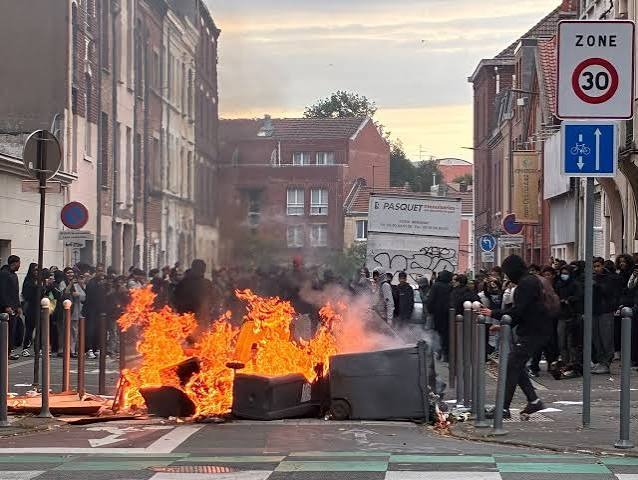
In Lyon’s 7th arrondissement, rioters set ablaze a school entrance, trapping firefighters behind a wall of flames. Paris’s famed Voltaire Lycée became a fortress of smoke as flaming trash bins blocked major arteries. The violence wasn’t confined to campuses—city centers became war zones. Police faced volleys of bricks, fireworks, and Molotov cocktails, prompting a heavy-handed crackdown involving tear gas, water cannons, and armored units.
The Interior Ministry reported over 160 arrests nationwide, alongside scores of injured protesters and officers. Public transport systems collapsed under the strain. Marseille’s metro ground to a halt; Nantes and Bordeaux suspended trams and buses. Commuters faced gridlock, stranded without clear routes home.
Lecornu’s emergency command: a high-stakes gamble
With the crisis spiraling beyond local control, Prime Minister Sébastien Lecornu took unprecedented action. At Place Beauvau, he convened an interministerial crisis cell—normally reserved for natural disasters or terror threats. Key figures including the Education, Transport, and Interior Ministers joined the war room to synchronize a multi-agency response.
In a rare televised address, Lecornu condemned the unrest with uncompromising language: « Violent destruction of schools and attacks on law enforcement cannot be tolerated. Protest is a democratic right—but vandalism is an assault on the Republic. The state will respond with unwavering firmness. »
As night fell, anticipation built for Friday’s deployment. Thousands of riot police units were already on standby, poised to flood trouble zones before dawn. The message was clear: this wasn’t just a policing operation—it was a bid to restore authority.
Political fallout and fractures in the debate
The crisis has laid bare deep divisions. Opposition leaders across the spectrum demanded tougher measures—some calling for curfews, others for school-linked protest bans. Right-wing voices accused the government of « security surrender, » while left-wing figures blamed « official deafness » to youth discontent and condemned excessive police force.
Student unions and parent associations, usually at the forefront of reform campaigns, scrambled to distance themselves from the mayhem. A joint statement from umbrella groups declared: « Our struggle is for education, not destruction. Torching our schools betrays everything we stand for. » Yet public sentiment was already hardening against the movement, as images of burning classrooms dominated airwaves.
What’s next for France’s embattled youth movement
The government’s next moves hang in the balance. Will Lecornu’s emergency cell impose stricter protest rules? Will schools close? Will digital surveillance expand to identify ringleaders? One thing is certain: the genie is out of the bottle. The protest model—once rooted in dialogue—has mutated into a combustible force. Whether it can be contained, let alone channeled, remains the question haunting politicians, parents, and a nation watching in shock.