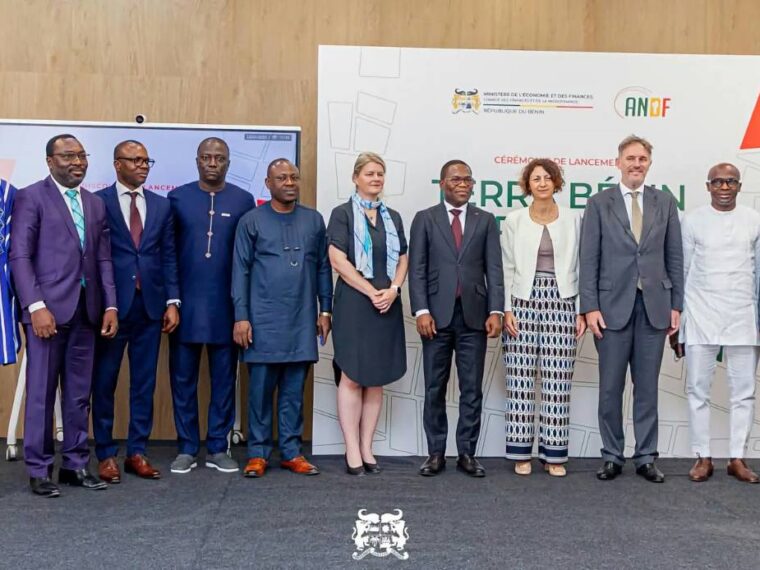
Benin has taken a decisive step toward ending decades of land insecurity with the official launch of two groundbreaking programs: TERRA BÉNIN and PPMEC II. The initiative, unveiled in Cotonou on November 6, 2026, marks a turning point in the government’s efforts to modernize the national land registry system, eliminate property disputes, and provide lasting security for landowners.
Why Benin is betting big on a digital land revolution
A nation plagued by land conflicts, title disputes, and uncertain property rights is finally addressing the root cause of its legal and economic challenges. Benin’s new cadastre overhaul aims to do more than just update records it seeks to transform how the country manages, verifies, and protects land ownership. By digitizing and securing land data, Benin is laying the foundation for a more predictable and investor-friendly property market.
A national project with massive scale and impact
The TERRA BÉNIN program sets an ambitious target: registering 1.5 million land parcels and issuing over one million registration certificates within the coming years. This isn’t just bureaucratic paperwork—it’s a practical solution to long-standing problems such as overlapping claims, fraudulent sales, and ownership ambiguities.
A well-organized cadastre provides clear, accessible, and verifiable information on land parcels details that are essential for:
Preventing double sales of the same property
Reducing disputes over land boundaries and ownership
Accelerating property transactions with greater confidence
Supporting urban planning and infrastructure development
More than just land records: A catalyst for economic growth
The ripple effects of this reform extend far beyond individual property titles. Land insecurity has long discouraged investment, stifling business growth and limiting access to credit for landowners. With a reliable cadastre in place, Benin is expected to see:
Increased investor confidence in real estate and infrastructure projects
Easier access to financing through clearer property documentation
More efficient urban expansion and national land use planning
Enhanced government revenue through accurate land valuation and taxation
From paperwork to protection: How the new system works
Unlike past efforts that relied on fragmented records and manual processes, the new cadastre draws on digital mapping, satellite data, and centralized databases to ensure accuracy and transparency. The system is designed to:
Identify each parcel with precise geographic coordinates
Assign unique identifiers to prevent duplication or fraud
Allow real-time updates and verification by authorities
Enable public access to verified land information, where appropriate
For citizens, this means no more living with the fear of losing their land to undocumented claims or administrative errors. For businesses, it means fewer legal hurdles and more predictable conditions for investment. And for the government, it means stronger legal and fiscal stability.
Building a fairer and more competitive Benin
This is not the first effort to modernize Benin’s land administration, but it is the most comprehensive. By integrating two major programs TERRA BÉNIN and PPMEC II the country is combining technical innovation, institutional reform, and nationwide execution. The success of this initiative will depend on:
Full territorial coverage across all regions
Public awareness and education on the new process
Efficient implementation of digital tools and procedures
Strong legal and institutional mechanisms to enforce secure property rights
If executed effectively, Benin’s cadastre transformation could serve as a model for other nations grappling with land insecurity. It represents not just an administrative upgrade, but a strategic investment in the country’s future that empowers citizens, attracts capital, and upholds the rule of law.
With 1.5 million parcels on the line and one million certificates to be issued, the stakes are high. But the potential payoff stable property rights, a thriving economy, and a society built on trust is even higher.
By Agnès Mvogo — Journalist