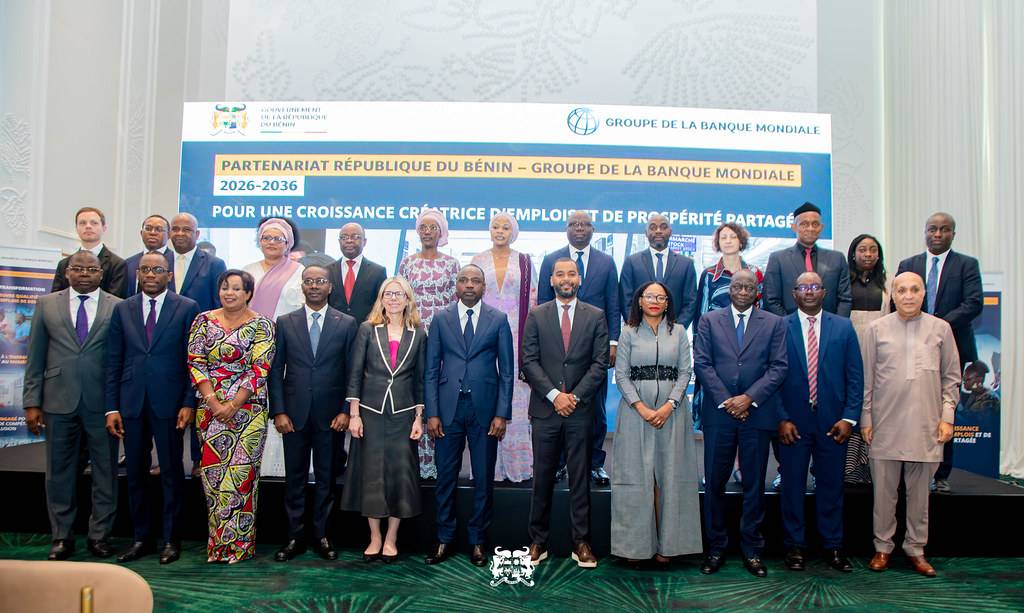
The Sofitel Cotonou Marina Hotel & Spa buzzed with energy on Friday, July 17, 2026, as officials launched the groundbreaking Country Partnership Framework (CPF) 2026-2036 between the government of Bénin and the World Bank Group. This landmark 10-year agreement is designed to propel the nation toward its bold Alafia Bénin 2060 vision by focusing on human capital, productive infrastructure, and youth employment.
A strategic renewal in a pivotal economic moment
In a gathering of ministers, diplomats, international partners, and private sector leaders, the CPF 2026-2036 was officially unveiled. Far from a routine policy update, this framework represents a complete overhaul of how the World Bank will support Bénin financially and technically over the coming decade.
This initiative arrives at a critical juncture for the country’s political and economic trajectory. With Alafia Bénin 2060 as its guiding star, the government aims to solidify macroeconomic gains while accelerating inclusive growth. The attendance of Anna Bjerde, World Bank Managing Director of Operations, underscored the renewed confidence international donors place in Bénin’s structural reforms.
Economic transformation at the heart of the roadmap
The CPF 2026-2036 is not just about maintaining growth—it’s about reshaping Bénin’s economy into one that is more competitive, resilient, and equitable. The framework’s cornerstone is a decade-long commitment to stable financing, enabling large-scale infrastructure projects without straining national budgets. This influx of capital and expertise is intended to unlock private investment, both domestic and foreign, fostering a self-sustaining cycle of development.
The three pillars powering structural change
To ensure maximum impact, the partnership zeroes in on three interconnected priorities:
- Strengthening human capital: A skilled and healthy workforce is the backbone of economic expansion. The first pillar tackles malnutrition, public health, and vocational training reforms. The goal is to align education with market demands, preparing youth for careers in high-growth sectors.
- Building essential infrastructure: Infrastructure deficits have long hindered local businesses. Massive investments will target energy, digital connectivity, and transportation networks. By improving connections between farmlands, urban hubs, and the Port of Cotonou, the country aims to cut logistics costs and boost exports.
- Empowering the private sector: Small and medium enterprises (SMEs) are positioned as the engine of sustainable job creation. The CPF will support reforms to simplify business regulations, expand credit access for entrepreneurs, and promote youth and women-led ventures.
Youth employment: the litmus test of success
The true measure of this decade-long plan lies in its ability to integrate Bénin’s youth into the workforce. With a predominantly young population, the country faces both a social challenge and an economic opportunity.
Aristide Medenou, Minister of Economy, Finance, and Cooperation, emphasized this urgency during the launch. He stressed that the CPF 2026-2036 must act as a catalyst for opportunity, prioritizing high-value agricultural value chains and agro-industry—sectors capable of absorbing young workers and curbing rural exodus. By linking World Bank technical assistance to national industrialization goals, such as those already seen in the Glo-Djigbé industrial zone, the framework ensures new jobs are not temporary but rooted in lasting economic growth.
Resilience and stability: safeguarding progress
No thriving economy stands on shaky ground. The CPF 2026-2036 embeds resilience and national cohesion across all initiatives. In a West African region grappling with security and climate challenges, Bénin is doubling down on inclusive development.
Investments will extend beyond the economic powerhouses of the south. A significant portion of funds will reach peripheral and northern regions, addressing disparities through basic infrastructure (clean water, electricity, rural roads) and local job opportunities. By tackling root causes of vulnerability, the program aims to fortify social stability nationwide.
Global recognition of Bénin’s ambitious vision
Anna Bjerde praised Bénin’s strategic leadership, highlighting the bold ambitions of the President and his administration, particularly in financial governance. She noted that the timing of this partnership is ideal for translating macroeconomic strategies into tangible benefits for entrepreneurs, farmers, and families across the country.
Her remarks reinforced Bénin’s reputation as a reform leader among Bretton Woods institutions. They also signaled the World Bank’s commitment to a long-term partnership, ready to adapt financing mechanisms to evolving local realities.
Paving the way for an emerging Bénin by 2036?
The CPF 2026-2036 lays the groundwork for a transformative decade. By simultaneously investing in human capital, infrastructure, and private enterprise, Bénin and the World Bank are deploying a comprehensive economic overhaul.
The plan’s success hinges on flawless execution, robust project governance, and the ability of public institutions and local businesses to absorb investments effectively. If the commitments made in Cotonou translate into action across the nation’s towns and villages, Bénin could emerge as a model of inclusive economic transformation for West Africa. The countdown to 2036 has begun.