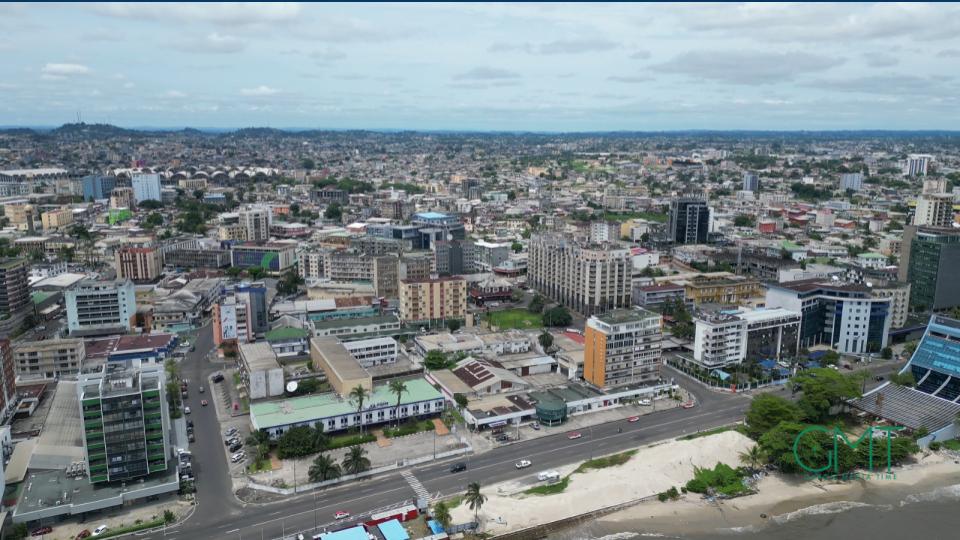
Gabon is significantly strengthening its standing among the most appealing economies within the Central African Economic and Monetary Community (CEMAC) for foreign direct investment (FDI). According to the World Investment Report 2026 from UNCTAD, the nation recorded substantial FDI inflows of $379 million in 2025, equivalent to 216 billion Fcfa. This marks a notable increase from $310 million in 2024, signaling a robust recovery following several years characterized by considerable volatility in capital flows. This upward trend unfolds within a global landscape where international investments remain concentrated across a select number of countries and strategic sectors, particularly digital infrastructure, critical minerals, and energy.
The total stock of FDI within Gabon has now reached $19.24 billion, an increase from $18.89 billion just one year prior, underscoring the sustained confidence of global investors. Conversely, FDI outflows have remained modest at $56 million, indicating Gabon’s profile as primarily a recipient rather than an exporter of capital. This dynamic reaffirms Gabon’s role as the foremost destination for international investments in Central Africa, largely attributed to its abundant natural resources, developing infrastructure, and ongoing reforms aimed at enhancing the business climate.
Economic diversification: a strategic imperative
The report, however, highlights that Africa continues to grapple with a significant concentration of investments in just a few economies and a limited number of sectors. UNCTAD reminds us that the overall outlook remains fragile due to prevailing geopolitical tensions, trade uncertainties, and the slowdown of major infrastructure projects. Across Africa, the decline in project financing operations and the concentration of investment flows into a restricted number of countries underscore the critical need to broaden the foundations of economic attractiveness.
Gabon must leverage its position as a leading force within CEMAC to attract even more investments into high-value-added sectors. These include the local processing of raw materials, industrial development, the digital economy, and renewable energies. In an international environment marked by intensified competition among capital-receiving territories, Gabon’s capacity to pursue structural reforms and strengthen regional economic integration will be pivotal in maintaining its leadership and contributing to making CEMAC a more competitive destination for international investors.