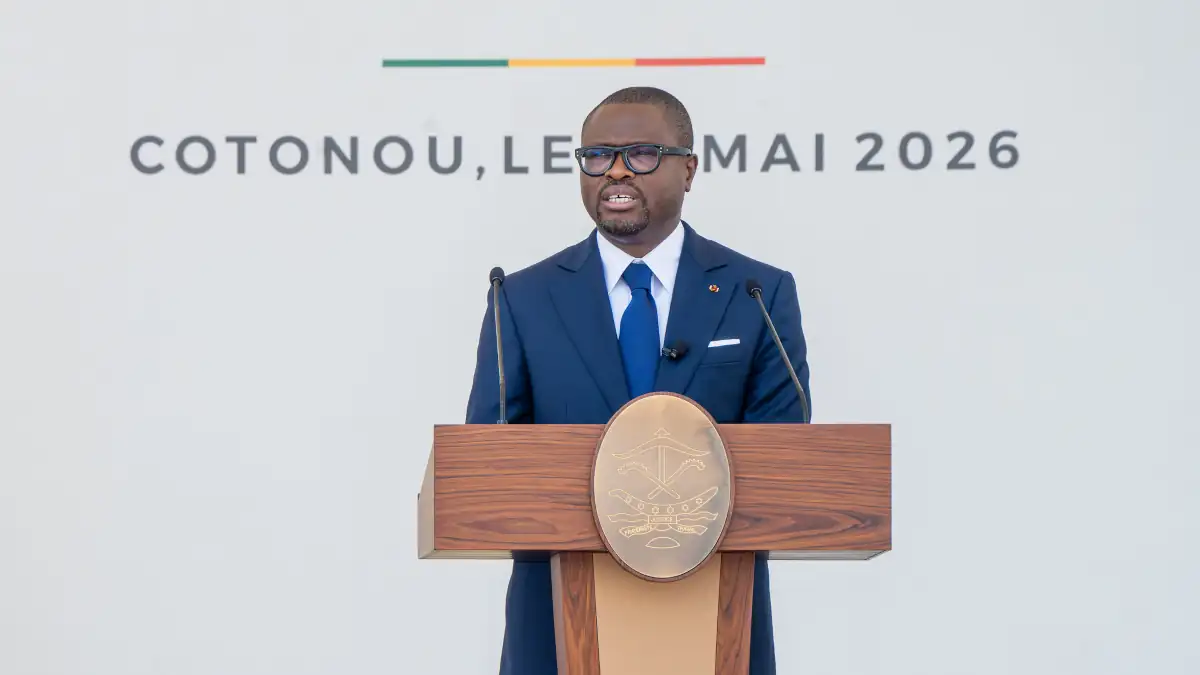
The newly elected President of Bénin, Romuald Wadagni, convened the first Council of Ministers of his seven-year term on May 28, 2026, at the Palais de la Marina. Just days after his official inauguration, the government gathered to receive the President’s guiding directives for the 2026–2033 mandate.
In his opening address, President Wadagni extended warm congratulations to the newly appointed ministers, emphasizing that their roles were not merely positions of power but a sacred duty to serve the nation. He made it clear that this responsibility carried no personal privilege, only a commitment to the greater good of Bénin and its people.
The Head of State outlined the core values that would define the government’s operations. He called for unwavering integrity, strict sobriety in conduct, and a spirit of solidarity among ministers. Above all, he insisted that public service must remain free from partisan or individual interests, ensuring decisions are made solely for the benefit of the country.
addressing regional disparities and national security
During the landmark session, President Wadagni highlighted two critical priorities for his administration. The first centered on reducing communal disparities across Bénin, ensuring that development reaches every corner of the nation. The government was tasked with accelerating efforts to bridge the gap between regions through strategic investments, improved access to essential services, and the construction of modern infrastructure in underserved areas.
The second priority emphasized national security, particularly in response to recent armed incursions in the northern regions. The President urged the executive team to reinforce defense mechanisms, strengthen territorial protection, and maintain vigilance to safeguard the country’s stability and sovereignty.
streamlining government operations for efficiency
The administration also announced a restructuring of its working methods to enhance governance. Moving forward, the Council of Ministers will convene regularly on the first Wednesday of each month. Additional extraordinary sessions may be called if circumstances demand immediate action.
The Interministerial Committee will meet twice a month—on the first and third Mondays—to ensure cross-sector coordination. Furthermore, joint sessions involving the Council, the Interministerial Committee, and sectoral ministers will be organized to tackle complex policy challenges more effectively.
This inaugural meeting marks the official launch of the new government’s operational framework, setting the stage for a transformative seven-year term under President Wadagni’s leadership.