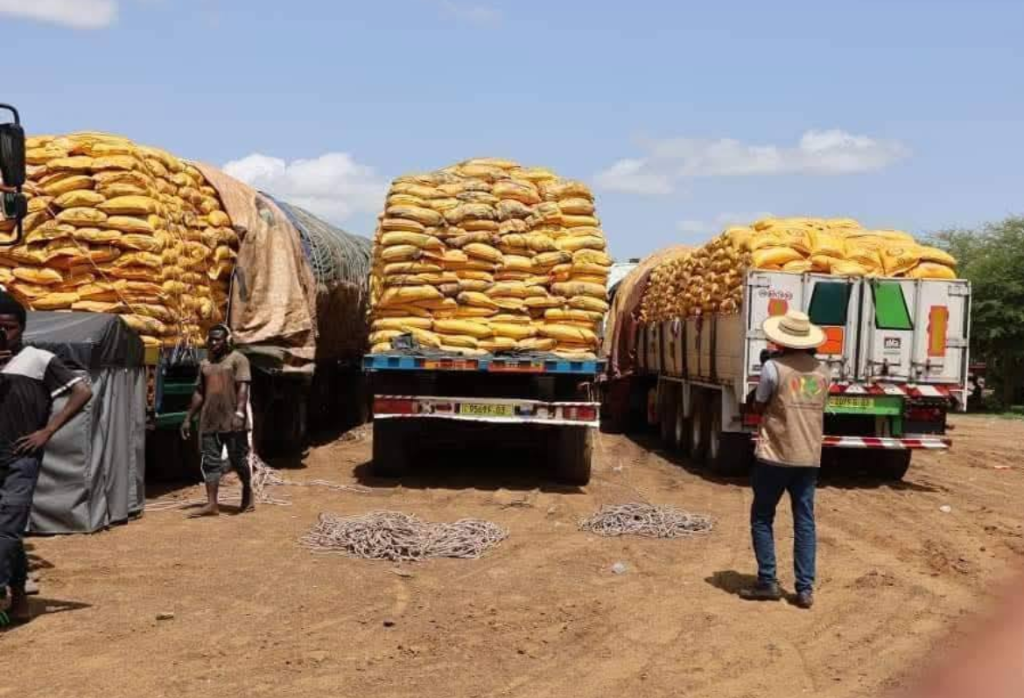
Amidst soaring rhetoric about self-reliance, Burkina Faso finds itself critically dependent on humanitarian aid to combat a deepening food crisis. Recent shipments of rice, including 2,422 tonnes donated by Pakistan, highlight the stark gap between the government’s promises and the harsh reality on the ground.
The ceremonial handover of Pakistani rice underscores a troubling paradox: the country’s transition authorities continue to struggle with securing food supplies over three years after the rise of the Patriotic Movement for Safeguarding and Restoration (MPSR). While officials celebrate these donations as diplomatic victories, they also lay bare the failure of local agricultural policies to meet the nation’s needs.
The illusion of self-sufficiency crumbles under scrutiny
Beyond Pakistan’s contribution, Burkina Faso has received substantial aid from China and Canada. Despite the regime’s claims of restored sovereignty, over 3.5 million Burkinabè now rely on international aid just to put food on the table. The situation exposes the hollowness of political slogans in the face of systemic failures:
- Local production has collapsed, forcing the country into a cycle of dependency on distant donors.
- Rice donations target northern and eastern regions, where insecurity has severed supply chains and left communities isolated.
- The military’s approach has exacerbated the crisis, with entire agricultural zones abandoned due to conflict and displacement.
The security crisis and its human cost
Observers increasingly attribute the food emergency not just to climate challenges but to the junta’s own policies. The militarization of governance and aggressive counterinsurgency tactics have devastated rural economies. Over 2 million internally displaced persons now roam the country, transforming once-fertile farmlands into wastelands. Alarmingly, the Integrated Food Security Phase Classification (IPC) warns that parts of Burkina Faso are on the brink of Phase 4 (Humanitarian Emergency).
The stakes couldn’t be higher: more than 600,000 children face acute malnutrition by year’s end. Yet, the government’s response remains hamstrung by bureaucratic opacity and distrust from international partners. Only 18% of the 2026 Humanitarian Response Plan has been funded, signaling growing skepticism among donors toward Ouagadougou’s leadership.
A fragile lifeline with no sustainable future
As the rainy season approaches, the Pakistani rice shipment offers temporary relief to a population pushed to its limits. However, Ibrahim Traoré’s government faces mounting pressure: sovereignty cannot be proclaimed from a television studio; it must be built in fields that remain vulnerable under persistent insecurity. Without a fundamental shift from militarized rhetoric to tangible rural revival, a lasting solution remains out of reach.