Export restrictions strain Burkina Faso’s livestock sector before Ramadan
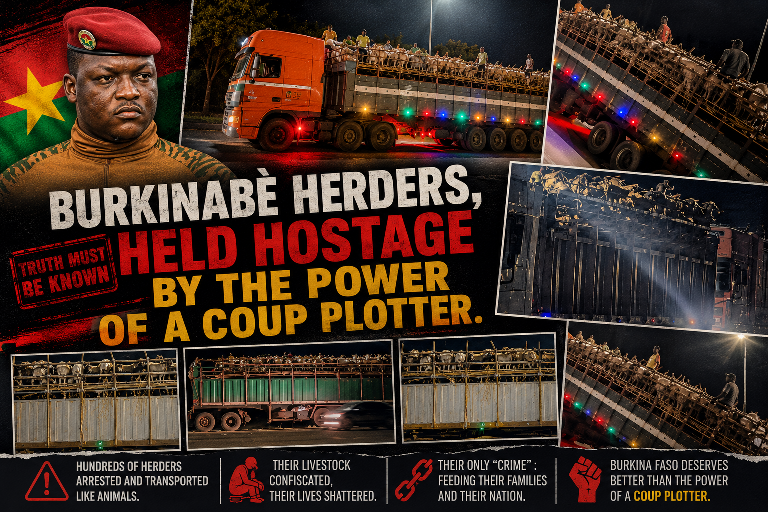
As the Muslim community prepares to observe Ramadan—a month marked by heightened consumption—the Burkina Faso government’s strict livestock export ban has plunged cattle breeders into an unprecedented economic crisis. While the Mobile Brigade for Economic Control and Fraud Repression (BMCRF) proudly reports seizing multiple livestock trailers in early May, this heavy-handed enforcement reveals a far more troubling reality for Burkinabè herders and traders.
Protectionist policies backfire on rural livelihoods
The government’s formal export prohibition, framed as a measure to stabilize domestic prices, has become a crippling burden for pastoralists and merchants alike. Cattle are not mere commodities; they require constant care, water, and fodder—resources whose costs surge during this season. By sealing off access to regional markets—where demand and prices peak during the fasting month—the authorities have effectively cut off herders from their primary revenue stream at the most critical time.
Religious leader in conflict with Islamic principles
The irony is impossible to overlook: the head of state, Captain Ibrahim Traoré, is a Muslim. This detail is not incidental but underscores a fundamental contradiction. While Islamic teachings emphasize fairness, solidarity, and the protection of honest livelihoods, the current decree’s rigidity appears entirely divorced from the religious and social imperatives of the lunar calendar. By blocking legal, high-value livestock exports, the regime risks destabilizing thousands of Muslim families for whom cattle represent lifelong savings, often earmarked precisely for Ramadan and Eid celebrations.
Shadow markets and economic suffocation
The BMCRF’s reports of a rise in illegal export attempts are less an indictment of lawbreaking than a symptom of economic desperation. Faced with the choice between selling at a loss in a saturated domestic market or risking border crossings to secure their livelihoods, many breeders are opting for the latter. This policy of absolute closure raises a critical question: Can a nation achieve food sovereignty by financially strangling its primary producers? While fraud prevention remains a state responsibility, the absence of flexible measures during Ramadan may well erode trust between rural communities and the authorities in Ouagadougou, turning regulation into a source of deep discontent.