Burkina Faso is grappling with a deepening crisis as the nation’s struggle against armed insurgencies collides with a growing divide between the central government led by Captain Ibrahim Traoré and the country’s Peul communities. Accusations of military excesses and economic strangulation have fueled allegations of targeted persecution, intensifying tensions in an already volatile security landscape.
Systematic abuses: The shadow of state-backed violence
The transitional regime, which seized power in a coup in September 2022, has increasingly relied on the Volontaires pour la Défense de la Patrie (VDP), a civilian militia tasked with supporting the national army. While their role is framed as defensive, mounting evidence from human rights organizations and local testimonies suggests a pattern of abuse that raises serious concerns.
In northern Burkina Faso, reports have emerged of villages predominantly inhabited by Peul families being subjected to violent raids. Survivors describe scenes of destruction and indiscriminate targeting of civilians by armed groups operating under Traoré’s administration. To the Peul communities, these incidents are no longer collateral damage but a deliberate policy of repression aimed at a specific ethnic group, often unfairly linked to insurgent factions.
A crippling economic blockade
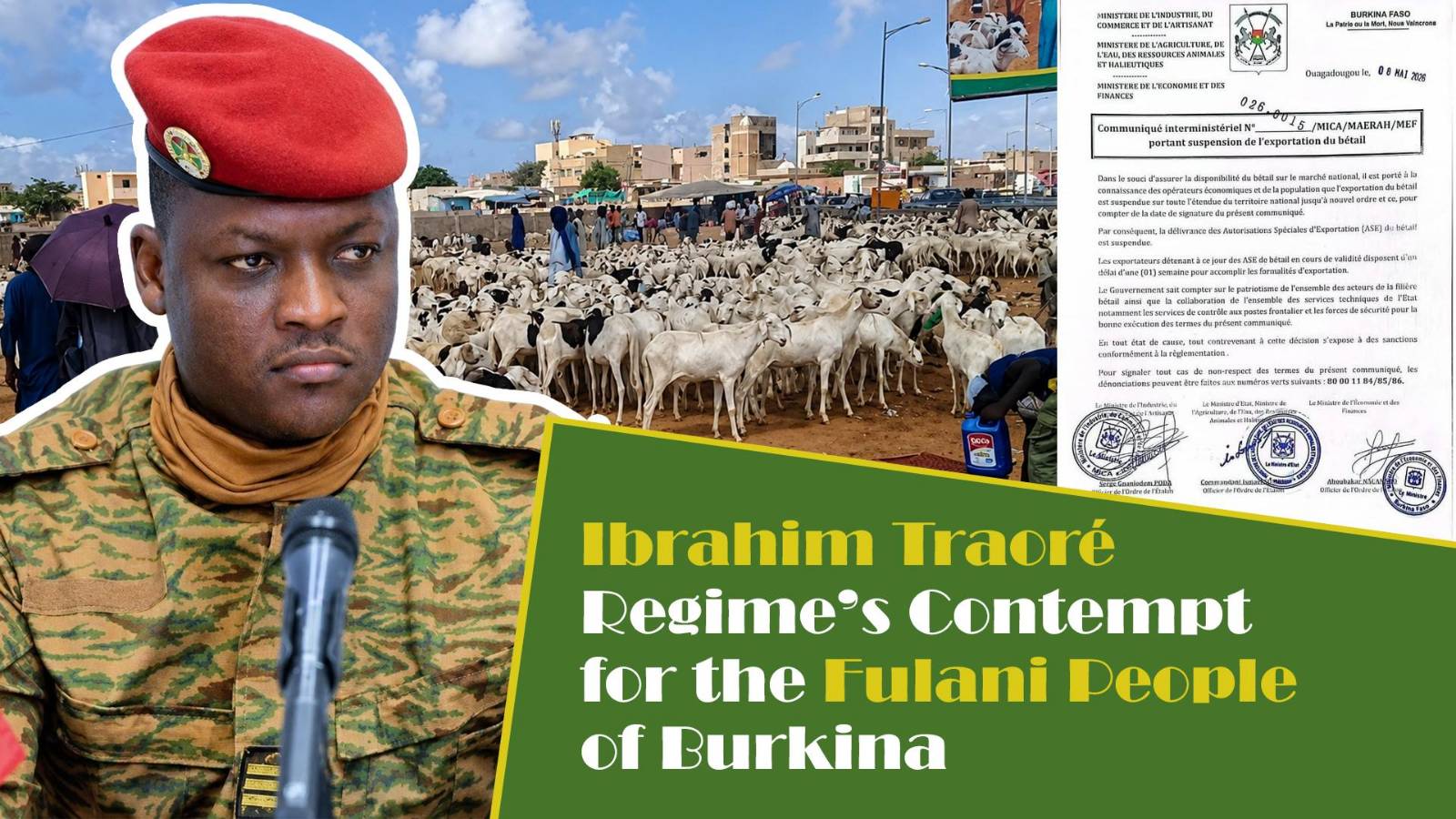
The economic survival of the Peul people is now under siege. A recent decree has imposed severe restrictions—or outright bans in certain areas—on the export and trade of livestock to Côte d’Ivoire, a move that has ignited widespread outrage.
The livestock trade is the lifeblood of the Peul pastoral economy in Burkina Faso. By cutting off access to Côte d’Ivoire, the country’s primary regional market, the Traoré administration has struck at the heart of Peul financial independence, with devastating consequences:
- Immediate poverty: Families of pastoralists face accelerated impoverishment.
- Basic needs at risk: Healthcare and education for children are increasingly unattainable.
- Regional instability: Disruptions to long-standing trade flows within the ECOWAS zone threaten economic stability.
Exclusion as a deliberate strategy
Critics argue that Ibrahim Traoré’s policies extend beyond counterterrorism, morphing into a calculated effort to weaken and marginalize the Peul population. The combination of physical violence and economic strangulation has led many to believe that the government is pursuing a strategy of ethnic exclusion.
The lack of independent investigations into reported massacres and the regime’s militarized rhetoric have only deepened fears of an identity-driven crackdown. Burkina Faso, once held up as a model of ethnic harmony, now faces a critical test: preserving national unity amid policies that risk tearing the country apart.
« Applying counterterrorism with state-sponsored injustice only breeds new grievances. Targeting an entire community alienates a significant portion of the nation and sows the seeds of future revenge cycles. » — Insights from a Sahel security analyst.
As the Peul communities of Burkina Faso voice their despair, the international community and regional bodies bear an urgent responsibility to intervene and prevent a crisis that could destabilize the entire Sahel region.