Mali’s recent security upheaval reveals critical flaws in external security partnerships, particularly with Russian forces, according to a leading regional analyst. The Timbuktu Institute, a Dakar-based African research center, published a scathing analysis titled “Mali: Anatomy of a Security Earthquake” following the coordinated attacks on April 25 that resulted in the death of Mali’s Defense Minister, General Sadio Camara, and the fall of Kidal to armed groups.
military alliances under scrutiny after jihadist offensive
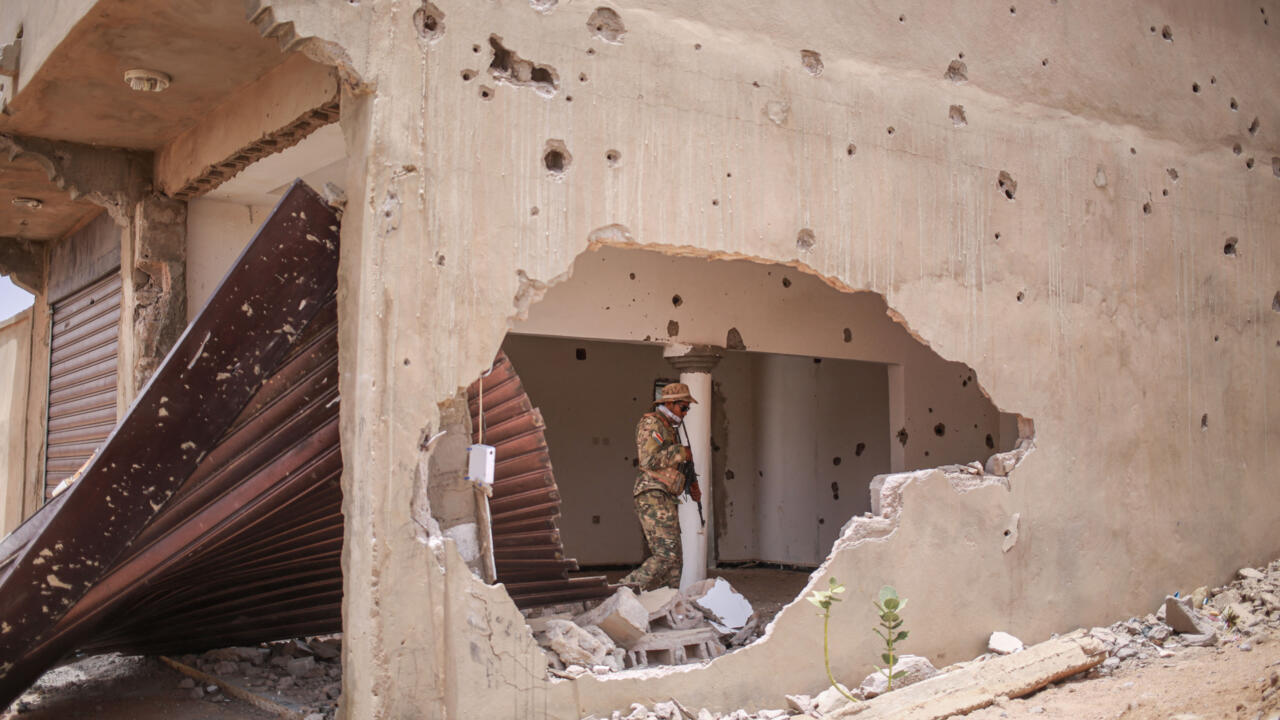
The assault, carried out by the Group for the Support of Islam and Muslims (JNIM), linked to al-Qaeda, and the Front for the Liberation of Azawad (FLA), an independence movement, targeted multiple locations in northern Mali. The offensive raised serious questions about the effectiveness of Mali’s security strategy, especially its reliance on foreign military support. Bakary Sambe, Director of the Timbuktu Institute, argues that the externalization of security has proven ineffective in combating locally rooted insurgencies.
Russia’s africa corps fails to deliver promised results
Sambe highlights that the death of General Camara and the chaotic withdrawal of Russian forces from Kidal symbolize the collapse of the Wagner-Africa Corps strategy. Despite initial promises of rapid stabilization, the partnership has not delivered tangible security gains. The analyst points out that after the withdrawal of Barkhane, which included civil-military development aspects, outsourcing security to Moscow has failed to counter an insurgency deeply embedded in Mali’s local context. The regime of Assimi Goïta now faces the risk of losing its primary narrative of security restoration.
alliance of states of the Sahel falls short in solidarity
Another key observation is the limited support from the Alliance of Sahel States (AES), originally designed as a mutual defense pact. Despite declarations of solidarity from regional leaders, including Burkina Faso’s Colonel Ibrahim Traoré, no military assistance materialized following the attacks. Sambe explains that internal security challenges in neighboring countries, such as recent attacks in Burkina Faso, have diverted attention and resources away from Mali. The failure of the AES to mobilize underscores the alliance’s limitations in practice.
paradoxical public reaction strengthens transitional regime
The analyst notes a paradoxical shift in public sentiment. While the regime’s security promises remain unfulfilled, the attacks have paradoxically fostered a temporary sense of national unity. Sambe describes this as a “rally around the flag” effect, where the population temporarily closes ranks behind the transitional government despite its shortcomings. This phenomenon, though difficult for external observers to grasp, has bolstered the legitimacy of General Goïta in the short term.
jihadist-rebel alliance: a tactical convergence, not a lasting bond
Sambe examines the growing coordination between JNIM and the FLA, describing it as a pragmatic convergence rather than a deep-rooted alliance. While the attacks demonstrate increased tactical coordination and shared interests, such as opposition to the Bamako regime and control over trafficking networks, fundamental ideological differences persist. JNIM seeks to impose Sharia law, while the FLA advocates for Azawad’s autonomy. Additionally, the dominance of central Mali’s Katiba Macina within JNIM raises doubts about its long-term commitment to the FLA’s territorial ambitions. Without a shared political vision, the alliance is likely unsustainable.
the case for dialogue over military solutions
Sambe emphasizes the inevitability of dialogue with armed groups, particularly as jihadist movements become increasingly rooted within Malian society. He notes that many Malians believe it is time for the country to engage with all its citizens, including those perceived as lost causes. The analyst argues that military solutions alone cannot address the deep-seated grievances fueling the insurgency. The call for an inclusive national dialogue is gaining traction, even among opposition figures like the Coalition of Forces for the Republic (CFR) led by Imam Dicko.