
The African Football Confederation (CAF) has officially endorsed the joint bid by Burkina Faso, Mali, and Niger to host the 2032 Africa Cup of Nations (AFCON). This milestone paves the way for the three Sahel Alliance nations to advance their ambitious project, though significant hurdles remain in infrastructure and security.
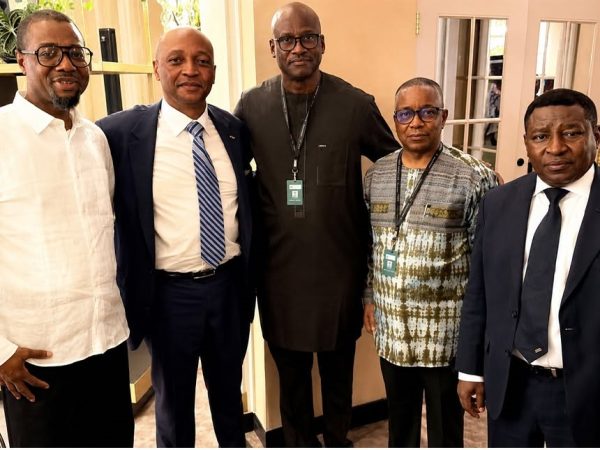
On July 18 in New York, the presidents of Burkina Faso’s, Mali’s, and Niger’s football federations secured confirmation from CAF President Patrice Motsepe that their co-hosting declaration had been formally accepted. The announcement, made public on July 20 by Niger’s football federation (FENIFOOT), quickly resonated across the region.
Administrative milestone, not final approval
While this step holds symbolic value, it remains largely procedural. Under CAF’s candidacy regulations (article 7.3), the trio has now met the basic requirement of submitting a joint declaration of interest—a mandatory first step that keeps their bid alive without guaranteeing eventual success. According to FENIFOOT, this validation merely allows their application to proceed to the next formal evaluation phase.
Why caf opened three bids at once
In early July 2026, CAF simultaneously launched calls for bids for the 2028, 2032, and 2036 AFCON editions, inviting all 54 member associations to submit proposals. This long-term planning approach gives federations ample time to develop robust, sustainable bids.
However, the 2032 bid now faces rigorous technical scrutiny. CAF will assess the feasibility of the Sahel project, focusing on the adequacy of stadiums, hotels, and transportation networks across the three countries.
A proven model to follow
Joint hosting is not unprecedented for CAF. Kenya, Uganda, and Tanzania will co-host the 2027 AFCON, serving as a potential blueprint for Burkina Faso, Mali, and Niger. A tripartite arrangement could enable the Sahel nations to share existing infrastructure rather than shoulder the full burden of meeting international standards alone.
CAF’s president has praised the initiative as a model of regional cooperation, while emphasizing strict adherence to established procedures, as noted in the FENIFOOT communiqué dated July 20, 2026.
Football as a tool of sahelian diplomacy
This bid aligns with a broader geopolitical strategy. Since severing ties with ECOWAS, the military-led governments in Ouagadougou, Bamako, and Niamey have intensified joint initiatives to assert the Sahel Alliance’s autonomy—ranging from monetary policy to international diplomacy. A successful AFCON bid would offer the alliance an unparalleled global platform at a time when the region continues to grapple with persistent insecurity. Just days earlier, the African Union condemned deadly attacks in Niger and Mali on July 17 and 18.
The CAF will weigh the Sahel bid heavily on two fronts: security conditions and the robustness of infrastructure, hospitality, and transport systems. These factors will determine whether the dossier meets the stringent requirements set for hosting a continental tournament.
What’s next for the sahelian bid
By securing CAF’s preliminary approval on July 18, Burkina Faso, Mali, and Niger have only cleared the first administrative hurdle: a declaration of interest. The road to 2032 remains long and uncertain, with no fixed timeline for the final decision. Technical feasibility—spanning stadiums, accommodations, and security—remains unproven and will be scrutinized closely.
The three federations have vowed to collaborate with their respective governments to prepare a technical bid aligned with CAF’s stringent criteria. The real test lies not in boardrooms, but in the ability of the Sahel nations to deliver long-term infrastructure, organizational capacity, and security—hallmarks of a world-class sporting event.
The 2032 AFCON could become far more than a football tournament: it may serve as a testament to the Sahel’s capacity to transform political unity into a lasting international showcase.