The African Football Confederation has officially endorsed the joint bid by Burkina Faso, Mali, and Niger to host the 2032 Africa Cup of Nations (AFCON). This landmark decision marks a critical milestone for the three Sahelian nations, who now face the challenge of demonstrating their readiness in infrastructure and security.
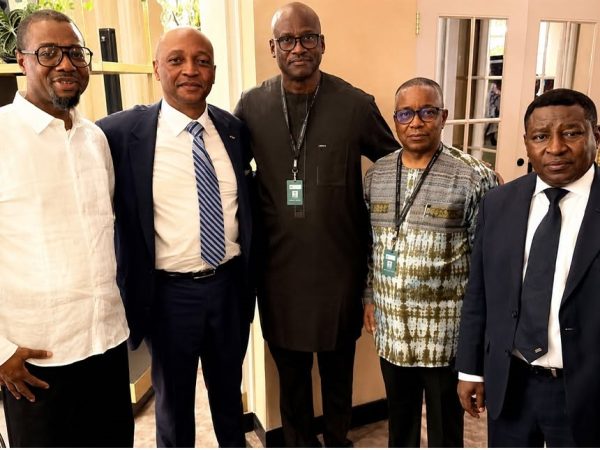
Behind closed doors in New York on July 18, Burkina Faso, Mali, and Niger secured initial approval from CAF President Patrice Motsepe. The leaders of the three football federations—Colonel Oumarou Sawadogo, Mahamadou Cissé, and Issaka Adamou—formalized their shared ambitions before the continental body. The announcement, made public two days later by Niger’s football federation, immediately resonated across the region.
Administrative clearance achieved, but the road ahead remains long
This validation fulfills a regulatory requirement under CAF’s Article 7.3, confirming that the trio has met the basic threshold for submitting a joint expression of interest. While this step permits them to remain in contention, it does not guarantee final selection. According to Niger’s football federation, this approval simply allows the bid dossier to proceed through the official evaluation process.
Why the CAF chose to invite bids for three tournaments at once
In early July 2026, the African Football Confederation opened simultaneous calls for bids for AFCON 2028, 2032, and 2036, inviting all 54 member associations to participate. By extending the timeline, CAF aims to foster sustainable planning while giving federations ample time to develop robust bids.
For the 2032 edition, however, the continental body has yet to set a final decision date. A thorough technical assessment will be carried out, evaluating the readiness of sports facilities, hotels, and transportation networks across the three candidate nations.
A precedent from East Africa offers reassurance
The concept of a three-nation co-hosting arrangement is not new to CAF. Kenya, Uganda, and Tanzania are already slated to jointly organize AFCON 2027, serving as a potential model for the Sahelian bid. This collaborative approach could enable Burkina Faso, Mali, and Niger to leverage existing infrastructure rather than shoulder the full burden of meeting global standards alone.
CAF’s president has praised the initiative as a symbol of regional cooperation, while emphasizing the need to follow established procedures, as outlined in a statement released by Niger’s football federation on July 20, 2026.
Football as a new frontier in Sahelian diplomacy
The joint bid reflects a broader trend. Since severing ties with ECOWAS, the military-led governments in Ouagadougou, Bamako, and Niamey have intensified joint initiatives aimed at reinforcing the Autonomous Sahel Alliance—spanning monetary policy to foreign affairs. A successful bid could provide the Alliance of Sahel States with a rare international platform, particularly amid ongoing security challenges in the region. Just days before the announcement, the African Union condemned deadly attacks in Niger and Mali that occurred on July 17 and 18.
The CAF’s decision will hinge not only on security conditions but also on the quality of sports infrastructure, accommodation capacity, and transport networks. These factors will determine whether the Sahelian bid can stand out in the coming months.
What this means for the future of AFCON 2032
The July 18 approval represents only the first hurdle: a procedural green light that allows the bid to advance. It does not predetermine technical feasibility—nor does it ensure victory over potential competitors. The Burkina Faso, Mali, and Niger federations have pledged to work closely with their respective governments to prepare a bid dossier that fully complies with CAF’s stringent requirements. The real test, however, will unfold far from diplomatic chambers, in the ability of these nations to deliver lasting infrastructure, seamless organization, and robust security for a continental tournament.
Should the bid succeed, AFCON 2032 could transcend sport, emerging as a powerful symbol of the Sahel’s capacity to transform political unity into an international showcase.