
Cameroon’s paul biya absence sparks political debate
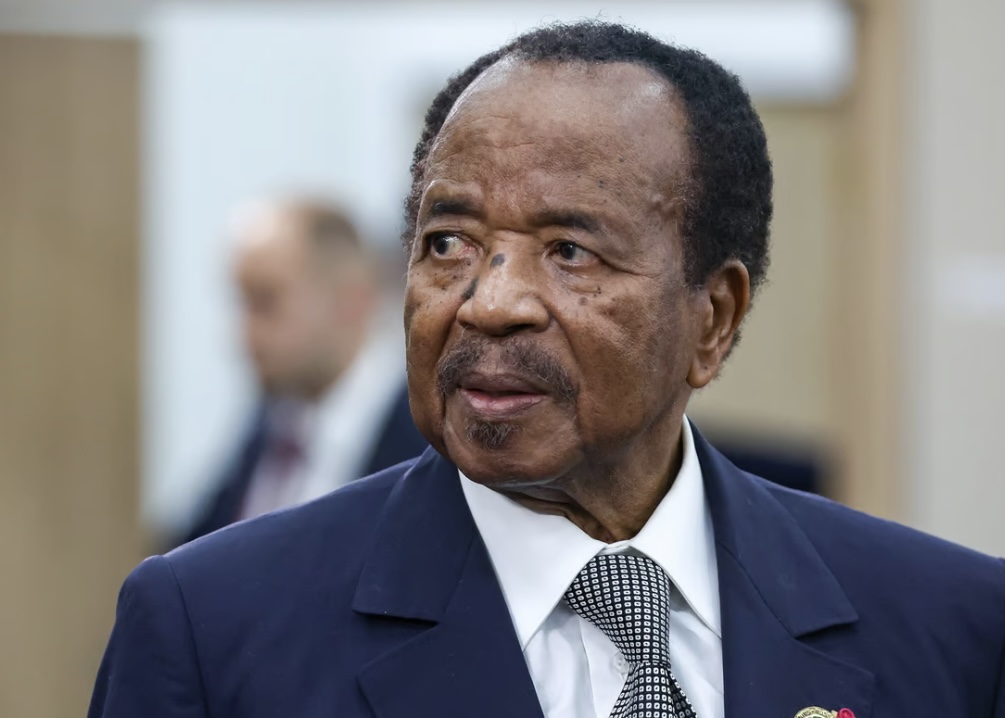
Uncertainty grows as Cameroon’s president remains abroad
The Rassemblement démocratique du peuple camerounais (RDPC) convened an urgent meeting of its top officials this week, over a month after President Paul Biya departed for a private trip to Europe. No official statement has clarified when—or if—he will return, deepening concerns about the continuity of governance.
While the ruling party insists institutions are functioning normally, opposition leaders are demanding transparency regarding the president’s prolonged absence and the safeguards in place for such scenarios.
Party defends stability amid silence
RDPC Secretary-General Jean Nkuete called the gathering, describing it as a ‘key working session’ in a statement released Wednesday. The agenda and purpose of the meeting were not disclosed, leaving observers to speculate about its implications.
At 93 years old, President Biya left Cameroon on June 7, with his civil cabinet citing a ‘short private stay in Europe.’ Since then, no official announcement has confirmed his return date, fueling persistent questions about his whereabouts and the functioning of the presidency.
The RDPC has attempted to quell speculation, publishing an editorial on July 15 in L’Action by party propaganda chief Christophe Mien Zok. The piece reaffirmed that ‘authority is not vacant’ and dismissed claims of the country being run ‘on autopilot,’ using the party’s emblematic phrase ‘the Lion has not left.’ Official presidential social media channels have continued to share messages attributed to Biya, including greetings to Emmanuel Macron for France’s national day and a note to the President of Montenegro, but no other public activities have been reported.
Opposition demands answers on presidential absence
The prolonged absence has reignited calls for clarity from several political figures. Deputy Jean-Michel Nintcheu has urged the Constitutional Council to declare a vacancy in the presidency. Meanwhile, the Union démocratique du Cameroun (UDC) has taken a more measured stance, refusing to speculate on Biya’s personal situation while stressing that state continuity cannot rely on silence or assumption.
In a July 18 statement, the UDC acknowledged that a long stay abroad does not automatically constitute a power vacuum but stressed the need to examine how presidential duties are being exercised during such periods. The party emphasized that the constitution lacks clear provisions on extended absences, particularly regarding the threshold that would trigger constitutional intervention.
Constitutional gaps fuel institutional concerns
Cameroon’s laws do not specify a maximum duration for the president’s absence from national territory, leaving a legal gray area. Analysts argue this ambiguity warrants institutional review, especially as the country grapples with questions about presidential succession and contingency measures.
The UDC also highlighted another unresolved issue: the vice-presidency, reintroduced during a constitutional revision in April, remains unfilled. The party advocates for legal reforms to define clear protocols for prolonged presidential absences, ensuring transparency and continuity of governance.
President Biya, who has led Cameroon since 1982, frequently travels to Europe. His current trip, now the longest during his tenure, continues without an official update on his return, leaving the nation in a state of heightened vigilance.