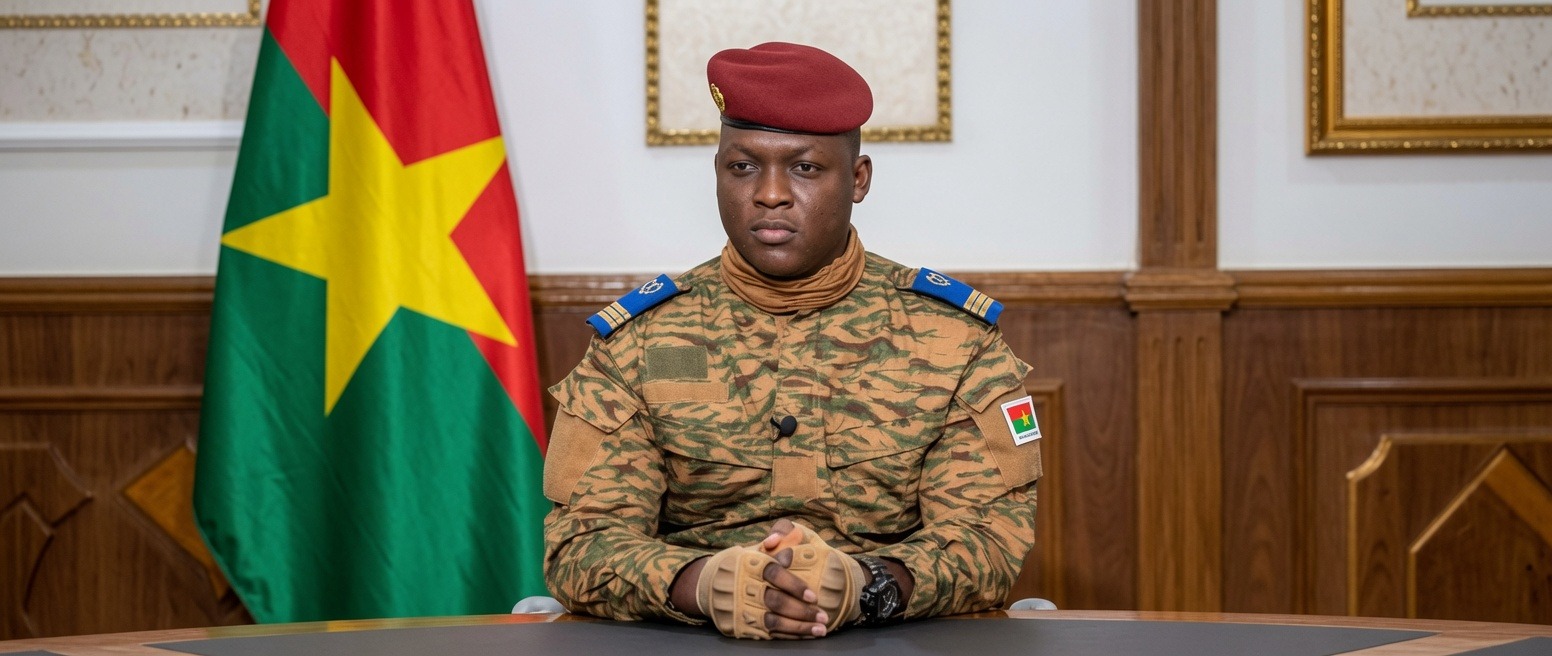
The appearance of Captain Ibrahim Traoré in Ouahigouya has laid bare a deep structural fracture within Burkina Faso’s transitional leadership. The blunt, coarse language deployed—words like « merde » and threats of uncompromising crackdowns—reveals not strength, but a profound crisis of confidence in the military apparatus itself. In both politics and warfare, over-reliance on aggressive rhetoric and constant intimidation signals fragility, not resolve.
From doctrine to intimidation: the erosion of trust
Where once cohesion was built on shared strategic vision, today it rests solely on fear of purge. By publicly declaring that loyal cadres will be « crushed » without hesitation, the transitional leader implicitly admits that loyalty is no longer a matter of belief or shared purpose, but of survival. This shift from ideological alignment to coercive control creates a dangerous paradox: a regime that clings to power through fear is, by definition, vulnerable to collapse the moment that fear wavers.
The illusion of unity and the weight of personal legitimacy
In rejecting any hierarchy—« there is no Number 1 or Number 2 »—Traoré attempts to preempt internal rivalries. Yet this flattening of command also concentrates all risk on a single figure. By staking everything on his battlefield credentials, he entrenches a classic pretorian trap: a regime whose legitimacy is personal, transient, and entirely dependent on immediate military success. Without institutional roots, such power is inherently fragile and cannot outlast tactical setbacks.
Discourse vs. reality: when fear chokes command
The hardening rhetoric does little to mask the strategic misstep at the heart of Burkina Faso’s counter-insurgency strategy. By prioritizing political loyalty over structural reform, the transition risks suffocating its own command chain. Officers, now consumed with avoiding accusations of disloyalty, retreat into cautious conformity rather than bold initiative. An army paralyzed by surveillance and suspicion loses agility on the frontlines, widening the gap between the firm words spoken in Ouagadougou and the harsh realities unfolding in the field.
The unintended consequence: dissent goes underground
Far from neutralizing factions, the climate of intimidation pushes dissent into the shadows. Regional military history shows that when internal debate is suppressed under the threat of brutal reprisals, opposition does not vanish—it merely bides its time. The moment the balance of power tilts, those forced into silence resurface, often with greater cohesion and determination than before. For Burkina Faso, this means that the current strategy risks breeding the very instability it seeks to quell.