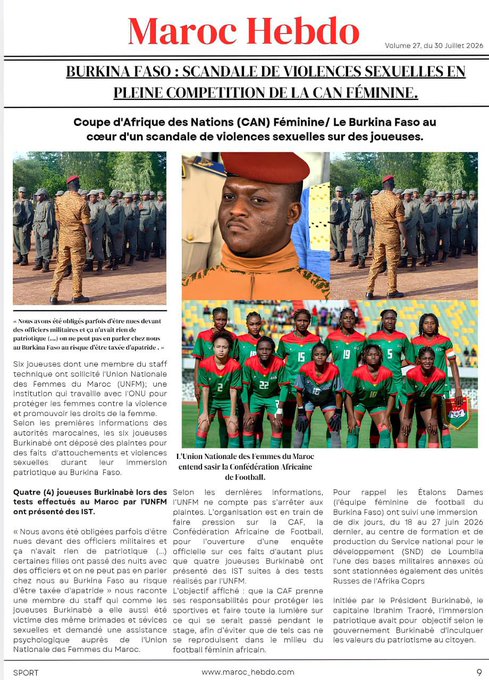
Under the banner of patriotism, military discipline, and national rebirth, Burkina Faso’s ruling authorities have steadily expanded the military’s footprint into civilian life. Now, explosive allegations of sexual abuse involving members of the national women’s football team—allegedly occurring during a military-organized training camp—raise a critical question: how far can a government go when oversight vanishes and impunity becomes standard practice?
From patriotic training to serious allegations
What was marketed as a noble initiative to mold citizens before athletes took a dark turn. The national women’s football team was sent to a military camp for a so-called “patriotic immersion stage,” billed as a way to instill discipline, national commitment, and a spirit of sacrifice ahead of a continental competition.
But this public relations effort may now backfire dramatically. A formal complaint filed in Morocco with the National Union of Moroccan Women (UNFM) accuses six players and one technical staff member of enduring sexual violence and harassment at the hands of military officers during the camp. If verified by an independent inquiry, these claims would represent grave violations of fundamental rights and expose the dangers of a system where military authority operates largely unchecked.
Military encroachment into civilian life
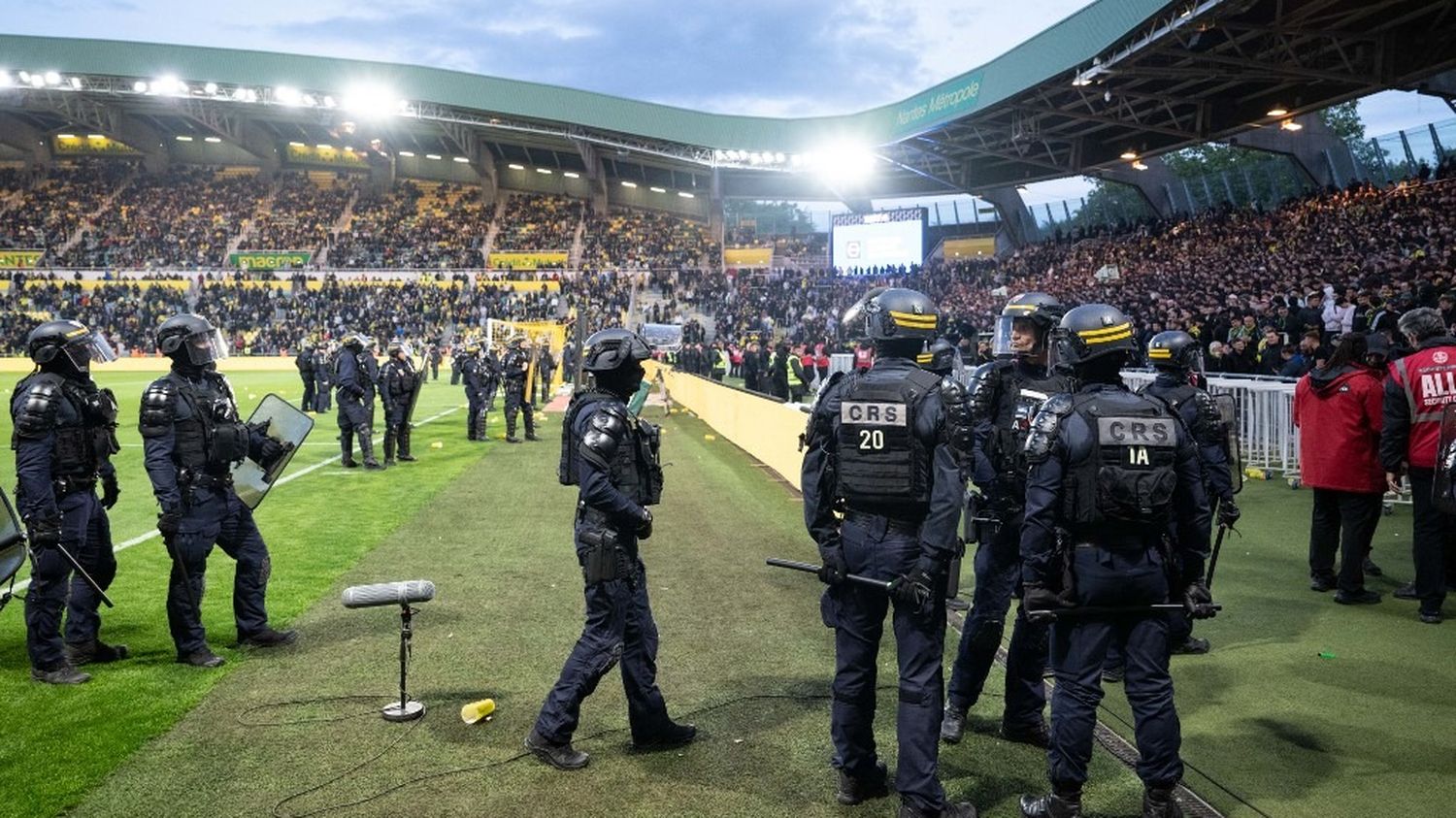
The scandal goes beyond individual accusations—it reflects a broader transformation in Burkina Faso. Since assuming power, Captain Ibrahim Traoré has steadily expanded the military’s role far beyond national defense. Today, soldiers are deployed in education, youth programs, cultural initiatives, political messaging, and even sports.
This shift aims to position the military as the central pillar of national reconstruction. Yet when civilian institutions are replaced by military structures in areas outside their mandate, traditional safeguards—accountability, oversight, and transparency—risk eroding. Human rights organizations have warned for months that shrinking democratic space and the decline of independent checks are creating fertile ground for abuse.
Impunity thrives when oversight disappears
Democracy depends on balance. When the judiciary, free press, civil society, and political parties lose their ability to function, the space to expose wrongdoing narrows. Victims grow hesitant to report abuses, fearing retaliation—professional, social, or even physical.
The current case highlights this precisely: according to available information, the complainants only took action after leaving Burkinabè territory. This alone raises serious doubts about the trustworthiness of domestic mechanisms for victim protection.
A climate of fear silences dissent
Challenging military authorities is increasingly framed as unpatriotic or even supportive of armed groups. Journalists, activists, and civil society leaders report growing intimidation and coercive measures for speaking out. Restrictions on independent media further limit investigative reporting and the flow of counter-narratives. Meanwhile, security imperatives are prioritized over human rights and victim protection.
In such an environment, silence cannot be mistaken for approval. It may simply reflect the fear of public reprisals.
An issue that goes beyond football
This affair is not just about women’s football. It challenges the role of military institutions in a country at war and questions the boundaries of their involvement in civilian affairs. It also tests the state’s capacity to protect its own citizens when they participate in programs under its authority.
It underlines a fundamental truth: combating terrorism, however necessary, cannot justify the long-term weakening of judicial guarantees, public freedoms, or accountability mechanisms.
Seeking justice beyond borders
The decision to file the complaint outside Burkina Faso sends a strong signal. Regardless of future findings, it reveals a deep crisis of confidence in domestic systems of justice and protection. For victims, turning to international bodies appears as a last resort to secure impartiality and accountability.
This internationalization of the case could intensify pressure on Burkinabè authorities to conduct a transparent, independent investigation—one that identifies responsibility, safeguards victims, and, where necessary, delivers justice.
A wake-up call for democratic governance
These allegations remind us that no political project, no matter how ambitious, can endure without the rule of law. Patriotism cannot serve as a shield for unchecked power or a barrier to truth when grave human rights violations are alleged.
If proven, this case could mark a turning point in assessing Burkina Faso’s governance. It would underscore the dangers of excessive power concentration and the erosion of institutions meant to protect citizens.